"New Leaders Will Rise from the Ashes": An Interview with Entrepreneur Andrei Doronichev
A former top Google executive and co-founder of a Silicon Valley startup discusses AI, biotech, the financial bubble, and the companies that will drive the economy in the future
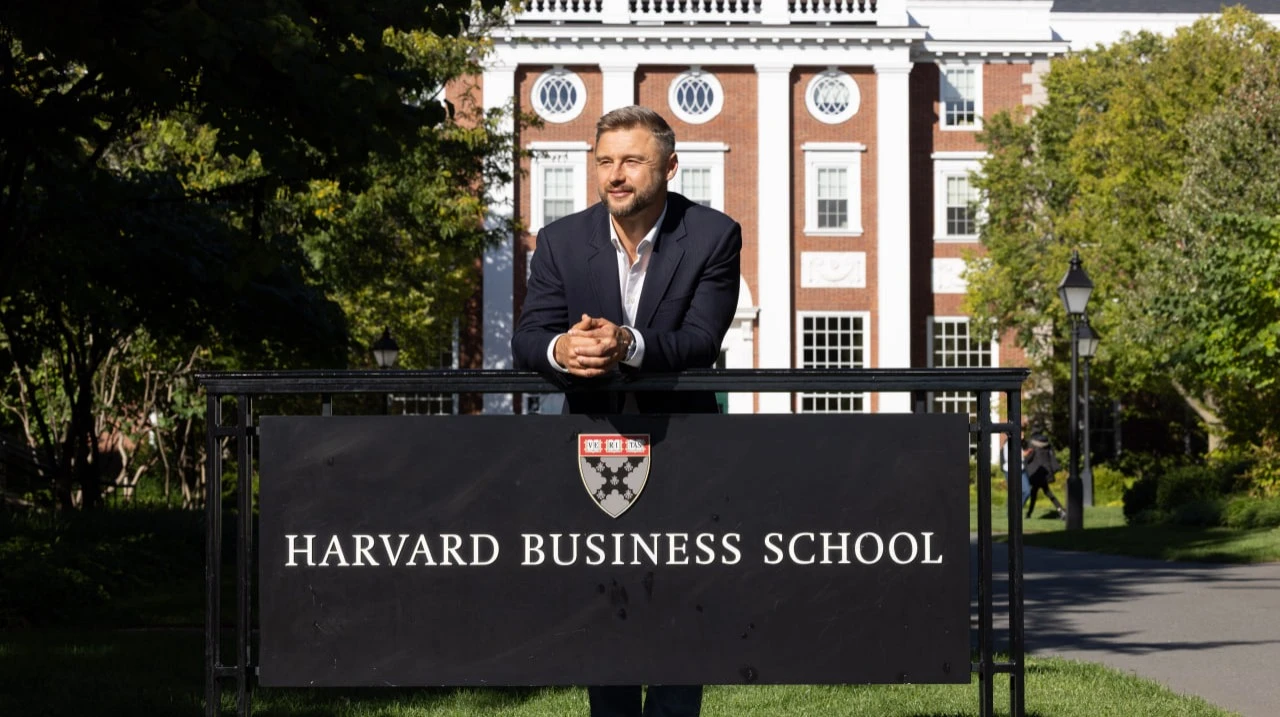
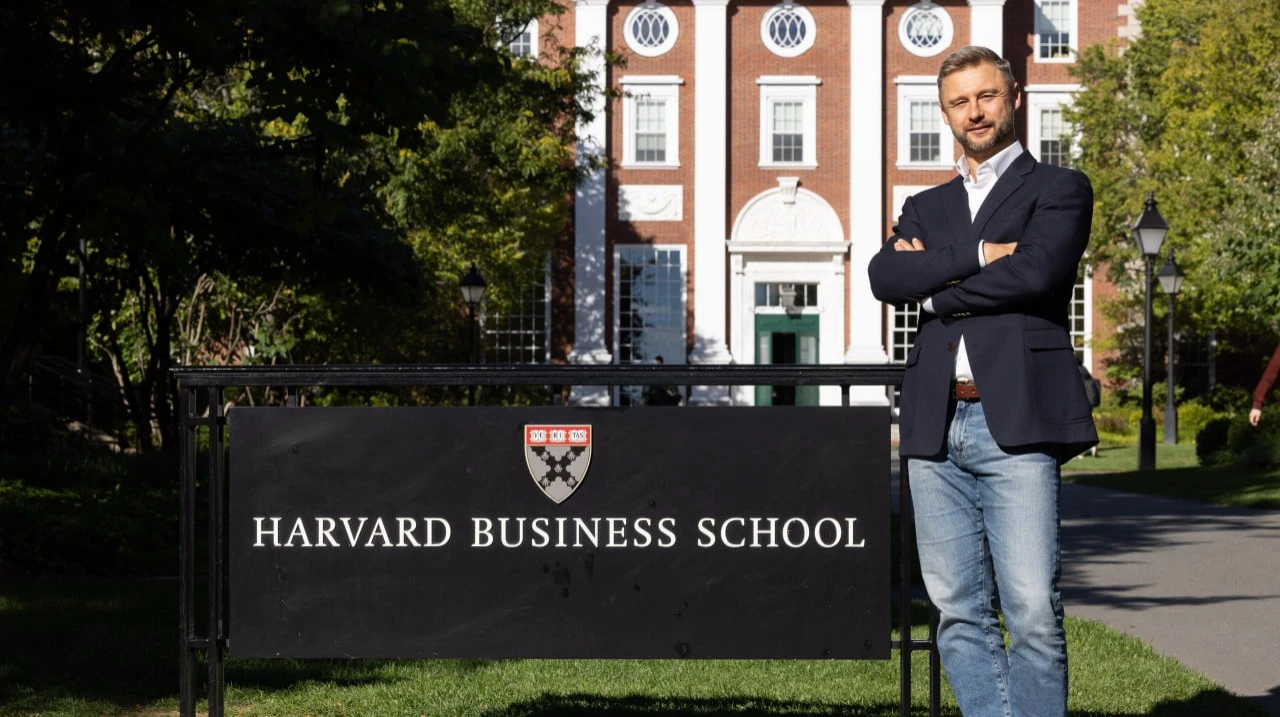
Photo: Evgenia Eliseeva / Andrei Doronichev's personal archive
Entrepreneur, venture capitalist, former Google executive, and current co-founder of a Silicon Valley biotech startup, Andrei Doronichev published a book this summer titled *New Version: Change Yourself Without Changing Who You Are*. Oninvest spoke with him about the book, investments, and the future of AI-related industries.
About the New Book: How to Measure Success and Your Own Transformation
— Andrei, you recently published a book titled *New Version: Change Yourself Without Betraying Yourself*. We’d like to congratulate you on this achievement. Do you expect to make money from it? How will you measure its success?
Thank you. When I sat down to write the book, I didn’t fully realize just how complicated the whole process would be. Finishing the manuscript isn’t the end of the work on the book. You have to translate the finished text into other languages, print physical copies, set up distribution channels, and so on. All of that involves expenses, payments, and taxes. But I was pleasantly surprised by the sales. For example, just outside the CIS countries—excluding the Russian-speaking market—I’ve already sold 5,000 copies. So, financially speaking, I’ve basically broken even. I’m happy with this experience, but I don’t think I’ll be ready to go through this process again anytime soon.
And I believe the most important metric for this project isn’t the money earned, but rather how many people, after reading the book, will take that first step and eventually discover a new version of themselves.
— How can you measure the success of your own transformation? Are there any qualitative or quantitative KPIs for each one?
A major mistake many people make—and I’m no exception here—is that we often copy other people’s behavior patterns and metrics for success, and then start stubbornly following them. Instead, we need to listen to ourselves, understand our own desires and goals, and—based on that understanding—create our own starting framework and set our own metrics. That’s exactly what I write about in my book. So no matter what personal KPIs I might mention right now, it would be bad advice for others.
— What questions did you try to answer in the book?
Over the past year, many people have told me or written to me about their anxiety regarding the spread of AI and its impact on their lives and careers. In addition, following the outbreak of Russia’s war against Ukraine, my readers from both countries found themselves forced into exile. Throughout this time, they’ve shared their stories and asked questions that boil down to the same thing: “What should I do?” and “How can I reinvent myself in this new life?” I’ve tried to answer these questions by suggesting that readers of the book treat themselves as a startup and apply a structured product-oriented approach to personal transformation.
On Venture Capital Investments: How to Choose a Startup and the Right Industries
— In your book, you write that you set yourself some investment KPIs. The first was to learn how to select startups and invest in 25 companies. Did that happen?
Yes. For example, I've invested in Coda, Grammarly, PandaDoc, Titan, Reface, and other startups.
For the first 10 investments, I was simply learning about angel investing and, by paying for other people’s mistakes out of my own pocket, gaining experience on what not to do.
I was mainly interested in the early stages of tech companies.
Two things are important for startups like these. First, who are the founders, and have they worked on other projects before? If they’re serial entrepreneurs, that means someone else has already learned from their mistakes.
Second, what problem are they solving by launching a startup?
There are different types of founders. There’s the solution-driven founder—an entrepreneur who starts with a particular technology or idea. And then there’s the problem-driven founder—someone who tries to find a solution to a specific market problem.
In my experience, the first group is often good at only one thing—a specific technology—and simply tries to sell it. The second group often comes from the industry in which they want to launch a startup; they know all of its pain points firsthand.
I believe more in problem-driven founders than in solution-driven ones: ideas, technologies, and solutions quickly become obsolete, but problems remain.
I usually assess how big a startup’s market will be. If a startup—even one with the world’s best founder—is tackling a minor problem in a niche segment, it won’t really make any money. To me, that’s just a waste of money and time, because an angel investment is a commitment for at least 10 years. If, on the other hand, a project aims to solve a problem in a massive market—for example, as we’re doing at Bioptic in a $4 trillion industry—and achieves even a slight improvement in the efficiency of one of the functions of this gigantic machine, it will ultimately generate billions of dollars in market capitalization.
— Which startup metric is the most important to you?
Perhaps it’s the founders’ flexibility and adaptability. A startup’s true success isn’t measured by how much venture capital it has or how long that capital will last if no new investments come in, but by how many pivots (changes to the business idea) the founders still have the resources to make.
If they—even with only a small margin of financial stability—are ready to quickly and easily test another 3–4 new hypotheses, in my view, they have a better chance of success than a slow-moving team that stubbornly keeps banging its head against a wall, trying to prove the viability of a single business idea.
This philosophy is rooted in my personal story. In 2022, after raising $11 million in funding, we launched the Optic AI Lab, which developed a service for detecting digital fakes and got off to a strong start in the NFT market. But by the end of 2022, FTX—one of the largest crypto exchanges—collapsed, dragging the entire crypto industry down with it. Then Silicon Valley Bank—Silicon Valley’s main bank, where we had kept almost all of our money, about $10 million—collapsed. It was time to explore new ideas. One of them led us to Bioptic—a platform for developing drugs using AI.
— When you say “resource,” do you mean, first and foremost, willpower?
Rather, it’s a unique combination of qualities, much like those of a martial artist. A founder must be as strong as a rock and yet able to instantly become as fluid as water.
— Do you advise the startups you've invested in?
Not always. For example, Shishir Mehrotra, the co-founder of the startup formerly known as Coda and now called Superhuman, was my mentor on YouTube.
I usually help founders with what I’m good at. The first area is developing a product strategy. That’s what I’ve been doing professionally my whole life, both at Google and at my own companies. The second is corporate governance and growth challenges. Managing a growing team effectively and delegating responsibility is a painful process that not all startups survive.
— Aside from early-stage tech startups, what other sectors are you looking at for angel investments?
Biotech, medicine, and pharmaceuticals. But the phase of my life when I was primarily an angel investor has come to an end. From 2022 to the present, I’ve been a founder fully focused on my startup, obsessively pursuing my goal of developing cancer treatments.
Investing in the Stock Market: Idols and Robots
— Another investment goal you mention in your book was to build a portfolio of assets that yields 10% a year. Did that work out?
Yes. In recent years, market conditions have been such that we've managed to achieve returns of more than 10%. But let's see what happens over the long term.
— How is your capital currently allocated? What assets are in your portfolio?
Since Optic was founded, the structure of my portfolio has changed significantly. The vast majority of my capital is now concentrated in a startup. On paper, this stake is worth much more than all of my liquid assets combined, but the stake itself is largely illiquid. And all of my risks are concentrated here as well.
As for the liquid portion of my portfolio, I’m an extremely conservative investor: I keep about 40% in real estate, another 40% in the stock market, 10% is in my angel investment portfolio, and 10% is in cash and cash equivalents, such as T-bills and deposits. Of the portion in the stock market, about 70% is in stocks and 30% in bonds, although perhaps this ratio is becoming riskier now.
— Which industries and public companies do you follow?
Personally, I follow the same pharmaceutical and tech companies, as those are the stories that interest me the most. But my portfolio isn’t concentrated in the sectors that interest me; on the contrary, it’s very diversified—I’d even say it’s spread out across the market. It’s hard to list the companies in the portfolio, since it’s managed by a robot that rebalances it daily.
— Do you trust a robo-advisor?
Yes, and much more so than people. For one thing, people in the stock market—even professionals—often act spontaneously and emotionally, sometimes making decisions that have no mathematical basis whatsoever. At least a robot trader is free from such mistakes.
Second, active trading on the stock market is, after all, a lottery. Imagine we gathered the world’s best traders in one place—say, 40,000 people in a single stadium. A referee would flip a coin a predetermined number of times, and the traders would place their bets. The choice is simple: heads or tails. After the first flip, half of them would lose. And so on, until only a few people remain who happened to guess all the flips correctly. They’ll leave the stadium and start writing books, giving interviews, and claiming that their victory was based on some idea or system, even though in reality the outcome was determined by a series of coincidences.
I graduated from the Walter Haas School of Business at Berkeley in California. One of the professors who taught economics there—I won’t mention his name—once admitted to us students that he didn’t really believe it was possible to beat the market or consistently time the perfect moment to buy or sell a stock. And so he chose to follow the market by investing in index funds.
I have a similar strategy. I prefer to actively invest in startups because that’s where I can influence the situation and help bring success about with my own efforts, whereas on the stock market I’m more or less passive.
— Does that mean you don't have any role models when it comes to investing?
Not on the stock market. When it comes to investing in general, I’d name Naval Ravikant—an American investor and the founder of AngelList, a platform that revolutionized the venture capital market by enabling startups to find their first, angel investors on a sort of venture capital marketplace. Ravikant recognized the potential of Uber, Twitter, and other successful startups and invested in them early on; he made a huge fortune and became a guru to many people in Silicon Valley. I think any startup would dream of having him among its key investors. Some may find his ideas controversial, but I largely identify with his philosophy on wealth and happiness.
About Biotech: The Limits of AI, Big Pharma as an Investment Bank, and the Search for Cancer Cures
— Let’s talk about biotech and pharmaceuticals. Bioptic’s AI agents are searching for candidate molecules for future cancer drugs. But to what extent is the data on cancer accumulated by humanity now complete, free of “noise” and “clutter,” and accessible?
All data accumulated by humanity on cancer—or any other subject—is, by definition, messy, noisy, and inconsistent. Sometimes it’s simply the result of trial and error by scientists testing hypotheses. Sometimes it’s outright fabrication. For example, when researchers “tweaked” the results so they would better “fit” their unsound theory. And the results of millions of failed experiments have simply disappeared—few people want to share their failures with the world.
So everything we have now is, in part, a survivor's bias.
At Bioptic, we build neural networks that can handle “noise,” “clutter,” and inconsistencies. They learn to generalize from available data and transfer identified patterns from one domain of knowledge to another, just like the human brain.
In general, the ability to generalize has become a breakthrough in large language models.
However, specifically in chemistry and biology, there has not yet been a breakthrough in the ability of neural networks to generalize knowledge and generate new insights based on it.
Even Google DeepMind’s neural network-based AlphaFold program generalizes well only for things it has already seen. When faced with protein structures it is unfamiliar with, its ability to generalize decreases significantly.
Why? Let me give you an example. For GPT-3, ChatGPT’s predecessor, to learn how to generalize, its training dataset was on the order of one trillion tokens. But in chemistry and biology, the training dataset is only about 20 million tokens. That’s how much data we’re missing!
To add a single data point to a molecular data set, an experiment costing at least $50,000 must be conducted. Therefore, such projects are best undertaken either by companies with bottomless budgets or by government-funded institutions. Or by major foundations such as the Chan Zuckerberg Initiative, led by Mark Zuckerberg and Priscilla Chan, which is currently building a global network of Biohub laboratories and using AI to create digital twins of human cells and proteins in an effort to move some clinical trials from laboratories to computers.
Otherwise, it will be like the Recursion case, where the AI learned to identify candidate molecules for treating orphan diseases, but the drug developed from them failed during human trials. At that point, investors, who were keeping a close eye on their money, accused the company of massive cash burn, which led to a collapse in its stock price and a change in its business model.
— How much time and investment do you think it will take to train models in chemistry and biology to generalize?
A lot. But what's really needed here are a couple of genuine scientific or technological breakthroughs.
— Imagine you have a magic wand. What breakthrough would you make?
I would learn how to fully simulate clinical trials on humans. Science hasn’t even come close to that yet. The cutting edge of biology is the simulation of a single human cell. And while many consider this science fiction, I’m optimistic.
But there are hundreds of problems in the pharmaceutical sector that can be solved right now—without a magic wand. For example, there are currently no drugs available for approximately 10,000 diseases, even though dozens of research teams have worked on developing them at various times. They collected data, tested hypotheses, and published papers, but for some reason were unable to move forward. A lack of funding isn’t the only fatal flaw for a project. Sometimes everything can grind to a halt due to simple team inefficiency or legal red tape. In fact, there are hundreds or even thousands of such cases.
Our models at Bioptic help pharmaceutical giants identify such promising research and development projects, acquire them from developers, and put those third-party results through the rigors of clinical trials and regulatory reviews.
It’s clear that we’re still just picking the low-hanging fruit. But ridding the scientific community and the pharmaceutical sector of inefficiency is already a huge step forward—one that will help patients get the medicine they need faster, make treatment more affordable, and save hundreds of lives.
— When will the first cancer drug developed entirely by AI be available?
If we’re talking strictly about an AI-native drug—where AI completely independently identified the target, generated the candidate molecule, and even wrote the clinical trial protocols—you can’t buy one like that at the pharmacy just yet. Clinical trials take many years. The molecules that were first generated by neural networks back in 2015–2017 are now nearing the end of Phase 3 trials.
Insilico Medicine has the best chance of being the first to bring a fully AI-native drug to market; its treatment for idiopathic pulmonary fibrosis entered Phase 3 clinical trials in patients in July.
This is the biggest AI story in the pharmaceutical market. If these guys pull it off, I’ll be cheering them on. But Big Pharma is also wrapping up Phase III trials of its AI-native drugs and preparing to submit its results to the FDA (U.S. Food and Drug Administration). So we won’t have to wait long—just a few years.
— How has Big Pharma’s attitude toward AI startups like Bioptic changed? Do you see them as competitors or partners?
Big Pharma itself has changed. The pharmaceutical giants have finally acknowledged that they are neither IT companies nor pioneering scientists, and have slashed their research and development spending.
Now it's these investment banks that are looking for biotech startups to acquire through mergers and acquisitions or to buy out their technologies.
Big Pharma largely thrives by providing external innovations with multimillion-dollar funding and access to the largest markets. On their own, they’re only willing to work on ultra-profitable blockbuster drugs with sales potential exceeding $1 billion a year—something like Ozempic, for example. If a drug’s potential is below $1 billion, it’s easier for them to wait for startups to do the heavy lifting. So right now, for biotech companies, pharmaceutical giants are more like partners who have taken on the roles of clinical back office, regulatory lobby, and global distributor.
— In the field of AI, Bioptic is inevitably becoming a competitor to AI giants such as OpenAI, Perplexity, and others. How do you see the future of this competition?
They have ambitions in research-oriented AI and a massive budget. It’s difficult for us to compete with them on capital-intensive projects. But there are plenty of opportunities in this market for startups as well.
Here at Bioptic, we’ve created what is arguably the best tool for identifying drugs at all stages of development. Major pharmaceutical companies have become our clients—they didn’t turn to OpenAI or Anthropic for this.
Here’s another real-life example. Google has been and remains the undisputed leader among internet search engines. But there were also vertical search engines like Kayak, which was tailored for travel planning, and Expedia—a full-fledged trip planner. In their respective niches, they always outperformed Google. There’s nothing stopping a biotech startup from finding a highly specialized but sufficiently large market segment and becoming the leader in it.
— Which biotech and pharmaceutical companies are you keeping an eye on?
Among European companies, there’s Cradle.bio, which uses generative AI to develop software for protein engineering and programming. LabGenius is also worth noting; they focus on generating data for molecular biology. Everyone’s talking about Chai Discovery, which creates AI models for computer-aided drug design and programming molecules from scratch. I’m impressed by what Insilico Medicine is doing, and I’m closely following Google’s “giant,” Isomorphic Labs, which works with AlphaFold.
— How do venture capitalists view the AI-driven pharmaceutical industry? Are they willing to invest and wait a long time for a return on their investment? How difficult was it for Bioptic to raise its first round of venture capital?
How does a seed round typically work for a tech company? The lead investor buys 10% of the startup, and the founder retains 90%. In each subsequent round, the founder gives up another 10–20% of the company. Multi-million-dollar checks are signed for a great idea. The investor’s logic is simple: I’ll invest in four companies; three will fail, but one will grow into a unicorn and make up for everything the others didn’t.
It’s different in biotech. It’s not uncommon for an investor to acquire 95% of a company right from the first round, since this is a very capital-intensive industry: you need labs, materials, and clinical trials, and it can take years to see a return. Having gained substantial control over the business, they’re willing to do this. We raised our first round of $11 million as an IT company.
— Would you like another round?
We’re currently raising a new round of funding, and it’s really tough. We’re a startup focused on projects at the intersection of AI and the pharmaceutical industry. If we approach funds that work with the tech sector, they’ll start comparing us to every other AI startup. For example, those that use AI to generate content and make their first million within the first three months. But biotech investors will meticulously examine how many publications and molecules you have. We’ll face challenges in investment committees in both sectors.
— Will you be teaming up with the same people you played with in the last round?
Right now, we need a new lead investor with expertise in the pharmaceutical industry who can help us grow, open the right doors, and attract major clients from the industry.
— So you're willing to give up 95% of the company?
No. We'll try to find a compromise.
— Are you considering an IPO in the future?
Yes, we're keeping that scenario in mind. An IPO is a good way to make the shares liquid.
— What advice would you give to private investors in publicly traded AI biotech companies who are willing to make long-term investments?
The most important thing is to understand that biotech is a fundamental science that, by definition, involves enormous risk. A vast number of biotech companies will never become commercially successful. Moreover, the AI industry in medicine is still too young and rapidly evolving. In this market, you need to be prepared for the long haul, regardless of short-term losses. And if you’re just throwing money at stocks that catch your eye on a whim, like chips at a casino, you’re better off choosing other industries. In AI biotech, blind luck almost never pays off.
On AI: Will the Bubble Burst? Where to Look for New Energy Sources, and Growth Potential in Microchips
— In your interviews, you talk a lot about the future of AI. Will technological progress come to a halt due to a simple shortage of electricity?
Technological progress will certainly not come to a complete halt due to energy shortages. But there will definitely be more than one bottleneck along the way. In fact, the AI industry is already experiencing a shortage of power grid capacity. The electric power industry has proven unprepared for the pace at which the AI sector is developing. I think that if we want to accelerate progress without overheating the planet, we need to resume projects in nuclear energy. Look, we’re seeing a renaissance in nuclear power all over the world right now. Countries are restarting old nuclear reactors.
— Are chips nearing their physical limits? What technologies in microelectronics will be able to push those limits further?
In recent decades, the computing industry has grown primarily by reducing the size of transistors and packing an ever-increasing number of them onto a single chip. Today, this approach has become significantly more complex and expensive: individual transistor components have reached the scale of atoms, and leakage, heat generation, and quantum tunneling limit further miniaturization.
Scaling has not stopped, but the growth in computing power is now increasingly driven by new transistor architectures, 3D packaging, chiplets, and specialized processors. A prime example of such a specialized chip is an ASIC designed specifically for the operation and application of neural networks. In short, the potential for growth in microelectronics through hardware and software optimization is truly enormous right now.
— Is a new global crisis looming for the markets if investors start demanding quick returns from AI startups?
Right now, the market is fueled by incredible expectations surrounding AI-driven transformation. People, as a rule, tend to behave predictably when caught up in this kind of manic frenzy. Let’s recall the dot-com bubble. It inflated in exactly the same way. Does that mean we shouldn’t have developed the internet? The internet has become a technology that has transformed the way humanity lives. We work, study, communicate, and meet people online. The dot-com bubble, however, was caused by the irrational behavior of investors who maniacally poured money into anything labeled “Internet.”
AI has become a technology that is leading us toward a new transformation. But I don't see the technology itself as the cause of a global crisis.
The only thing that could slow its progress is stifling regulation, and the only thing that could halt it is a global military conflict. However, the financial bubble surrounding AI could very well burst.
— Many AI investors in the stock market have experienced more than one crash this year. What would you say to them?
The markets will inevitably adjust their expectations regarding AI. A global crash will happen sooner or later—that’s a medical fact. But it’s important to separate the wheat from the chaff.
Investor sentiment and technological development are not correlated. Just because a financial bubble has formed does not mean that a technology bubble is forming.
As a result of the crash, a host of companies will exit the market. But new leaders will emerge from the ashes. We’ve already mentioned the dot-com crash—it gave rise to today’s fastest-growing and largest companies: Google, Amazon, and Facebook. The same thing will happen again: a huge number of worthless companies will be washed out of the market, and those that survive and grow in the wake of this collapse will fuel the economy for decades to come.
This article was AI-translated and verified by a human editor