Porsche has decided to raise the average price of its top-of-the-line sports cars by 20%. What are the risks involved?
The company is banking on exclusivity, but Chinese competitors are entering its market segment, and the U.S. market shows that prices cannot be raised indefinitely

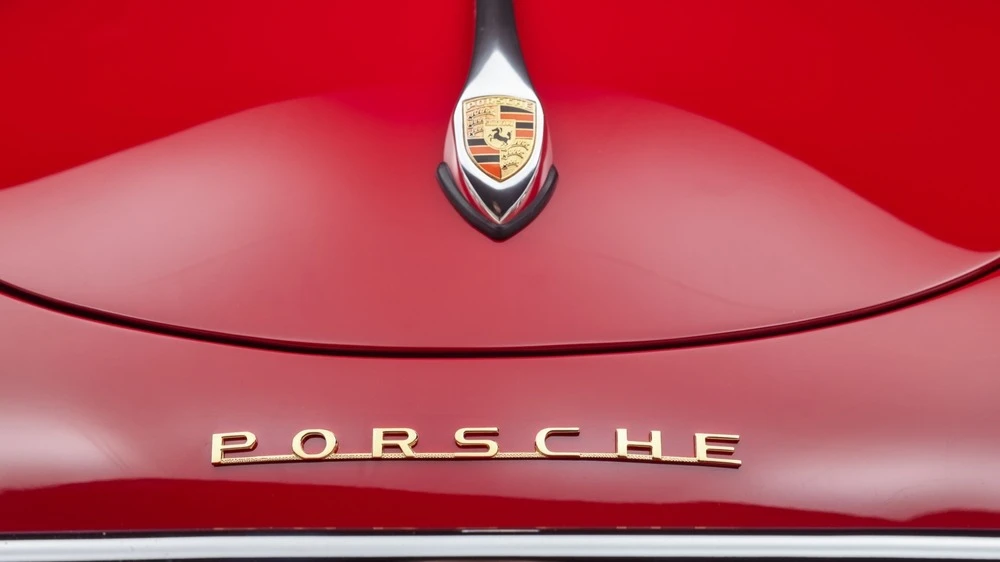
Porsche plans to increase revenue from custom orders sixfold / Photo: JoshBryan/Shutterstock.com
German sports car manufacturer Porsche intends to increase its profit per vehicle and, in the medium term, raise the average selling price of its top-of-the-line models by approximately 20%, the company announced. CEO Michael Leiters presented the strategy, which is designed to make Porsche significantly more profitable by 2035, to investors on October 7.
Smaller, but more expensive
Porsche expects to drive up the average price through broader customization options and new models in high-end segments, according to a company statement. Porsche plans to increase revenue from its Sonderwunsch customization program sixfold, according to Handelsblatt.
The company is also developing a mid-engine supercar platform: based on this platform, a new lineup will be introduced that will occupy the top spot in the model range, above the long-standing 911 flagship. According to Bloomberg, such an expansion would bring Porsche closer to Ferrari with its sports cars and Gran Turismo models.
“Our top priority is to continue strengthening our unique sports car brand across the entire lineup by launching new, highly desirable models in particularly high-margin segments,” Leiters said at a press conference in Stuttgart, according to Bloomberg.
Risks: China and Tariffs
Handelsblatt calls this approach risky: Chinese manufacturers such as Xiaomi and Denza are increasingly entering Porsche’s market segment, and U.S. tariffs show that even Porsche cannot raise prices without restrictions. Leiters acknowledges this as well. “A price increase in and of itself is not yet a luxury,” the newspaper quotes him as saying. According to the CEO, price increases must be backed by real improvements to the cars themselves.
Porsche is seeing its sales decline most sharply in China: the company is projecting sales there of only about 15,000–20,000 cars per year, according to Handelsblatt, citing sources within the company. Bloomberg notes that Porsche’s Chinese business is unlikely to return to its former scale.
The strategy is intended to make the company structurally more stable, according to the press release: Porsche will lower its break-even point to below 200,000 vehicles sold, and this calculation is based on a “very conservative” forecast for China. In 2025, the company delivered just under 280,000 vehicles to customers, Bloomberg notes.
Promises to Shareholders
In the medium term, Porsche expects to achieve an operating margin of 10–15%, and in the long term, 15%. At the end of 2025, the figure stood at just 1.1%, and in the first half of 2026, it was 7.8%, according to Bloomberg. The company clarifies that reaching the upper end of the guidance range will require more favorable macroeconomic, geopolitical, and regulatory conditions and/or successful additional value-creation measures. Porsche intends to increase revenue to €41–45 billion and allocate at least 50% of net income to dividends.
Porsche CFO Jochen Breckner explained the basis for the calculation. “The improvement in profitability and cash flow that we are striving for is based on a higher value per vehicle, a more attractive model lineup, and a consistently more efficient cost and capital base,” he said in a press release.
The current targets are more modest than those Porsche set when it went public in 2022: at that time, the company was aiming for an operating margin of 17–19% in the medium term and more than 20% in the long term.
Consensus: "Hold"
At the peak of trading in Frankfurt on October 7, Porsche shares rose 5.1%. However, the shares subsequently lost their gains and turned negative: at the time of this writing, they were down 1% to €42.08.
According to WSJ Market Data, the current consensus recommendation from analysts for the German brand’s stock is “Hold.” Five analysts recommend “Buy,” 12 recommend “Hold,” and another five rate the stock “Underweight” or “Sell.”
This article was AI-translated and verified by a human editor