Rockets, AI and a bit of masconomics: what SpaceX is really selling at its IPO

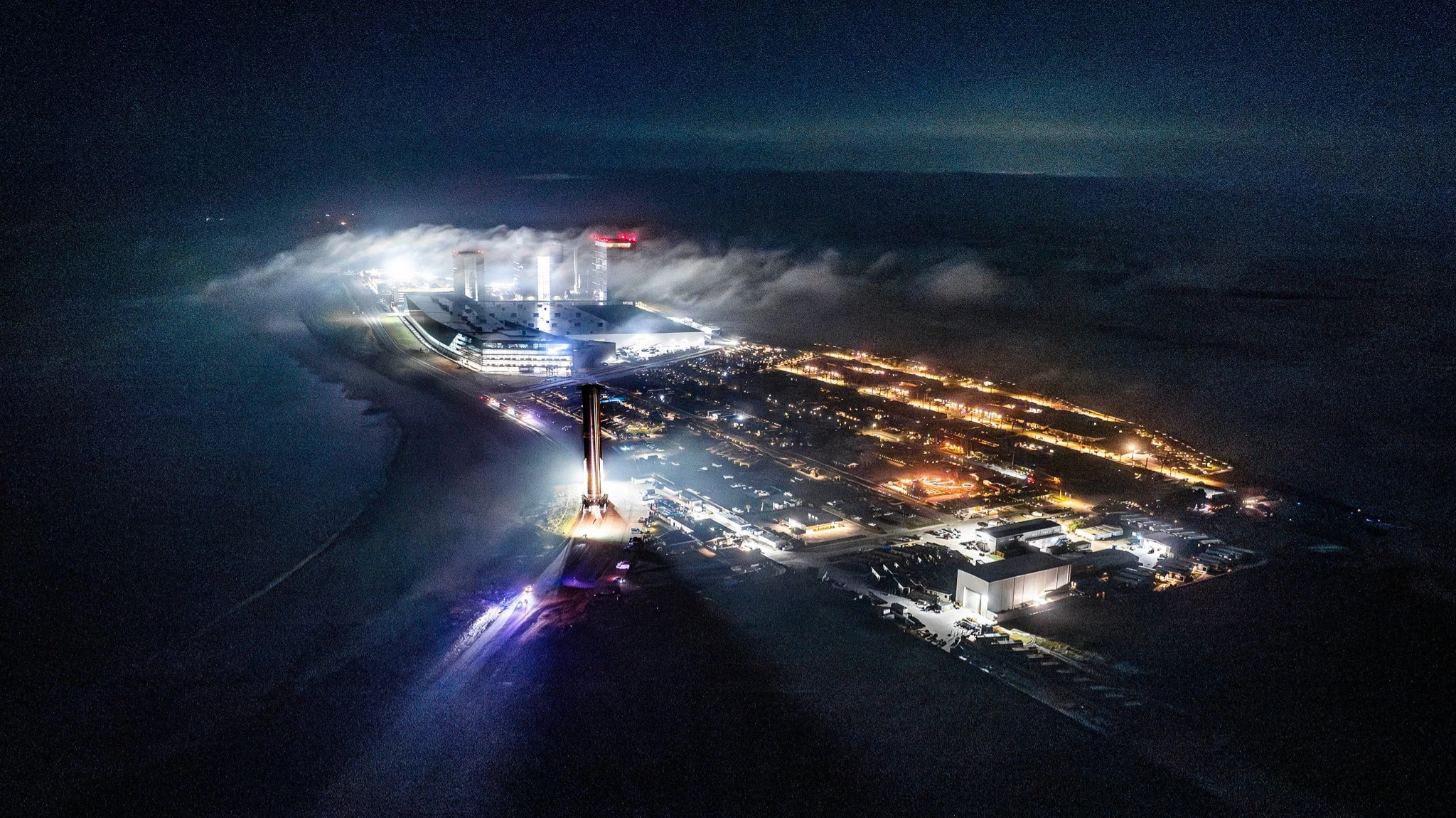
SpaceX is valued at at least 63 times revenue, on a P/S ratio SpaceX IPO is doomed to fail - Motley Fool. Photo: SpaceX
"The "Magnificent Seven" of leading technology companies may turn into an "eight" this summer. In early April, it was reported that Elon Musk's SpaceX, the largest private space company in the world, is preparing to go public. Undoubtedly, this is a landmark event for the market: as Fortune magazine calculated, if the company gets the expected $50-75 billion, it will be more than all 90 IPOs of the last year combined. Investors willing to invest in promising space technologies will finally have their own "blue chip" - and it will be a bet not only on space, but on masconomics.
The failure of the Russian designer that led to the creation of SpaceX
In 2001, PayPal co-founder Elon Musk, a 30-year-old entrepreneur, traveled to Russia. Already then obsessed with the idea of creating a colony on Mars, he wanted to start by buying some decommissioned Russian ballistic missiles on the cheap in order to refurbish them and send an automatic greenhouse with plants to the red planet under the "Martian Oasis" project.
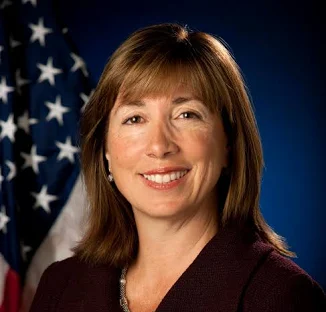
The negotiations were unsuccessful - the parties did not agree on the price. It ended with one of the Russian designers literally spitting on Musk's shoes in his heart. Lori Garver, former deputy administrator of the American aerospace agency NASA, wrote in her memoirs:
This act so offended Elon that on his way back he decided to start his own rocket company to compete with them [Russians - Oninvest note]. If the beauty of Helen of Troy sent a thousand ships sailing, it was the spit that launched a thousand spaceships into space&
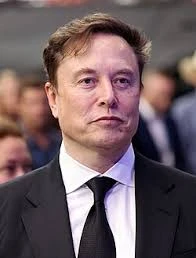
After receiving $175 million from the sale of his stake in PayPal in 2002, Musk invested about $100 million in a new space exploration company, Space Exploration Technologies Corp. that later became SpaceX, Business Insider writes.
In 2006, SpaceX received $278 million from NASA as it prepared to launch the Falcon 1 rocket, with Musk later telling CNBC that he was on the verge of failure.
I failed the first three launches.... Fortunately, the fourth launch, which was the last one we had money for Falcon 1, succeeded. Otherwise it would have been the end for SpaceX. But fate favored us that day.
Due to its success, NASA awarded SpaceX a $1.6 billion contract in late 2008, and it saved the company.
Musk didn't just want to build another rocket, he wanted to make them at least partially reusable to reduce the cost of getting cargo into orbit by a multiple.
In 2015-2016, the new Falcon 9 rocket managed to return the first stage - first to the spaceport, then to a floating landing pad.
SpaceX president Glynn Shotwell has promised a 10% discount to customers who dare to fly on a rocket with a "used" first stage.
And in March 2017, such a flight took place - Falcon 9 put into geostationary orbit a satellite of the Luxembourg company SES and for the second time landed a stage that had already flown into space, proving in practice that it is possible.
According to the Our World in Data portal, thanks to SpaceX developments, delivery of 1 kg of cargo to low-Earth orbit has dropped in price by more than 95% compared to the Space Shuttle reusable shuttle program, which NASA had been working on for more than 30 years and had to close, almost losing its own rocket industry.
Now SpaceX is the undisputed leader - the Falcon 9 accounted for more than half of all orbital launches in the world last year, nine out of 10 kilograms of cargo to Earth orbit was delivered by Musk's company, as he himself claims.
Masconomics
Musk did not limit himself to making money from launches. With unprecedented launch capacity in history, he built a multi-thousand-satellite constellation of Starlink satellites in low-Earth orbit, which provided global high-speed Internet access and cheap space cellular communications without dead zones.
Unlike launches, Starlink provides ongoing (recurring) payments, which is a much more stable cash flow. Reuters estimates that more than 9,500 Starlink satellites have been deployed since 2019, serving more than 9 million users worldwide. Starlink is already generating 50% to 80% of SpaceX's revenue.
Another of Musk's companies, xAI - that's AI and social network X - merged with SpaceX in February this year; the combined company was valued at $1.25 trillion at the time, according to CNBC.
But why does SpaceX need artificial intelligence? Musk intends to make another technological leap and build AI data centers in space. An important role in this venture will be played by a new giant and fully returnable Starship, which is now being tested - Musk once promised to use it to drop the cost of delivering 1 kg of cargo to orbit by another 100 times - to $26.
Does that sound like science fiction? But few people believed in the success of electric cars, reentry vehicles and satellite constellations of thousands of people before - and now we have all that.
Masconomy is an ecosystem that includes the combined SpaceX and xAI, as well as Tesla, Neuralink, and transportation company Boring Company.
SpaceX's public IPO
According to the most recent data from Bloomberg sources as of early April, Musk's company will try to raise up to $75 billion in its IPO at a $2 trillion valuation. If it does, it will many times surpass the currently record IPO of Saudi Aramco, which raised $29 billion in 2019.
And the capitalization catapults SpaceX right into the "Magnificent Seven" of major tech companies - it will become more expensive than Meta and Tesla.
Musk himself, though, wrote on his social network X that this is nonsense.
Reuters sources claim that SpaceX is planning to allocate an unprecedentedly large stake to retail investors around the world in preparation for its IPO. Leaving aside Musk's main goal of establishing a colony on Mars and making humanity a multi-planetary species, there are a number of very practical questions for the investor: to buy or not to buy? Will SpaceX stock be overvalued and will it have upside potential?
Official statistics are not released yet, but according to Reuters last year SpaceX earned $15-16 billion in revenue and about $8 billion in earnings before depreciation and taxes (EBITDA). Sounds good, but that's even before it was "hung up" on unprofitable X and xAI. According to The Information, SpaceX recorded a loss of nearly $5 billion in 2025 on revenue of more than $18.5 billion, and that's already including xAI's performance. "By combining two losers with one winner, he keeps everything under control. He keeps everything afloat," The New York Times quoted Ross Gerber, an investment manager whose firm invested back in Twitter and is now a SpaceX shareholder, as saying.
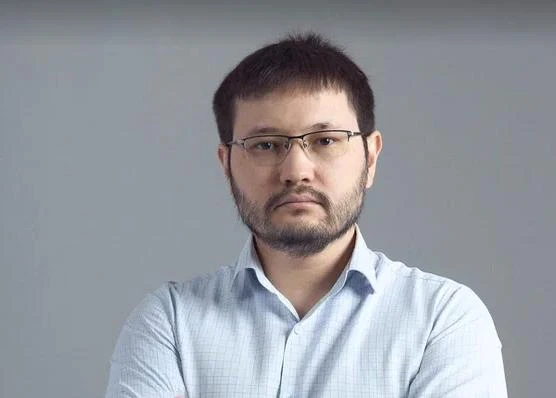
The upcoming SpaceX IPO has made a lot of noise with its incredible valuation, but for investors this figure should rather be a warning, Askar Akhmedov, investment director at Atlas Capital, said in an interview with Oninvest. To justify this value, he said, SpaceX is claiming a radical change of course - and moving powerful servers for artificial intelligence directly into space. This is all driven by experimental cooling systems that are so far too unreliable. As a result, investors risk financing not a revolutionary "space AI factory," but just a system prone to failure.
Instead of demonstrating a stable business, the company is increasingly behaving like a financial manipulator. The IPO itself is designed to force large passive funds to pour billions into an artificially limited volume of shares, creating the illusion of frenzied demand. In parallel, the recent merger with xAI and X looks like a tactical maneuver to hide huge debts and billions in monthly losses. Contrary to tradition, retail investors will also be invited to the IPO. But, apparently, not to share in the future success, but to provide liquidity and a favorable exit for venture capitalists.
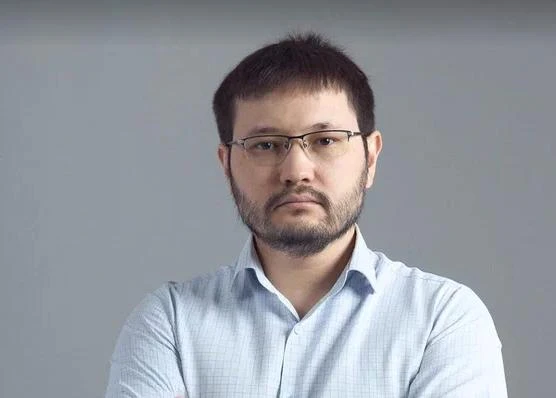
In addition, several key employees have left the company and the management of critical projects, including the development of new Starship rockets, is now in the hands of less experienced engineers, leading to test failures, Akhmedov emphasizes.
.
The current SpaceX valuation is a package of "technological ideal", inside of which everything is very fragile. Having lost experienced top managers, the company has turned into a vulnerable system, which is kept solely on the figure of Elon Musk. Therefore, the upcoming IPO looks very doubtful. And there is a risk that the purpose of the IPO is to shift the company's risks onto the shoulders of retail investors
However, in the fund Ark Invest (owns shares of SpaceX) believe that the amount is commensurate with the scale of opportunities, cites another opinion of the NYT.
This is going to be the craziest IPO in stock market history. If the company is counting on $1.5 trillion, I wouldn't be surprised if that amount exceeds $2 trillion after the market trades open
Agitated overvaluation is a bad prognosticator. Between 1980 and 2023, 45 companies went public with valuations that were more than 40 times their annual sales on the first day of trading. Only seven companies traded higher three years later. On average, those stocks lost about half their value from the close of the first day of trading and lagged the market as a whole by about 63%, the agency cited the study as saying.
On the other hand, we have a publicly traded company long led by Musk - Tesla. Last year, CNBC did a review on the 15th anniversary of the company's IPO, and found that its stock had appreciated nearly 300 times in that time. An investor who invested $10,000 in Tesla shares during the IPO and kept all of those shares would own a stake worth nearly $3 million in 2025. A similar investment in the S&P 500 index at that time would have resulted in assets worth about $57,000. Since then, Tesla shares, despite all the turbulence surrounding the company, have risen another $20 to $343.25 as of April 9.
A popular Silicon Valley saying attributed to investor Peter Thiel is, "Never bet against Elon."
Without diving into the maze of financial analytics, we can say that the main asset in any Musk company is Elon Musk himself, undoubtedly a visionary, a talented engineer, innovator and businessman. And he is also the main risk, with his tendency to make overly optimistic promises, to cause noisy scandals, courts and quarrels with regulators.
This article was AI-translated and verified by a human editor