The digital curtain of the Russian Federation: what threatens platforms and users with the bill on the crypto-market

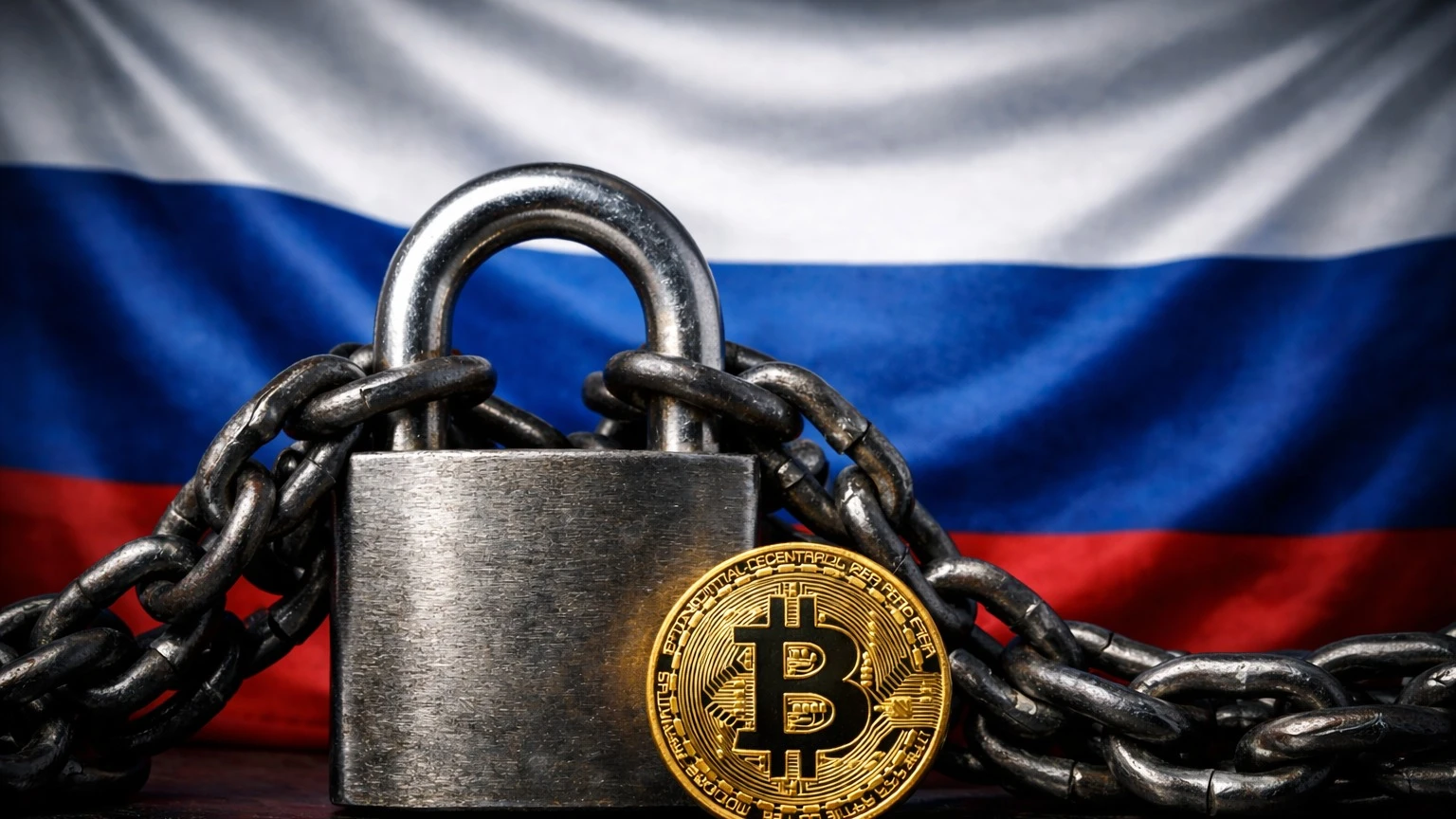
If the bill is passed, cryptocurrencies will become sources of data for the Federal Tax Service on the income of users, and the clients of crypto exchanges and brokers themselves will be obliged to report to the tax authorities on income from digital assets.
The Russian authorities have unveiled a plan which, according to their version, will legalize foreign crypto exchanges and at the same time tighten the rules of cryptocurrency trading for Russians. Market players say that this is more of an isolationist approach.
Telegram's plan: how the crypto market will be "grounded"
On April 1, the Russian government submitted to the State Duma a bill on the regulation of the crypto market.
If these amendments to the law on digital financial assets are adopted, foreign cryptocurrency exchanges will be able to operate in the Russian Federation if they register a Russian legal entity. The exchange will be obliged to enter one of the registers of the Bank of Russia.
This is reminiscent of the law on "landing" foreign IT companies, also known as the Telegram "landing" law, which has been in effect since 2022. According to it, foreign IT companies were obliged to open a branch in Russia, register a personal account with Roskomnadzor and create a feedback form.
In the case of crypto exchanges, it is not only about legal presence, but also about controlling financial flows.
All settlements (deposit/withdrawal of rubles) and transactions will have to be made only through authorized Russian banks - their list will be specified by the Central Bank. Direct "crypto-crypto" or "crypto-foreign card" settlements will be prohibited.
The bill introduces a ceiling for investments in digital assets by private individuals. There are no specific figures in the main text of the document, but based on the official position of the Bank of Russia, unqualified market participants will be able to buy cryptocurrency for an amount within 300 thousand rubles per year on one platform. "But technically, a client can work through several intermediaries and exceed the threshold in total," says White Stone lawyer Alexandra Fedotova. Until the exchange of data on transactions between different platforms is established and the regulator sets up a system of data aggregation. This may take several years.
For qualified investors, there is no limit on the amount of transactions.
Competition and "black marking"
Now several foreign crypto exchanges continue to work with Russian clients, including Bybit, BingX, OKX, HTX (formerly Huobi), MEXC, vc.ru wrote.
These platforms are headquartered in friendly or neutral jurisdictions such as Seychelles, Singapore, and Hong Kong. Now they restrict P2P payments only through the sub-sanctioned banks Sber, VTB and Tinkoff.
There are also platforms affiliated with the Russian Federation, which were originally built taking into account Russian sanctions risks and the peculiarities of the banking system, such as ABCEX, Garantex, Bitpapa (all but ABCEX are already under sanctions for circumventing sanctions).
In late March, Deputy Finance Minister Ivan Chebeskov said that foreign cryptocurrency exchanges were allegedly interested in working in Russia in the legal field. However, representatives of three cryptocurrency exchanges among the top 10 largest in the world according to Coinmarketcap, already working with Russians, on condition of anonymity Oninvest said that they do not seek to "land" in Russia and are still watching the fate of the bill. Crypto exchanges OKX, Bybit, MEXC, HTX and Turkish BtcTurk did not respond to official inquiries about the bill.
Toxic area
Any cryptocurrency that simply "passed" through a Russian bank or exchange can become "dirty" for Western compliance, Dmitry Machikhin, CEO and founder of BitOK, an IT service for control, accounting and analytics of digital money, told Oninvest: "There is a chance that crypto in the Russian Federation will be labeled as 'dirty. Machikhin recognizes that it will not be easy for crypto exchanges to give up Russian clients.
And now imagine that these exchanges are told: either "ground yourself" by creating a subsidiary in the Russian Federation, or leave, since you will not be able to operate legally in the Russian Federation. Platforms that have invested money in intercepting Binance's stake are hardly ready to give up working with Russians so easily

The international crypto exchange Binance operated in Russia until 2023 and was the most popular among cryptocurrency users (according to various estimates, it accounted for 60% to 80% of cryptocurrency retail in Russia). This market share was eventually taken up by other crypto exchanges, investing in their own promotion.
I don't think that crypto exchanges, which picked up and plundered the share of Binance, which left the country, will so easily give their part [to foreign. - Oninvest's note] to competitors

Mikhail Uspensky, managing director of Parallax consulting agency, notes that now foreign centralized exchanges will not be able to obtain a crypto license, as such a license simply does not exist in the Russian Federation. Uspensky now advises the Russian authorities within the framework of the expert council on legislative regulation of cryptocurrencies of the State Duma of the Russian Federation.
In this case, the maximum that can be counted on is "the probability of localization of players from the CIS, but rather through a subsidiary exchange, rather than a fully functional exchange," sums up Mikhail Uspensky.
What this means for the retail investor
For clients of crypto exchanges and brokers have also prepared innovations. Anonymous trading of cryptocurrencies will be banned, only transactions with 5-10 "approved" cryptocurrencies will be allowed, and each platform will be obliged to verify the client as to whether he is a qualified investor or not.
Banks will be able to block payments from unlicensed sites; also, all payments will have to go through a mandatory licensed intermediary.
The platforms will become sources of data for the Federal Tax Service on the income of users, and the clients of crypto exchanges and brokers will be obliged to report to the tax authorities on income from digital assets.
The bill allows cryptocurrencies to be transferred from licensed Russian platforms to crypto wallets on foreign crypto exchanges, adds Andrei Gusev, senior partner at Nordic Star AB. But you can't pay with it. In general, the document strengthens control over investors' operations.
If these norms are adopted as stated, the space for free trade through foreign exchanges will be significantly narrowed - including for Russian citizens using foreign cards, since the regulation applies to all currency residents
For their part, foreign platforms will be able to see the connection with Russia's sub-sanctioned structures - this can be indicated by the trace of transactions in the blockchain, adds Dmitry Machikhin.
What does this mean for Russians living in the Russian Federation and abroad?
The attempt to "ground" the crypto industry essentially divides Russian users into two camps. For those who remain inside the country, cryptocurrencies will cease to be an instrument of "alternative finance", as they will lose their anonymity and may become analogous to a deposit that can be monitored.
For Russians living abroad, cryptocurrency is still one of the main bridges for transferring money between countries after most Russian banks have been disconnected from SWIFT. If the bill is passed, this channel will be effectively closed.
The obligation of banks to block transfers to "ungrounded" exchanges makes it impossible to directly withdraw from RUB to crypto via P2P. If a person decides to use the "white loop" to withdraw money, he or she risks facing the "Iranian scenario". A foreign bank, primarily a Western bank, as well as a foreign exchange, seeing the origin of funds from a licensed Russian depository, will block the transaction with a high degree of probability.
This article was AI-translated and verified by a human editor