The return of metrosexuals: which companies will capitalize on men's love of cosmetics

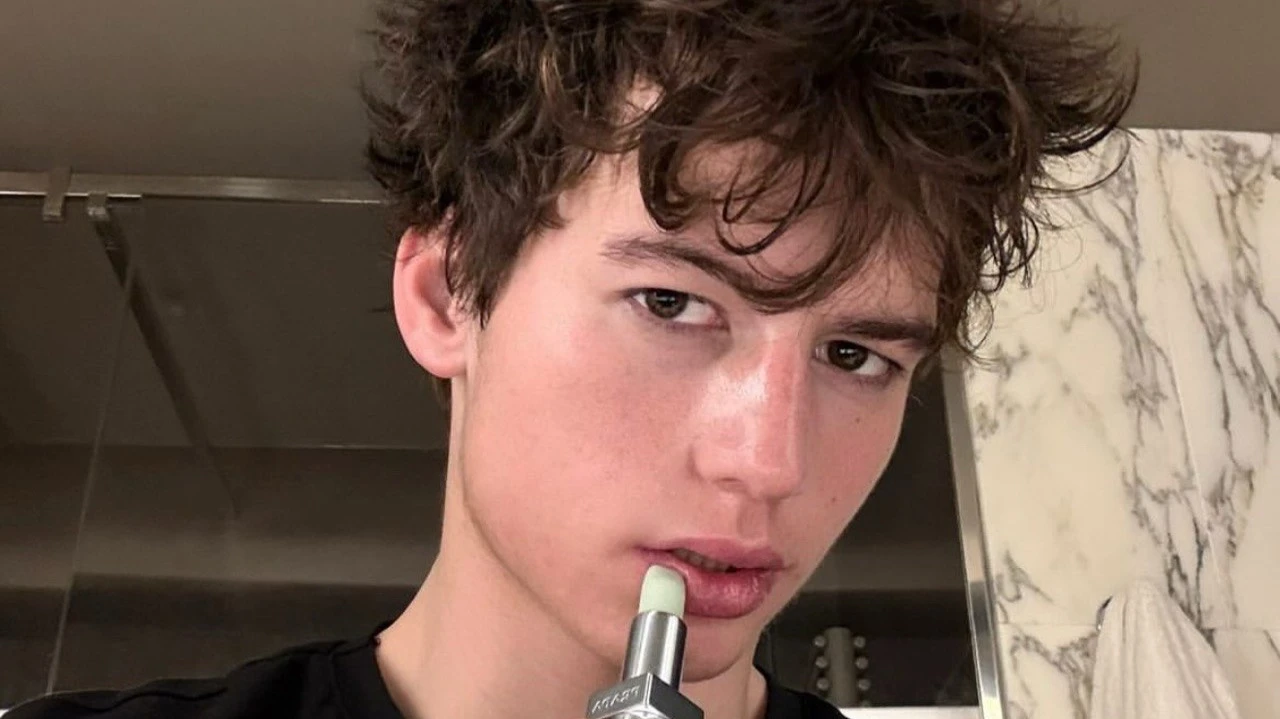
The popularity of decorative and care cosmetics among men is on the rise. It is especially noticeable in TikTok, wrote Bloomberg.
For example, TikTok-influencer Bach Buchan, with 9.4 million followers, uses everyday makeup in his videos, and his posts have racked up millions of views. He's partnered with MAC, Charlotte Tilbury and other beauty brands, Bloomberg writes, and these advertising partnerships could earn him about half a million dollars this year. The heterosexual Bach Bouquin calls his mission "normalizing makeup for men," the publication adds.
On Pinterest, searches for men's skincare grew 230% between Q1 2024 and Q1 2025, men's makeup added 50%, and men's nail design grew 115%. Over the past year, searches for brand names of men's cosmetics and grooming products have also increased: for Dove Men by 69%, Duke Cannon and Dr. Squatch by 32% and 57%, respectively, notes The Vogue Business Beauty Tracker in a November report done in conjunction with Spate.
In August and November, Google Trends recorded the highest peak of interest in men cosmetics in five years.
Will the trend become mainstream and how will it affect the cosmetics market?
K-pop, millennials and Influencer Marketing: How the trend came about
The results of a survey by British analytics company GWI, conducted specifically for Pinterest from Q1 2024 to Q1 2025, show that "young men are rethinking their attitudes towards beauty treatments and abandoning outdated ideas of masculinity in favor of self-care, beauty and well-being," points out British publication Professional Beauty.
This is especially evident in urban areas, where men see self-care as an extension of a healthy lifestyle, a way to boost self-confidence and build an image on social media, Business Research insights indicate. According to Bloomberg, much of this is due to the fact that zoomers strive to look good in the photos and videos they post on social media.
Social networks have played their part: men are as active as women in Influencer Marketing. This means it is easier and, importantly, cheaper for brands to reach the end consumer with their help.
The Asian influence has not been absent either. Alena Nikolaeva, portfolio manager of Astero Falcon, notes that the Asian cosmetics market has long been focused on unisex products, and thanks to the influence of cultural expansion, the popularity of K-pop music groups, doramas and Korean and Japanese brands, a new image of masculinity is also forming in the West.
She cites another factor among the reasons for the relevance of men's cosmetics. Millennials are shaping demand for longevity and a more premium product segment. "Hair-strengthening products, beard and scalp care - sales of everything are growing at double-digit rates," she says.
Because you are worthy of it: old approaches and new possibilities
Men's cosmetics are not a new age invention. Estée Lauder introduced the Aramis line for men back in the 1960s, which included, in addition to aftershave and cologne, bronzing pencils.
The first notable attempts to promote cosmetics as an important part of conventional male beauty lines to the general public came at the beginning of the metrosexual era, Bloomberg writes. In 2000, Estée Lauder reintroduced the Aramis line of concealers, and in 2003, Jean Paul Gaultier launched Le Male Tout Beau, a collection including bronzer, eyeliner and mascara. But none of these products were a huge success. There have been more recent attempts at men's cosmetics, such as Tom Ford for Men concealer, but these products are considered niche at best, Bloomberg writes.
Nikolaeva says in an interview with Oninvest that in the noughties men were just discovering grooming. However, five to seven years later, a men's line became mandatory for beauty houses that wanted to be competitive. Today it is quite possible that we are seeing a similar shift, she believes.
Market Research analysts in an October report predicted the men's cosmetics sector to grow from $89.1 billion in 2024 to $113.8 billion by 2030. Business Research insights estimated this market at $156.8 billion in 2025 and believes it will reach $218.9 billion by 2035.
"When you have a product that half the population doesn't use yet, it always looks like a big opportunity, at least on paper," Oliver Chen, senior analyst at TD Cowen, tells Bloomberg. - It's a big untapped market, and an untapped market always looks attractive."
"The entire range of men's decorative cosmetics is unlikely to become mainstream in the classic sense, but the utilitarian part of it could well open up a new market for brands and grow audiences by tens of billions of dollars"
According to Nikolaeva, men's cosmetics and grooming products are an understandable and important source of margin for companies: men's products are less likely to be hit by price wars, and the average check of a young male consumer is growing faster than that of a woman. In addition, the women's beauty market is oversaturated, and large budgets are required to launch new products.
Companies are already retooling for a male audience, she continues: using gender-neutral marketing and shifting their focus to more utilitarian products - for light skin tone, mattifying, skincare or a hybrid of several functions. They are suitable for everyone, regardless of gender.
Who can capitalize on this trend?
First of all, those companies that already have men's brands in their portfolios and are able to quickly scale new ideas and products are the winners, says Nikolaeva.
L'Oréal's advantage is almost automatic, she says. Since the beginning of the year, the company's securities have grown in value by 5.75% (by the close of trading on November 21). Of the 23 analysts, 11 recommend holding its shares in the portfolio, seven have "buy" and "above market" recommendations. Four more recommend to "sell" the securities, one gives the assessment "below the market".
This spring L'Oréal with Adobe Express organized the project "Men. Beauty and grooming. The game goes on with technology, products and more". As part of the project, the companies selected the best ideas for men's beauty products from German university students. In parallel, L'Oréal is expanding: in October this year, Kering announced the sale of its cosmetics business for €4 billion.
In its report for the third quarter of this year, the company did not separately disclose sales figures for its men's lines, but did mention the "impressive results" of its launched Aesop fragrance line - it is suitable for everyone, regardless of gender, the website said.
Estée Lauder has a strong position in luxury, where men spend significantly more on grooming products and fragrances than women in the same age groups, says Nikolaeva. The company has a men's skincare brand Lab Series in its portfolio, which was launched back in 1987. Estée Lauder also closed a deal to buy Deciem last June. This includes, for example, the gender-neutral brands The Ordinary and NIOD.
Since the beginning of the year, its quotations have grown by almost 20%. Out of 28 analysts, 10 recommend Estée Lauder securities to buy (ratings "buy" and "above market"), 18 - "hold".
Unilever relies primarily on hair care products, where male demand is the most active. At the same time, the mass segment is growing most rapidly, says Nikolaeva.
In June of this year, the company announced that it had entered into an agreement to buy men's care brand Dr. Squatch for $1.5 billion. The purchase allows the corporation to immediately enter a niche that is difficult for large companies to reach: an audience of young men 18-34 years old who value natural ingredients, humor, memes and direct contact with the brand. This simplifies the expansion of the product line and strengthens Unilever's position where it was losing ground to P&G and L'Oreal, says Alyona Nikolaeva.
Unilever shares rose by 6.53% YTD. One analyst advises to keep its shares in the portfolio.
Nikolaeva names Shiseido and Amorepacific among publicly traded companies in Asia.
"They are structurally closer to the male audience due to the peculiarities of local consumption, where cosmetics have long been unisex territory. Asian players can intercept market share in segments where Western brands are cautious," says Nikolaeva.
Shiseido shares have lost more than 20% in price on the Tokyo Stock Exchange since the beginning of the year. Of the 14 analysts, 10 advise "hold" its securities in the portfolio, two have "buy" and "above market" recommendations, and two more have "sell" and "below market" recommendations.
Quotes of South Korean Amorepacific have grown by 28.24% since the beginning of the year. Of 28 analysts, 24 recommend buying its shares, three have a "hold" recommendation and one has a "sell" recommendation.
This article was AI-translated and verified by a human editor