The semiconductor industry could peak in 2027 — Goldman Sachs
Analysts warn of the risk to the semiconductor industry of “building capacity before there is sufficient demand to utilize it”


Market capitalizations of companies in the semiconductor industry have fallen to multi-year lows / Photo: Poetra.RH / Shutterstock.com
Concerns about capital expenditures on AI have reached “extremely high levels,” and valuations of semiconductor companies have fallen to multi-year lows, analysts at Goldman Sachs’ trading division noted in a report cited by Seeking Alpha. This may indicate that hyperscalers’ spending on AI is nearing its peak, traders warn.
Details
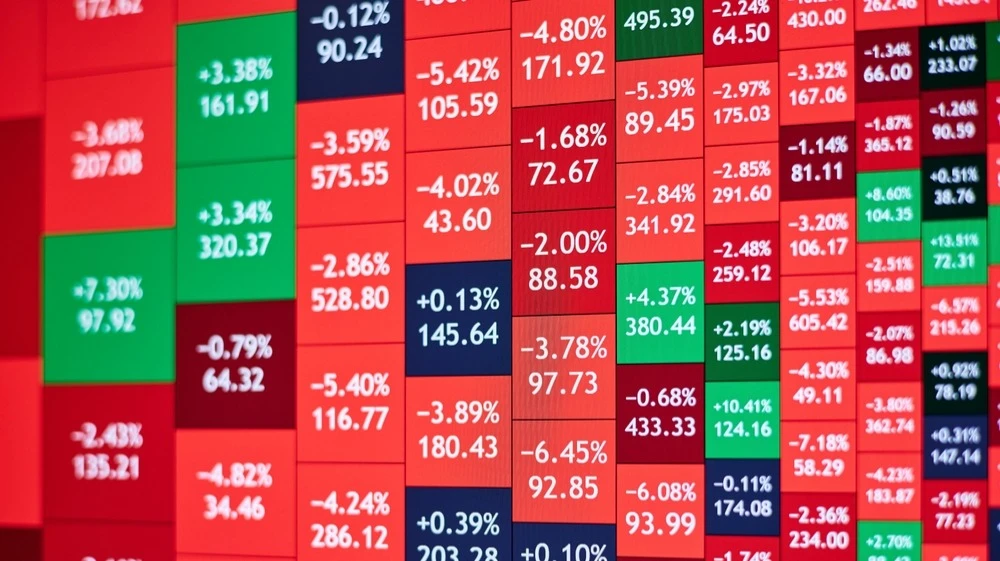
The Philadelphia Semiconductor Index is currently trading at a P/E ratio—which reflects the relationship between a stock’s price and its annual earnings—just above 12, approaching its 2022 lows. Meanwhile, Nvidia’s P/E ratio has fallen to 10—its lowest level since 2013, according to Goldman Sachs’ trading division. Analysts note that the market may be signaling “significant risks to forecasts” for chipmakers’ earnings. The year 2027 could potentially be a “peak” year for the semiconductor industry’s financial results, as the cost of capital and financing options for infrastructure construction “limit the pace at which companies can expand their capacity,” the bank’s note states.
Analysts are drawing parallels with the tech boom of the late 1990s and warning of the risk to the semiconductor industry of “building capacity before there is sufficient demand to utilize it.” Despite these concerns, Goldman Sachs’s equity research division remains optimistic about the industry’s prospects. Its analysts believe that “potential applications for these technologies remain largely untapped,” and “the development of robotics has barely begun, while the automation of workflows in corporate IT systems has yet to extend to legacy infrastructure.”
At the same time, Goldman Sachs acknowledges that “the financial constraints on corporate balance sheets and the limitations of the debt market are very real and are already holding back the industry’s growth.”
Context
The latest round of quarterly earnings reports from tech giants has shown that massive capital expenditures on artificial intelligence are putting increasing pressure on their free cash flow. For the first time in more than a decade, Meta reported a negative figure: a loss of $2.12 billion in the third quarter, compared to a gain of $10.63 billion a year earlier. Alphabet’s free cash flow was negative for the second consecutive quarter, with the deficit widening from $5.9 billion in the second quarter to $9.1 billion in the third. Meanwhile, capital expenditures at both Meta and Google have risen significantly this year. Amazon is not far behind: its negative free cash flow for the 12 months ending in September totaled minus $42.4 billion, compared to a positive $14.8 billion a year earlier. The company is also ramping up capital expenditures this year and plans to increase them next year as well. Of the four hyperscalers that reported this quarter, only Microsoft maintained a positive free cash flow—$18.6 billion for the quarter. However, a year earlier, it stood at $25.7 billion.
Rising capital expenditures on AI infrastructure are reducing the free cash flow of tech giants, forcing them to rely more heavily on debt financing. According to a Goldman Sachs forecast, hyperscalers could issue a record $420 billion in bonds in 2027—60% more than expected in 2026.

Against this backdrop, investors are increasingly skeptical about how quickly large-scale investments in AI will pay off. Previously, tech giants were able to finance these investments thanks to the high profitability of their core businesses. Now, however, problems are arising even in companies’ traditional lines of business, so the market has begun to take a more critical view of their capital expenditures.
This article was AI-translated and verified by a human editor