600% and above: Freedom spotlights five small caps with super-high returns in 2025

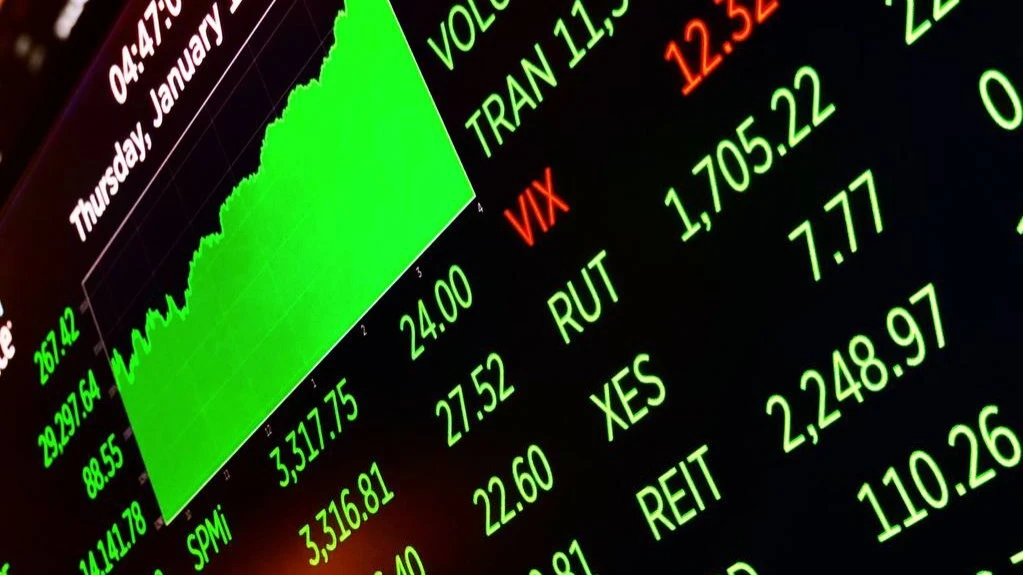
The Russell 2000 index is up about 11% in 2025, while the S&P 500 broader market index is up more than 16% / Photo: X / NYSE
In 2025, small-cap stocks generally lagged their large-cap peers. While the S&P 500 index rose 16.6% over the year, the Russell 2000, which tracks smaller companies, gained 11.1%. Some small caps, however, delivered explosive returns, with share prices rising more than 600%, notes Freedom Broker, whose screen covered companies with market capitalizations between $300 million and $2 billion.
NovaBay Pharmaceuticals
NovaBay Pharmaceuticals (NBY), which returned over 1,319% in 2025, rallied on the back of asset monetization, business restructuring, and speculative demand, Freedom Broker said.
Early in the year, the company completed the sale of its core ophthalmology business and in August declared a special dividend of $0.80 per share, which at the time exceeded 25% of its market value, reflecting its strong cash position and supporting the stock, Freedom Broker notes.
After the divestment, NovaBay explored additional restructuring options while continuing operations focused on its antimicrobial and eye-care products. Investor confidence was further boosted in October, when the company said it had regained compliance with NYSE American listing standards, removing a delisting risk that had loomed in 2024.
Toward year-end, trading was also driven by speculative demand, with retail buying and a short squeeze pushing the stock sharply higher, including a 27.6% gain on December 30 on elevated volume.
The Oncology Institute
The Oncology Institute (TOI), which gained 1,052% in 2025, benefited from growing investor confidence in its value-based oncology model, under which payments from insurers depend on treatment quality and efficiency rather than procedure volumes, Freedom argues.
In the third quarter, revenue rose 37% year over year to $137.0 million, and although the company remained unprofitable with a net loss of $16.5 million, Freedom said the revenue trajectory was strong enough for the company to lift its 2025 revenue guidance to $495-505 million from $460-480 million.
During the year, the company expanded its geographic footprint, added patients, and signed new contracts with insurers and cancer centers, while the rollout of AI tools helped reduce costs and improve care quality, driving improved financial performance, Freedom notes.
Wall Street analysts have issued four “buy” ratings on the stock, with an average target price of $6.50 per share, implying upside of more than 51%.
Relmada Therapeutics
Relmada Therapeutics (RLMD), which rose about 829% in 2025, rebounded from penny-stock levels as investors reacted to breakthrough clinical data and a more diversified pipeline, Freedom said.
A year earlier, the company had been weighed down by failed trials, but in August it reported strong mid-stage results for NDV-01, its bladder cancer drug. The data topped expectations and allowed the company to plan a phase III trial to begin as early as the first half of 2026. Relmada also said it plans to launch a phase II study of sepranolone in 2026 in patients with Prader-Willi syndrome, a rare genetic disorder. The dual focus on oncology and central nervous system diseases has helped attract investor attention to the company’s diversified potential, Freedom argues.
In September, Relmada regained compliance with Nasdaq’s $1 per share minimum bid price, avoiding delisting. These developments signaled the market’s return to confidence in the company’s drug potential after previous setbacks, the analysts wrote.
The stock now has two “buy” ratings (three month ago it had none), according to MarketWatch data, and the average target price of $9.50 per share implies upside of about 114%.
Palvella Therapeutics
Palvella Therapeutics (PVLA), which advanced over 772% in 2025, benefited from clinical trial success, growing analyst coverage, and index inclusion, Freedom said.
In December, the company reported positive mid-stage results for QTORIN rapamycin in a severe rare vascular skin disease with no approved treatments. It later disclosed that the FDA had granted the drug Fast Track status for a different rare indication that also lacks approved therapies, enabling more frequent regulatory interaction and potentially faster approval.
Freedom noted that several firms initiated coverage on the stock during the year. The stock now has 16 “buy” ratings and no “sell” ratings, with an average target price of $185 per share, around 90% above recent levels. In June, Palvella was added to the Russell 3000 and Russell 2000, triggering purchases by index funds and increasing liquidity, Freedom points out.
Avino Silver & Gold Mines
Canada's Avino Silver & Gold Mines (ASM), which gained close to 605% in 2025 and has listings in Toronto and New York, climbed on the back of record financial results and rising production, Freedom said.
In the third quarter, revenue increased 44% year over year to $21.0 million, while net income surged 559% to a record $7.7 million (the previous high was set in the first quarter with $5.6 million), helped by higher output and cost reductions. Analysts said the results strengthened the company’s fundamental attractiveness.
Another driver of investor confidence was the expansion of Avino’s resource base in Durango, Mexico, including the development of the nearby La Preciosa deposit acquired in 2022 with underground development commencing in 2025, Freedom notes.