Brent crude oil prices fell below $76—a four-month low


Photo: Hamara / Shutterstock
Brent crude oil prices fell to their lowest level since February 27—the day before the first U.S. and Israeli strikes on Iran, CNBC noted. At the time of publication, the benchmark Brent crude was trading at $75.51 per barrel—down 2% from the previous close.
Meanwhile, U.S. WTI is down 1.7% to $71.97. Oil prices are showing this trend amid signs that more and more oil tankers, stranded due to the war in the Middle East, are preparing to leave the Strait of Hormuz, Reuters reports.
The day before, the International Maritime Organization presented a plan to evacuate ships from the Strait of Hormuz. According to the organization, more than 11,000 seafarers stranded in the Persian Gulf will begin to exit through the Strait of Hormuz once safety guarantees are received. The operation will be carried out “in close cooperation with Iran, Oman, all other coastal states in the region, the United States, and the shipping industry,” the organization noted.
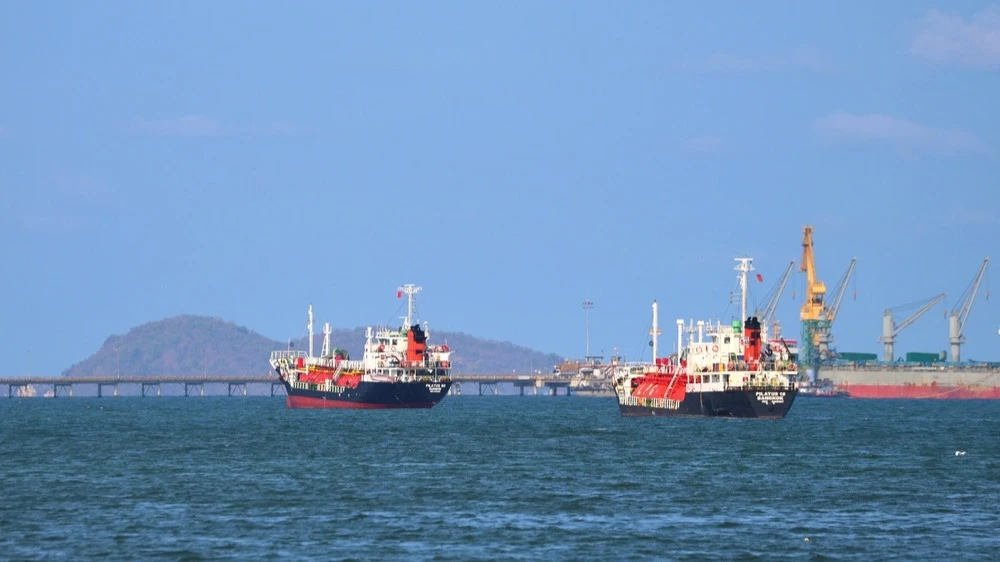
The de facto suspension of shipping through the Strait of Hormuz in late February resulted in nearly 1,200 ships carrying cargo worth $125 billion being stranded in the Middle East, the Financial Times reports, citing data from the insurance company Allianz. Before the conflict, about 135 ships passed through the strait each day, carrying one-fifth of the world’s oil and gas. The closure of shipping on this waterway caused massive turmoil in energy markets and drove oil prices to over $100 per barrel.
According to the International Maritime Organization, more than 40 ships have been struck by missiles during the recent months of active hostilities in the Middle East, and 14 sailors have been killed. Most of the damaged ships are tankers.
The situation in the Middle East has also put significant pressure on supply chains, noted Aditi Rasquinya, head of DHL Global Forwarding Greater China, during a CNBC interview. “With the reopening of the [Strait of Hormuz], a significant portion of these problems may be resolved,” she added, emphasizing, however, that it will take time to restore supply chains.
This article was AI-translated and verified by a human editor