H&M's sales fell short of forecasts. How does the company plan to overcome the crisis?
The Swedish retailer's operating profit in the second quarter fell short of market expectations, and its stock price dropped in response

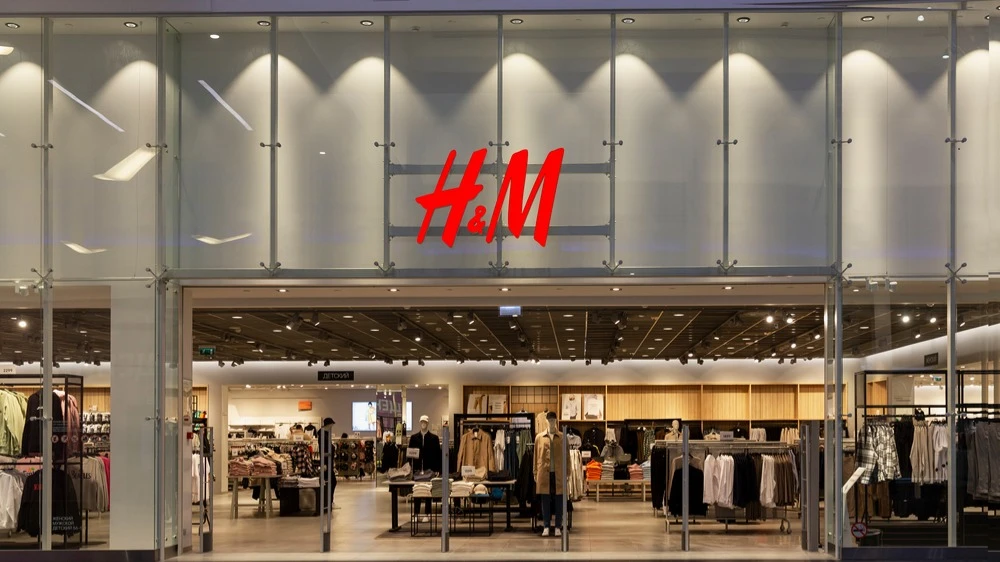
Swedish clothing retailer H&M reported disappointing results for the second quarter of 2026. Photo: Deman/Shutterstock
Swedish clothing retailer H&M reported disappointing results for the second quarter of 2026. This poses new challenges for the company as it works to turn its business around amid fierce competition and consumer spending caution, Bloomberg notes. Following the release of the earnings report, H&M shares fell 5% in Stockholm trading but subsequently slowed their decline to 0.6%.
Details
— H&M reported an operating profit of 5.91 billion kronor ($610 million)—a figure that remained unchanged from the same quarter last year but fell short of analysts’ average forecast of 6.3 billion kronor ($650 million), according to Bloomberg. However, excluding one-time restructuring costs of 679 million kronor related to organizational changes, the company’s operating profit rose by 11% in the last quarter.
— H&M’s net sales for the reporting period fell 3.3% to 54.83 billion kronor, falling short of analysts’ forecast of 55.27 billion kronor — due to pressure from the strengthening Swedish krona, notes the WSJ. In local currencies, the company’s sales rose 1% in March—the first month of the second fiscal quarter. However, a decline in consumer sentiment in H&M’s key markets, including the United Kingdom and Germany, in the following months led to an overall 1% decline in the retailer’s sales for the quarter when converted to local currencies.
H&M expects its sales in local currencies in June—the first month of the third quarter—to remain at last year’s level. CEO Daniel Erver’s efforts to restore growth are coming under increasing scrutiny after several years of mixed results, Bloomberg reports. Following the release of the results, the CEO acknowledged that the company’s sales “are still not at the levels we would like them to be.”
“Looking at sales as a whole, we’re not satisfied,” Erver said. “We had plans to achieve better results this quarter,” but even the women’s apparel segment, where H&M had been striving for greater flexibility and better trend-spotting, “was affected by some supply disruptions,” he added.
— At the same time, H&M reported a gross margin of 56.6% for the second quarter, compared with 55.4% a year earlier. This occurred despite the war in the Middle East, Reuters notes. CEO Daniel Erver noted that H&M’s efforts to improve inventory management supported profitability. “However, stricter inventory control has, in some cases, limited our ability to fully meet demand,” he emphasized. “We believe there is potential to further improve the accuracy of [forecasts] to strike a better balance between product availability and demand.”
— Although the company maintained its financial outlook for the year, it pointed to signs of weak consumer demand in regions such as Western Europe—a key market for H&M’s women’s apparel. Although the relatively weak dollar is providing some support, H&M expects transportation costs to rise, mainly due to higher spot prices for air freight and fuel surcharges.
H&M's Outlook
Bloomberg notes that the Swedish giant’s performance has been volatile in recent years. Although investors reacted positively to the company’s recent improvement in margins, their focus has now shifted to whether the retailer can return to stable revenue growth, the agency reports.
The situation is complicated by the fact that H&M has to compete for customers with low-cost online platforms, such as Shein, and secondhand marketplaces, according to Reuters. These low-cost competitors are putting pressure on the company’s business by attracting budget-conscious consumers with low prices and faster product turnover, forcing H&M to speed up its own deliveries and revamp its logistics.
Since taking office as CEO of H&M in 2024, Daniel Erver has been working to improve the company’s product lineup, optimize pricing, and launch marketing campaigns as part of a strategy to turn the business around. H&M is also striving to respond quickly to trends, modernize its stores, and reduce excess inventory, while also reducing its reliance on Asian supply chains, according to the WSJ. These efforts have helped restore the retailer’s margins, but demand in several key markets remains fragile.
H&M added that the investments in logistics and digital infrastructure planned for the second half of 2026 will speed up order processing. This will help allocate remaining inventory more accurately and eliminate potential product shortages.
Analysts at Jefferies noted that H&M’s results confirm that the company’s operational discipline is helping to “offset the lack of revenue growth”: “Inventory control is even more impressive and reduces the risk of having to hold massive sales.”
Of the 26 analysts who cover H&M stock, one recommends buying the company’s shares (Buy), 13 advise holding the stock (Hold), and 12 recommend selling (Underperform and Sell ratings). The consensus rating is “Underperform.”
This article was AI-translated and verified by a human editor