"I Just Want to Get Out": Why the "Bond King" Decided to Keep His Money Away from AI
"There will inevitably be losers in the AI race," and the risk of betting on the loser has become quite high, explained Jeffrey Gundlach

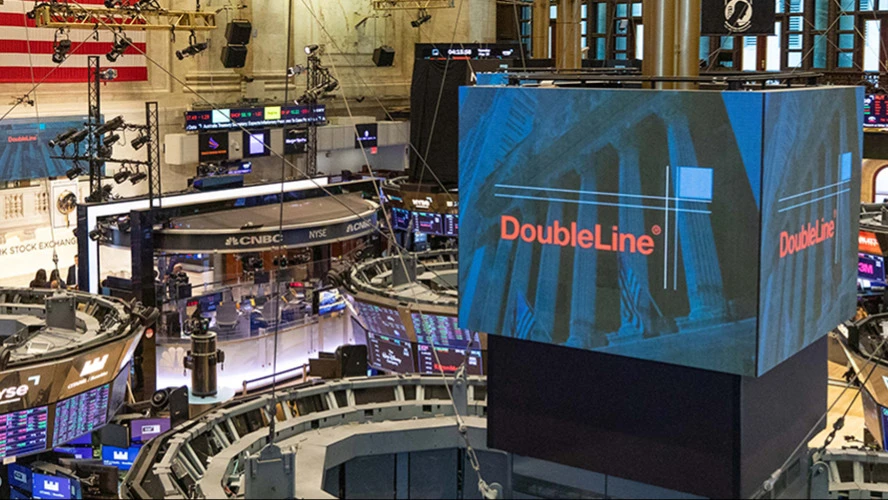
DoubleLine Capital CEO Reduced His Portfolio's Equity Exposure, Fearing an AI Bubble / Photo: Facebook / DoubleLine Capital
"The Bond King" Jeffrey Gundlach, known for his bets on mortgage-backed securities and other debt instruments and for predicting the collapse of the U.S. housing market in 2007, has sounded the alarm over the hype surrounding artificial intelligence, according to MarketWatch. Gundlach’s investment firm, DoubleLine Capital, has reduced the proportion of stocks in its portfolio in a way that allows it to “step away from the epicenter” of one of the hottest investment topics of the past decades.
Details
Jeffrey Gundlach, founder of DoubleLine Capital, reduced the proportion of stocks in his portfolio from 40% to 30% and allocated capital to one of the equally weighted Fortune 500 indices, he said in an episode of *The Julia La Roche Podcast*. He explained that this was done to minimize investments in AI companies.
Gandlach did not specify which equal-weight index fund he recommends. In the DoubleLine Fortune 500 Equal Weight ETF, the industrial sector accounts for more than 17% of assets, while the technology sector accounts for just over 9%, MarketWatch notes. However, the publication notes that there are still plenty of AI-related companies among the top ten holdings, including Applied Materials, Marvell Technology, and Palo Alto Networks.
According to Gandlach, the goal is to reduce the risk of excessive concentration in AI stocks. “If there are 440 companies in the index, each one accounts for about 0.23%. That means you won’t end up with 40% of your portfolio in AI. You’ll have practically nothing there. You’re staying as far away from it as possible. That’s why everything I’m recommending right now is completely separate from AI exposure,” the investor said.
He recommended allocating 30% of the portfolio to fixed-income instruments, including high-quality bonds and emerging-market debt denominated in local currencies. Gandlach advises allocating another 10% to the DoubleLine Commodity Strategy ETF, which provides exposure to the broad commodities market. The financier believes the remaining 10% should be held in gold. The remaining 20% should be allocated to relatively liquid instruments that can serve as a reserve for future purchases: the DoubleLine Commercial Real Estate Debt ETF and the DoubleLine Flexible Income bond fund.
“Please note: there is nothing even remotely resembling AI in any part of this portfolio. There’s absolutely nothing like that here,” said Gandlach. “I used to be perfectly fine with having some exposure to AI through other stock market instruments, but since last week, I’ve just wanted to get out.”
What's Wrong with AI
Gandlach stated that he is concerned about a situation in which, when it comes to AI-related trading, “we have already passed the point where everything seems perfect.” As an example, he pointed to the widening of credit spreads on debt issued by AI-related companies amid “insatiable demand” from corporations for borrowed funds; according to him, these companies “won’t be affected even if rates rise by 200 basis points.”
Gandlach noted: If SpaceX truly believes that its potential market is equal to a quarter of global GDP, then there is very little room left for other companies to capture their share of that growth.
“In the AI race for the Holy Grail, there will inevitably be casualties and losers. This will happen, and that is precisely what will lead to the next major sell-off in risky assets. Have we already reached that point? Well, I believe we’re close enough to it that I want to get out of the thick of it. I’m not selling off assets or going short. But I want to stay further and further away from the areas that will be hit the hardest,” he said.
Context
Last week, leaders in the AI industry launched a high-profile discussion about the need to slow down the development of this technology due to security risks. Anthropic CEO Dario Amodei was the first to make this call: he warned that continued rapid advancement of state-of-the-art models could lead to “catastrophic damage.” His position was supported by OpenAI CEO Sam Altman and xAI CEO Elon Musk. All of this quickly affected the stock market: AI stocks came under pressure, and Citi analysts cited the debate over limiting AI development as one of the risks to the U.S. stock market.
According to The Information, the Fed’s decision to raise interest rates could pose another challenge for the sector in the short term. The artificial intelligence boom is fueled largely by debt, and rising borrowing costs could make it harder to secure financing. This will primarily affect smaller companies, such as Rum Group, which is set to build a data center as part of a deal with Anthropic, notes Guru Focus. Major tech players are in a more advantageous position: Amazon, Meta Platforms, and Google have already secured significant amounts of debt financing, which provides them with some protection against rising interest rates, the publication writes.
This article was AI-translated and verified by a human editor