Immix Biopharma is targeting an $11 billion market. What will happen to its stock?
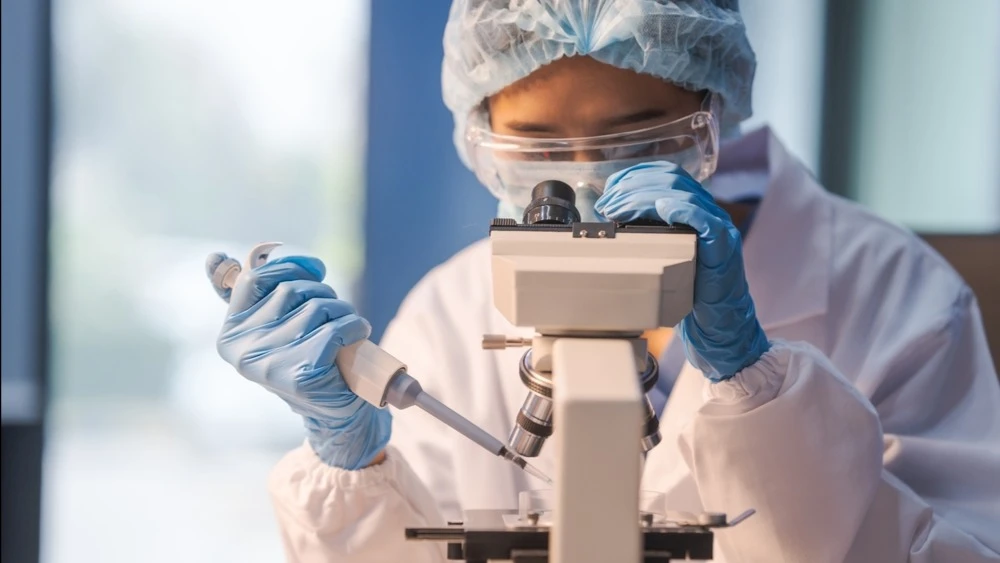
Immix initially focused on developing anti-cancer and anti-inflammatory drugs / Photo: Shutterstock.com
Small biotech Immix Biaopharma has decided to turn the therapy market upside down for a dangerous disease that can cause heart, kidney and liver failure - AL-amyloidosis. The latest clinical data show: its experimental drug has a high chance of approval, according to investment bank HC Wainwright. Grand View Research estimates that the global AL-amyloidosis drug market could grow to $11.13 billion in 2033.
A test tube idea
Immix Biopharma was founded in 2012. The idea for its creation came from Ilya Rakhman, a medical researcher and cell biologist, who, as the company wrote, wanted to put academic discoveries into practice.
By the time he founded Immix, he had extensive experience in clinical trials. He was one of the first to test drugs against a specific protein whose activity can lead to inflammatory and severe viral diseases, as well as the growth of cancerous tumors. Rahman later founded an organization that conducted clinical trials on behalf of pharmaceutical companies.
Rahman's partners in the business were patent attorney Sean Senn, as well as scientist Vladimir Torchilin.
The latter Immix calls a "scientific co-founder". Torchilin, one of the world's leading specialists in medical nanotechnology, graduated from the Faculty of Chemistry at Moscow State University and from the Institute of Experimental Cardiology. In particular, he worked on creating therapies for blood clots, strokes and heart attacks. In 1991, Torchilin moved to the United States and continued his career there. In 2024, the ScholarGPS service, which ranks scientists in their fields by the number of citations of their work in articles by other authors, named Torchilin a "highly ranked scientist," of which there are only 0.05% in the world.
Clinical pathway
Initially, Immix, as Rahman intended, focused on the development of anti-cancer and anti-inflammatory drugs. Chief among them was the IMX-110 molecule for treating solid tumors - those that can be seen visually. It first blocks the very specific proteins that help tumors grow and then destroys them. Clinical trials of IMX-110 are ongoing in Australia and the US.
In 2022, Immix expanded its development portfolio by acquiring the rights to drug candidate NXC-201 from Israel's Hadassah Hospital. This is a cell-based therapy (CAR-T) that has the potential to treat certain cancers as well as AL amyloidosis, a condition in which amyloid protein builds up in the heart, kidneys, liver and other vital organs, eventually causing organ failure and death. The deal is worth $20 million in licensing fees and future milestone payments, plus a commitment to invest Hadassah's clinical program $12 million over four years.
Current treatment for AL amyloidosis includes combinations of targeted drugs and chemotherapy. However, there are no approved therapies for patients with relapsed or refractory AL amyloidosis. In contrast to such regimens, NXC-201 is a single CAR-T therapy.
In May 2026, Immix published data showing that NXC-201 was effective in patients with recurrent AL amyloidosis in 95% of cases. One year after her drug was administered, 19 of 20 patients - one of two groups of patients she monitored - were in complete remission. There were no signs of the disease, even in those who had not been helped by the four previous lines of therapy.
Immix plans to submit data on a second group of subjects in September 2026 and March 2027, and then apply for its registration, after which it can begin commercialization.
It is also about to begin trials of the drug as a first-line therapy - in patients who have not yet received any treatment.
The company points out that NXC-201 has orphan status in the US and Europe. This means that no other company will be able to register its analog for the same indication for seven years in the US and for ten years in the EU.
What investors need to know
In the early years, Immix funded operations through grants, promissory notes and bond sales; in 2021, it did an IPO, selling 4.2 million shares at $5 each - for a total of $21 million, excluding the underwriters' option.
Since then, its quotes have risen 70%.
After the publication of updated clinical data on NXC-201, investment bank HC Wainwright raised the target price of the company's shares by a third to $20, which is 2.4 times higher than the value of the securities at the close of trading on June 12. Analysts believe that the results raised the probability of approval of the drug from 85 to 95%. They forecast that at the peak of sales NXC-201 may take 55% of the market for its indication against 40%, which the investment bank expected earlier.
According to Grand View Research, the AL amyloidosis drugs market will grow at an annual rate of 7.5% to reach $11.13 billion in 2033, the company writes in its 2025 report.
So far, the company's operations are not generating revenue for it. Immix warns that it won't turn a profit for years to come, perhaps never. Moreover, its operating losses will grow as research continues, the company notes. Among other risks to its business, Immix cites increased competition: pharma giants Abbvie and Janssen, a pharmaceutical subsidiary of Johnson & Johnson, among others, have publicly announced the development of AL amyloidosis treatments, its report says.
Immix securities have four ratings from Wall Street analysts and all of them are Buy. The average target is $18.5, which implies the growth potential of more than double of the last closing price.