JPMorgan advised medium-term investors to buy out any stock drawdowns
The weakness of stock markets due to the war in Iran is in sharp contrast to the situation that led to the collapse of quotations in 2022, the bank's strategists are convinced

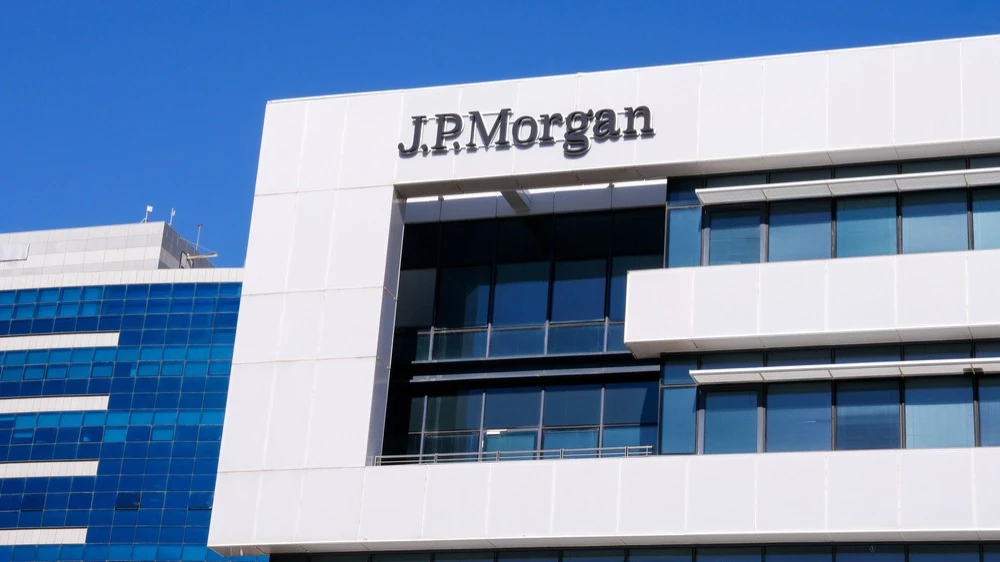
JPMorgan Chase urged clients to stay calm and buy out drawdowns / Photo: StockStudio Aerials/Shutterstock.com
Investors with a planning horizon of three months or more should use any decline in stock markets to build up positions, JPMorgan Chase said. The team of analysts at the largest US bank notes the emergence of clear signals of oversold stocks and considers current levels attractive for buying interest rate-sensitive assets.
Details
Exchange indicators point to a clear exhaustion of the wave of sell-offs, so market participants should not "succumb to bearish sentiment," MarketWatch quotes a research note by JPMorgan, published on April 13. The bank believes that current political, economic and military restraints will remain in place and prevent further geopolitical escalation.
The current situation is quite different from the massive market crash in 2022, said JPMorgan analyst Mislav Matejka. Inflationary pressures are weaker now due to the absence of pandemic complications, reduced pricing power of corporations and wage restraint due to the development of artificial intelligence technologies. In this regard, the largest Wall Street bank favors instruments with a long payback horizon, the price of which directly depends on the dynamics of interest rates, MarketWatch points out.
JPMorgan expects that as geopolitical tensions subside, the trends that prevailed before the Iranian war will return to the markets. In particular, we are talking about the outperformance of international assets and emerging market equities relative to the U.S. market, as well as a shift in focus towards small-cap stocks and "value stocks" as opposed to "growth stocks".
The bank urged clients to pay attention to the relative cheapness of stocks outside the U.S.: emerging market assets are trading at a 34% discount to developed markets, and for every dollar of expected earnings of U.S. companies, investors pay almost one and a half times more than for similar earnings in Europe - the corresponding P/E ratio for the MSCI Europe index is 14 versus 19.5 for the S&P 500.
Context
The war in Iran and the resulting record jump in oil prices had caused global stock markets to collapse by nearly $10 trillion by early April, Reuters calculated. Last week, the S&P 500 index rose more than 3.5%, the Dow Jones added 3% and the Nasdaq Composite gained more than 4% on the back of an agreement between the U.S. and Iran on a two-week cease-fire in the Persian Gulf and the start of peace talks.
Following the failure of Washington's talks with Tehran over the weekend, Europe's benchmark STOXX 600 stock index is down 0.7 percent on April 13, while futures on its U.S. counterpart, the S&P 500, are down 0.5 percent.
"Today's market reaction is quite telling because [stock] prices are down a little bit, [bond] yields are up a little bit, but we're not seeing as sharp a collapse as we saw a couple weeks ago," Lauren van Biljon, senior portfolio manager at Allspring Global Investments, told Reuters. - The odds that a comprehensive agreement could be reached in the first round of discussions were initially extremely low, and obviously that didn't happen."
This article was AI-translated and verified by a human editor