Luxury companies lost €250 billion in market value in 2026. Is it time to buy their stock?

Leading European luxury goods manufacturers have lost about €250 billion in market value this year amid falling demand in China and stock market volatility, according to calculations by the Financial Times (FT). However, some analysts believe that the luxury sector is faring better than investor sentiment suggests, and see the now-cheaper stocks as an opportunity for long-term investment.
What's Happening in the Luxury Market
The six largest publicly traded companies in the European luxury sector—LVMH, Hermès, Kering, Richemont, Prada, and Moncler—have collectively lost €251 billion in market capitalization since the beginning of the year. The industry’s heavyweights—LVMH and Hermès—were hit the hardest, with their market values falling by €131.6 billion and €93.3 billion, respectively. LVMH’s stock has plummeted by nearly 40% since the start of the year, making it one of the worst-performing stocks on France’s CAC 40 index.
The biggest pressure on luxury goods stocks came from a decline in demand in China, which had been the industry’s growth engine for more than a decade. According to the FT, Chinese consumer spending has been undermined by a protracted crisis in the real estate market, a decline in local stock indices, and tighter controls on offshore capital. As a result, in the third quarter, sales by LVMH’s key division—fashion and leather goods—to Chinese customers worldwide fell by approximately 15% year-over-year. At Kering (owner of Gucci and Saint Laurent), sales to Chinese customers declined by 15–20%.
What Analysts Are Saying
Goldman Sachs notes that, although consumers had many reasons to postpone purchases of non-essential goods, external conditions were unlikely to be the main problem. The investment bank attributes the weak results of recent years primarily to “strategic inertia” on the part of the luxury brands themselves. According to analysts’ estimates, traditional luxury brands have raised prices by approximately 60% since mid-2019. This aggressive pricing strategy, combined with a lack of new products, has led many shoppers to stop viewing luxury goods as worth the money and to stop buying them.
Nevertheless, the author of the report, Erwan Rambour, head of the European Luxury and Lifestyle division at Goldman Sachs Research, disagrees with the “bears” who believe that the luxury sector has stopped growing for the long term. According to his estimates, over the past 25 years, revenue for companies in the sector has grown by an average of 6% per year. Rambour forecasts a recovery: revenue growth for key companies will reach 6% in 2026 and accelerate to 7% in 2027.
Both Goldman Sachs and Morningstar cite the U.S. as the main driver of growth. According to Rambur, paradoxical as it may seem, the U.S. still remains an “emerging market” for luxury goods: there are many wealthy people there, but historically they have spent very little on luxury items. After the pandemic, the situation began to change, and brands are actively opening new stores. Morningstar also believes that the U.S. is leading the sector’s recovery and expects the strong U.S. stock market to support spending on luxury goods.
However, according to the FT, demand in the U.S. has also begun to weaken in recent months: against the backdrop of a cooling stock market and rising gasoline prices, Americans’ spending on luxury goods fell by at least 4% in July, August, and September, according to data from Citi.
What Else You Need to Know About the Luxury Market
At the same time, certain product categories remain stable. The jewelry brands Tiffany (LVMH) and Boucheron (Kering) posted double-digit sales growth in the third quarter, while sales of Hermès’s most expensive handbags, including the Birkin, rose by 10.8%. By comparison, sales at Hermès’s ready-to-wear and accessories division fell by 2% during the same period.
Nevertheless, according to a Morningstar industry report based on second-quarter data, the luxury sector showed signs of recovery. Sales growth accelerated to its highest level since 2023, and profitability began to stabilize. However, investors remain skeptical about the sustainability of the rebound, which is why the stocks of many companies, including LVMH, remain under pressure and are trading below what Morningstar estimates to be their fair value.
China remains the main risk for the industry, according to Elena Sokolova, senior equity analyst at Morningstar: the weakness of the real estate market continues to undermine Chinese consumers’ confidence and spending. Nevertheless, she sees opportunities in the current situation: “Investors remain cautious, but fundamentals are holding up better than sentiment would suggest. This divergence continues to create opportunities for those willing to look beyond short-term uncertainty.”
What Analysts Are Betting On
Among the undervalued stocks in the luxury sector, Morningstar highlights four favorites:
— LVMH. The company’s stock has plummeted nearly 40% since the start of the year. Analysts describe the current prices as a “very attractive entry point” for this high-quality asset. According to Morningstar’s estimate, the fair value of the stock is €590—54% higher than the most recent closing price.
— Kering. According to Sokolova, the group’s stock is near its bottom. Gucci, Kering’s flagship brand, is currently facing difficulties, but in the long term, it will be able to regain its pricing power and appeal to consumers. The analyst attributes this to the brand’s high name recognition, substantial marketing resources, control over distribution, and access to top creative talent. The analyst estimates the company’s “fair value” at €327 per share—more than 80% higher than its most recent closing price.
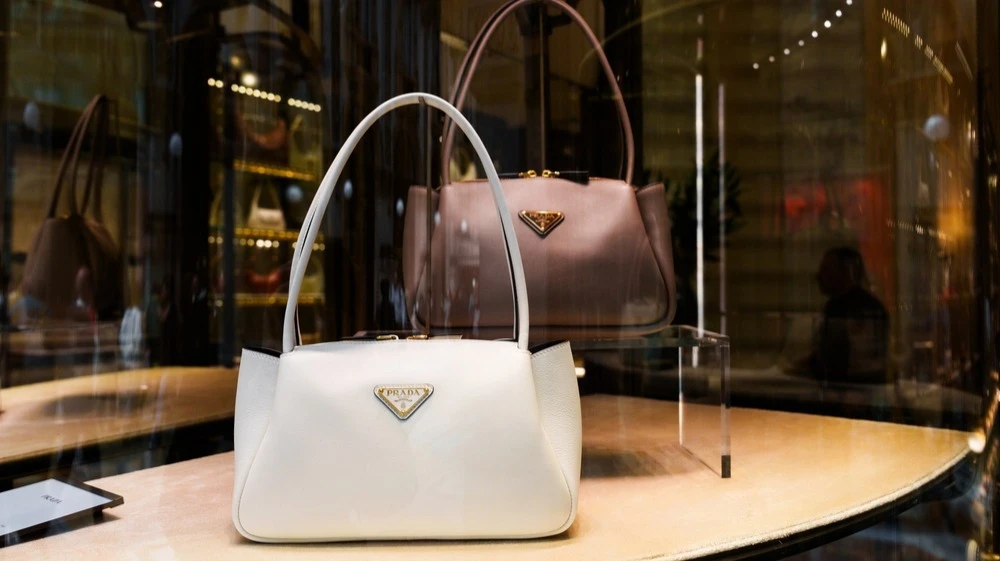
— Prada. The company is outperforming most of its competitors, but its shares are still trading at low multiples, which is why Sokolova considers them attractive. The analyst acknowledges the risks: the success of the Miu Miu brand may be short-lived, but a potential slowdown is already factored into Morningstar’s forecasts.
— Capri Holdings (Michael Kors, Jimmy Choo). Shares are trading around $16, with a fair value of $45.50 according to Morningstar. Following the collapse of Tapestry’s takeover bid and the sale of Versace to Prada for $1.37 billion, Capri is restructuring its business. According to Sokolova, Michael Kors lost market share due to its focus on discount sales channels, but the brand’s positioning is already improving. Jimmy Choo is currently unprofitable but could become an attractive acquisition target if Capri decides to sell it. This is the riskiest stock in the selection: Morningstar rates the uncertainty surrounding it as very high.
This article was AI-translated and verified by a human editor