Morning in New York: AI Leaders Lose Ground, and Inflation Adds Fuel to the Fire

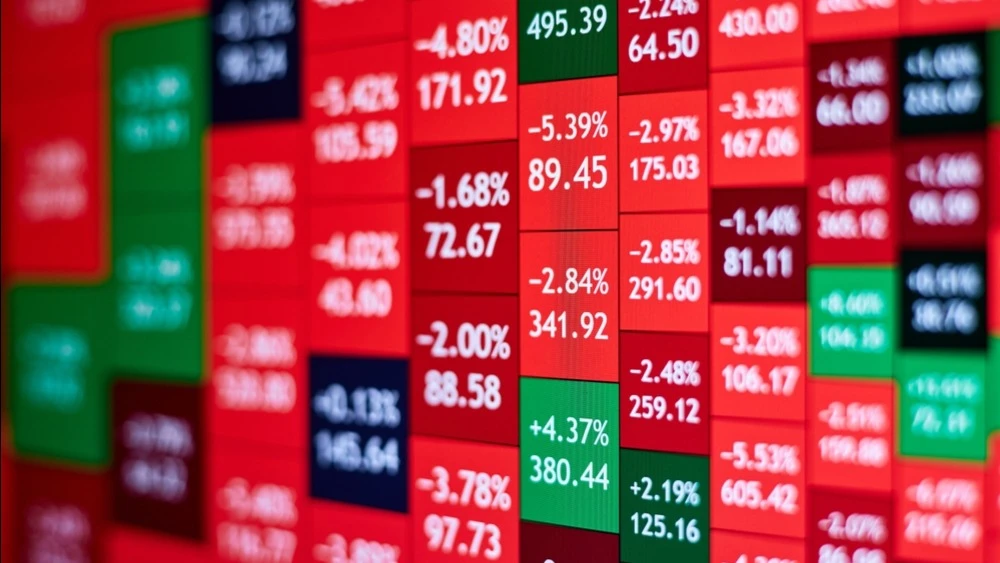
A key challenge for the U.S. market will be the continued pressure on companies involved in AI infrastructure / Photo: marketlan / Shutterstock
A daily review and forecast of events in the U.S. stock market by Mikhail Denislamov, Deputy Director of Capital Markets Research at Freedom Broker.
We expect
The main event of the day will be the release of September retail sales and producer price data at 8:30 a.m. Eastern Time (ET). Yesterday, the core CPI rose 0.3% month-over-month, compared with a consensus estimate of 0.2%. As we noted, this result provided an argument in favor of a rate hike at the October 27–28 meeting, but does not yet guarantee it: today’s data will add to the economic picture. The consensus forecast calls for a 0.6% MoM increase in the PPI (following 0.4% in August) and a 0.3% MoM increase in the core PPI (following 0.2%). Analysts at Freedom Broker expect 0.5% and 0.26%, respectively.
Retail sales, according to the consensus, are expected to rise by 0.3% MoM (following a 1.2% increase), while the control group is also projected to rise by 0.3% (following a 1.4% increase). In our view, the overall figure will be in line with the consensus, while the control group will rise by only about 0.1%: higher fuel prices will boost gas station revenue but may force consumers to cut back on other purchases. If our estimates are confirmed, the case for an October rate hike will weaken, but a weak control group will heighten concerns about consumer demand.
A key test for the U.S. market will be whether pressure on companies related to AI infrastructure continues. Nasdaq-100 futures are down about 1% today following yesterday’s sell-off, during which CoreWeave (CRWV) lost 15.5% and Oracle (ORCL) lost 8.8%. The situation in the bond market is causing particular concern: CoreWeave bonds maturing in 2032 have fallen below 80% of face value, with a yield of about 15%. Despite a $104 billion backlog of contracted revenue, investors are increasingly skeptical about the company’s ability to finance a large-scale infrastructure expansion on acceptable terms. The high cost of debt is becoming a risk in and of itself for the entire segment. Against this backdrop, we expect volatility in the technology sector to remain elevated.
At 4:30 p.m. (ET), Beth Hammack, president of the Federal Reserve Bank of Cleveland, will participate in the discussion, and at 11:30 p.m. (ET), Federal Reserve Chairman Kevin Warsh will hold a discussion with IMF Managing Director Kristalina Georgieva in Bangkok.
Before the market opens, the focus will be on earnings reports from Charles Schwab (SCHW), BNY (BNY), PNC Financial (PNC), U.S. Bancorp (USB), Marsh (MRSH), and Prologis (PLD). In the banking sector, attention will be on fee income and net interest income amid high long-term interest rates. After the market closes, Interactive Brokers (IBKR), J.B. Hunt (JBHT), and Alcoa (AA) will report their financial results.
S&P 500 futures are trading in moderately negative territory, with Nasdaq-100 contracts leading the decline. We anticipate increased volatility and assess the risk balance as moderately negative due to a reassessment of risks in AI-related stocks. The decline in long-term Treasury yields is providing some support, although the main reason for this movement is actually risk-off sentiment in the stock market, rather than a decline in U.S. inflation expectations.
What to Watch for in the Pre-Market
— TSMC (TSM) shares are down nearly 2%, but in our view, this reflects the broader sell-off in the semiconductor sector rather than a “pure” reaction to the earnings report. The forecast, however, confirms strong demand for AI chips: the company expects Q4 revenue of $52.3–54.3 billion, compared to the consensus estimate of $48.8 billion. Margins, however, have stopped growing: the gross margin forecast (65–67%) matched the consensus (66.1%), while the midpoint of the operating margin range (56.5–58.5%) came in below the expected 58%. Net income for the third quarter rose 69% year-over-year to 763.1 billion New Taiwan dollars, compared with a consensus estimate of 746.3 billion.
— SK Hynix (SKHY) shares are falling by more than 6% amid a broad sell-off among memory manufacturers in Asia. In Seoul, SK Hynix and Samsung Electronics shares lost more than 10% during trading, and the KOSPI index’s drop of more than 8% led to a temporary halt in trading. The sell-off in Asia also poses risks for Micron (MU) and SanDisk (SNDK) shares.
— Ericsson (ERIC) shares are up 12% following the release of its third-quarter earnings report. Revenue rose 6% year-over-year to 59.5 billion Swedish kronor (organic growth of 7%), beating the consensus estimate of 55.4 billion. Adjusted EBITA came in at 10.1 billion kronor, compared to a consensus estimate of 7.9 billion, with a margin of 17%. Margin growth in the Networks segment was supported by retroactive licensing payments (IPR). However, management views the radio access network (RAN) market as stagnant and expects rising component costs to put pressure on the gross margin next year.
— Rocket Lab (RKLB) shares are down nearly 10% after the company postponed the first launch of its Neutron medium-lift rocket to 2027. Rocket Lab had previously targeted late 2026, but in August, the company warned that the launch window before the end of the year was narrowing. The postponement delays the company’s entry into the medium-lift launch market and deprives the stock of its nearest catalyst.
The Market on the Eve of...
Trading on U.S. stock markets on October 14 ended with losses. The S&P 500 fell 1.11%, the Nasdaq-100 dropped 2.02%, the Russell 2000 declined 1.93%, and the Dow Jones remained virtually unchanged (−0.09%). SPY (−1.08%) underperformed the equally weighted RSP (−0.57%) by 0.51 percentage points, indicating that selling pressure was concentrated in large-cap stocks. The number of declining and advancing stocks within the S&P 500 was roughly equal (241 to 259 in favor of the bears). The technology sector (XLK: −2.98%) was the underperformer: it experienced a broad sell-off that hit non-cloud providers the hardest. The healthcare sector (XLV: +2.53%) led the gains, driven by pharmaceuticals and health insurers, followed by consumer staples (XLP: +2.22%).

Core CPI rose 0.3% MoM in September, the same as in August, against a consensus estimate of 0.2%, while the year-over-year rate accelerated from 2.4% to 2.6%, against a consensus estimate of 2.5%. The overall index rose 0.6% MoM, in line with the consensus (0.4% in August), while annual inflation accelerated from 3.4% to 3.7%, compared with a consensus of 3.6%. Prices for services, excluding energy and housing, rose at their fastest pace since January. In the Beige Book, three of the 12 Fed districts described price increases as strong, while three others noted mounting cost pressures.
Following the release of the CPI, which came in above expectations on a year-over-year basis, Treasury yields rose sharply, and the probability of a rate hike at the October 27–28 meeting exceeded 50%. By the close of trading, the trend reversed: the yield on 2-year Treasuries retreated from its morning peak by more than 15 basis points and ended the day up 2 basis points, at 4.81%; the 10-year yield fell by 3 basis points to 5.19%, the 30-year yield by 4 basis points to 5.52%, and the probability of an October rate hike dropped to 32%. The indices spent the second half of the session near their daily lows, and the movement in Treasuries was driven by a capital shift toward safe-haven assets. Fed Vice Chair for Supervision Michelle Bowman stated that she sees no urgency for the regulator to take new action.
The S&P 500 broke a streak of 53 sessions without a decline of more than 1%. More than 40% of SPY’s decline was attributable to three stocks: Nvidia (NVDA) accounted for 27 basis points, Microsoft (MSFT) by 11 basis points, and AMD (AMD) by 9 basis points. Large-cap value stocks ended the day unchanged, while large-cap growth stocks fell by 1.90%. At the same time, the Russell 2000’s drop of nearly 2% coincided with an initial rise in 2-year Treasury yields, indicating that the market was under pressure not only from selling in the AI sector but also from expectations of tighter monetary policy.
This article was AI-translated and verified by a human editor