Morning in New York: Oil Risk Returns


Photo: photomaster / Shutterstock
A daily review and forecast of events in the U.S. stock market by Mikhail Denislamov, Deputy Director of Freedom Capital Markets Research.
We expect
The upcoming session will take place against the backdrop of a sharp deterioration in the situation around the Strait of Hormuz. New attacks on the commercial fleet have been reported there. A Qatari vessel carrying LNG and a Saudi oil tanker attacked off the coast of Oman were both damaged. In response, the U.S. launched a series of strikes against Iranian military targets in the Strait area. Washington also revoked the license that had previously authorized transactions involving Iranian oil. New transactions, including the purchase or loading of Iranian oil and petroleum products after July 7, are prohibited, and previously agreed-upon transactions must be completed by the 17th. These developments threaten the fragile ceasefire, complicate a return to negotiations, and increase risks to shipping on a route that is vital for Middle Eastern hydrocarbon supplies.

Rising oil prices could support the energy sector (XLE ETF), while putting pressure on airlines, transportation companies, and other industries sensitive to fuel costs. We see room for the oil rally to continue in July, as seasonal factors will be an important driver of growth in addition to geopolitics. Investors can profit from rising oil prices by investing in the USO ETF and/or the DBO ETF.
The key event on today’s macroeconomic calendar will be the release of the minutes from the Fed’s June 16–17 meeting. Following the regulator’s brief statement and Kevin Warsh’s uninformative press conference, market participants will be looking for clearer signals regarding the positions of FOMC members and plans to adjust monetary conditions. Data on MBA mortgage applications for the week ending July 3 will also be released (the previous reporting period showed no change). Final May statistics on wholesale inventories (consensus: +0.5%, April: +0.3%) and wholesale trade (April: +2%) will also be published.
After the close of regular trading, Levi Strauss (LEVI) and AZZ (AZZ) will report their earnings.
Futures on U.S. stock indices are trending lower. We assess the risk outlook for the upcoming session as negative, with elevated volatility. The market is under pressure from the deteriorating situation in the Strait of Hormuz, rising oil prices, and weakness in technology stocks. Volatility in the NASDAQ 100 remains significantly higher than that of the S&P 500.
What to Watch for in the Pre-Market
— MasTec (MTZ) shares are up about 1% following the announcement of its acquisition of The Superior Group for approximately $1.65 billion. The acquisition is expected to strengthen MasTec’s position in the construction of infrastructure for data centers and other mission-critical facilities, where demand is driven by the growth in AI-related computing workloads.
— Penguin Solutions (PENG) shares are down 0.33% after rising nearly 4% in premarket trading, reacting to the release of its quarterly earnings report and an upward revision to its guidance for fiscal year 2026. The company reported record revenue driven by strong demand for memory and AI infrastructure solutions. Against this backdrop, sales and earnings per share are projected to grow at an accelerated pace.
— Primo Brands (PRMB) shares also rose by about 2% on news of a management restructuring, but then lost momentum—at the time of publication, they were down a symbolic 0.04%. The market views the elimination of the chief operating officer position as a step toward streamlining the organizational structure and improving management efficiency.
— FuelCell Energy’s (FCEL) market capitalization fell by more than 19% following the announcement of a plan to issue $200 million in additional common stock. The company plans to use the proceeds to expand production capacity, fund working capital, and support general corporate purposes. Investors view the risk of dilution of existing shareholders’ stakes as the main negative factor.
— Kura Sushi USA (KRUS) shares fell nearly 6% following the release of its quarterly earnings report and an update to its forecast for fiscal year 2026. The company lowered its annual revenue guidance despite an increase in sales volume during the quarter. Weak comparable sales growth and rising costs—including those for imported food and beverages—put pressure on the stock price.
The Market on the Eve of...
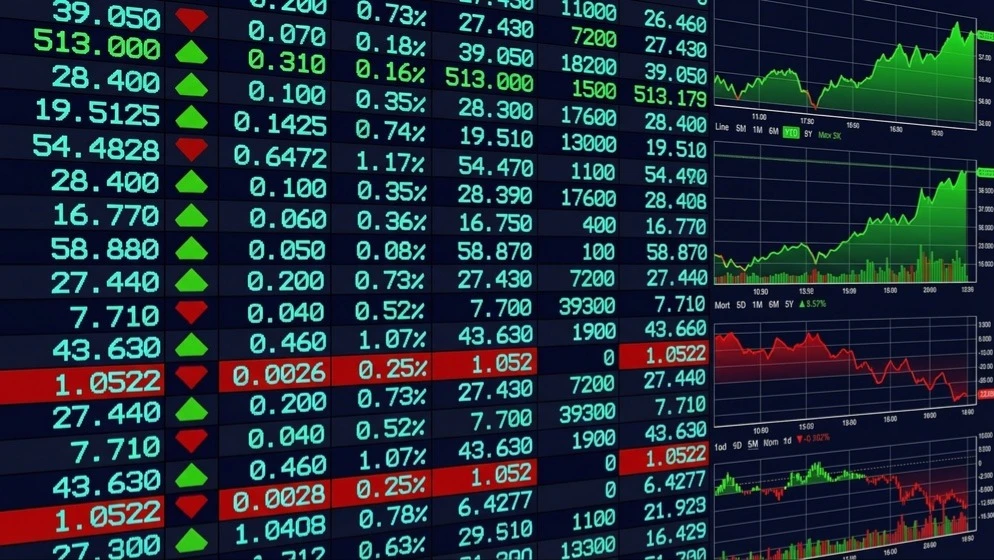
Trading on July 7 on U.S. stock markets ended in negative territory. The S&P 500 fell 0.45%, the NASDAQ 100 dropped 1.77%, the Dow Jones declined 0.25%, and the Russell 2000 lost 0.9%. However, the number of stocks in the broad-market index that rose exceeded the number that fell. The equally weighted benchmark outperformed the market-cap-weighted one. This suggests that the downward pressure was concentrated in a few large technology companies.
The negative trend was driven by movements in the stocks of chipmakers and companies involved in AI infrastructure, which more than completely erased the gains from the previous session. Pressure on the sector was exacerbated by concerns over competition from Chinese chip developers, as well as a weak reaction to Samsung’s preliminary results (005930.KS: -6.92%) and overly optimistic expectations for the semiconductor sector following its strong rally. Major tech companies showed mixed performance. Tesla (TSLA: -4.02%) contributed to the correction, while Meta Platforms (META: +2.55%) outperformed the market. Software developers’ stocks, on the whole, appeared more resilient than the rest.
The top performers were the energy (XLE: +2.84%), healthcare (XLV: +1.53%), and real estate (XLRE: +1.35%) sectors. The energy sector was buoyed by a resumption of oil price gains, while defensive sectors benefited from demand amid a general decline in risk appetite. The IT sector (XLK: -2.39%) and industrials (XLI: -1.71%) were among the underperformers.
Macroeconomic data has heightened investor caution. For the four weeks ending June 20, the average number of new jobs reported by ADP was 21,000. The U.S. trade deficit widened from $54.6 billion in April to $77.6 billion in May. According to a Fed survey, the public’s inflation expectations for the one-year and three-year horizons rose to 3.7% and 3.3%, respectively, although the five-year benchmark remained at 3%.
Treasury bond yields rose by 7–8 basis points across the yield curve. The auction to sell $58 billion in three-year Treasuries went smoothly, but the overall environment for yields remained tense.
Company News
— The FDA will review Agios Pharmaceuticals’ (AGIO: +17.7%) application for mitapivat, a drug for the treatment of sickle cell anemia, on a priority basis under the accelerated review process. A decision on this product is expected on November 1.
— DigitalOcean (DOCN: +4.4%) forecasts second-quarter earnings per share of at least the upper end of its previous range of $0.20–$0.23, noting improved customer activity that will enable the company to meet its targets by the end of 2026.
— Meta Platforms (META: +2.6%) announced the launch of the Muse Image image-generation model within Meta AI. The feature will be available on Instagram and WhatsApp, and will later roll out to Facebook, Messenger, and Meta Advantage+ creative tools for advertisers. The news reinforces expectations of further AI integration into the company’s consumer products and advertising platform.
— A consortium of banks, including J.P. Morgan, Bank of America, Wells Fargo, and PNC, is in preliminary talks to acquire the Fiserv (FISV: +1.8%) payment network. If these plans come to fruition, the financial institutions will gain their own infrastructure for handling a portion of their debit transactions, reducing their reliance on global payment systems. This intensifies competition for Visa (V: -1.4%) and puts pressure on its fee-based business model.
This article was AI-translated and verified by a human editor