Some OpenAI shareholders ponder replacing Altman ahead of IPO - WSJ
It is difficult for investors to understand how Altman's personal investments can affect the decisions he makes as the head of OpenAI

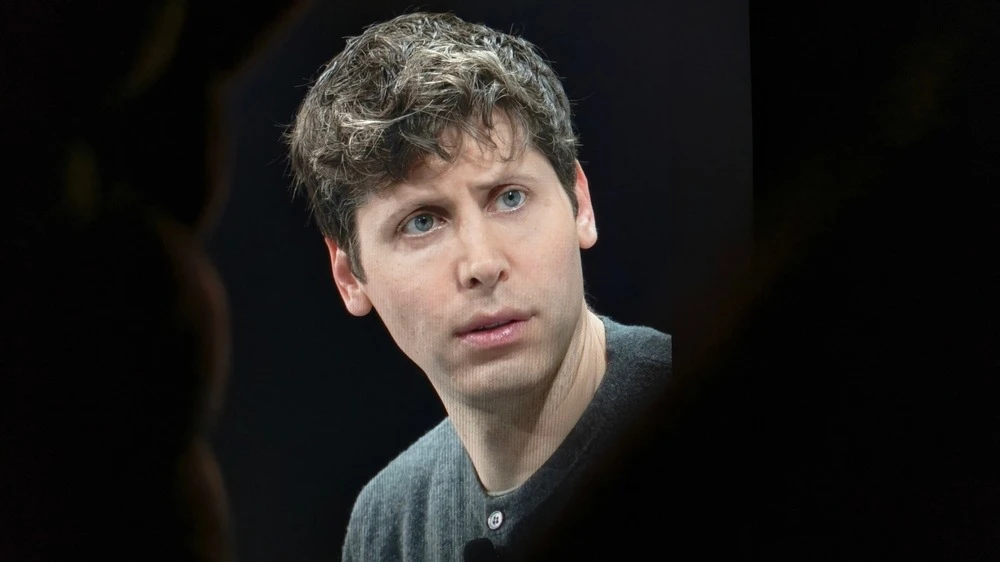
/ Photo: FotoField / Shutterstock.com
Some OpenAI shareholders have privately begun to question Sam Altman's ability to effectively lead the company as it prepares to go public, The Wall Street Journal reported, citing sources.
As a potential successor, investors are considering Salesforce chairman and former Salesforce co-CEO Brett Taylor, according to the publication's interlocutors. Taylor himself, when asked for comment, said Altman "is uniquely qualified to lead this company through the next stage of its development".
Altman admitted in December 2025 that the prospect of being CEO of a public company inspires him "zero percent." "Am I encouraged by the prospect of OpenAI becoming a public company? In some ways yes, and in some ways I think it would be very uncomfortable," he said in a podcast quoted by the WSJ.
What questions do you have for Altman?
Publicly, OpenAI executives and major investors support Altman and credit him with the company's success, the publication writes. In its article, it focuses on the potential conflict of interest of OpenAI's CEO in the run-up to the IPO.
Before leading developer ChatGPT, Altman ran venture capital fund Y Combinator and invested in hundreds of startups. The scale of his personal portfolio is comparable to the portfolios of large venture capital firms, WSJ notes. Some of the companies in which Altman invested later made lucrative deals with OpenAI that benefited him personally.
Investments in Helion
One such example is Helion, a fusion startup. It claims that its technology is close to providing the world with cheap energy. Helion does not disclose the results of its research, which makes it impossible to independently assess its progress. The startup originally claimed that its Polaris car would produce more electricity than it consumes by 2024. So far, Helion has failed to meet that deadline and has not provided any updates.
Altman first invested in Helion in 2014, and now a significant part of his fortune is invested in this company, writes WSJ. In 2021, the CEO of OpenAI invested $375 million in Helion - at that time it was the largest investment in his life. In the same year, Microsoft, one of OpenAI's largest investors, agreed to buy electricity from Helion starting in 2028.
In 2025, Altman participated in a new funding round that valued Helion at $5.4 billion. According to WSJ's source, Altman asked Japanese investment giant SoftBank, which was negotiating an investment in OpenAI at the time, to also fund Helion. As a result, SoftBank joined the round. The deal came as a surprise even to some SoftBank employees - it was personally supervised by Masaesi Son, the head of the holding company, the newspaper's interlocutor said.
Not long ago, Helion planned to raise another $1 billion from investors, and Altman offered OpenAI to invest about half of that amount, the WSJ writes. According to the publication's sources, some OpenAI employees were concerned about the offer: Altman was essentially asking the company he heads to back a startup from whose success he could personally benefit, while OpenAI would not benefit directly.
OpenAI turned down the investment, but still struck a deal giving it the right to buy power from Helion in the future. After OpenAI's rejection, the startup has tempered its ambitions and is now seeking to raise only $250 million, WSJ writes. According to sources, the round will be led by Thrive Capital, another major investor in OpenAI and a staunch supporter of Altman. Altman himself left Helion's board of directors in March.
Competing with Musk.
Altman has also tried to use OpenAI's resources to back startups competing with Elon Musk's projects, WSJ notes. In January, OpenAI invested in Merge Labs, a startup that develops brain-computer interfaces and competes with Musk's Neuralink. Altman sits on Merge Labs' board of directors but does not own shares, his spokesman said.
Last year, Altman was also in talks with rocket developer Stoke Space about a possible joint venture to build data centers in space. Altman proposed that OpenAI acquire the company in its entirety or a controlling stake in it, which would have put the ChatGPT developer in direct competition with Musk's SpaceX. WSJ sources told the WSJ in December that talks were no longer underway. According to the publication's interlocutors, some OpenAI board members were not even aware of the negotiations with Stoke Space and privately expressed skepticism about the space data center project.
Altman's potential conflicts of interest were one of the reasons for his short-lived ouster as CEO in 2023, the WSJ wrote. OpenAI's board of directors said at the time that Altman had not been "consistently candid." Because the private startups in which he invested do not publicly disclose information, some board members felt it was impossible to assess the degree of personal benefit Altman may have received from deals made on behalf of OpenAI.
After Altman was reinstated, the new board of directors promised to address the problem of potential conflicts of interest of officers, but so far it has not disappeared, the WSJ states.
This article was AI-translated and verified by a human editor