The global economy could lose half of its growth. It's all because of the new oil shock.


A new shock to the oil market threatens to cause a sharp slowdown in the global economy. Photo: Pixel Shot / Unsplash.com
The global economy quickly adapted to the largest oil shock in history this spring, but now risks losing half of its expected growth this year. The opening of a second front in the Middle East conflict in the Red Sea, on top of restrictions in the Strait of Hormuz, would be enough to disrupt the fragile balance in the oil market. But at the same time, another channel—in the Black Sea—has been partially blocked. This may prove to be too much for the economy to handle.
Three routes were cut off
Since mid-July, three supply routes have been disrupted simultaneously in the oil market. A series of drone attacks on tankers took place in the Black Sea. The Yemeni Houthis, acting on behalf of Iran, announced a blockade of ships from Saudi Arabia in the Bab el-Mandeb Strait, which provides access from the Red Sea to the Indian Ocean. They have already attacked two Saudi tankers. Meanwhile, following the resumption of the conflict between the U.S. and Iran, traffic through the Strait of Hormuz has once again been disrupted.
The actual disruption of three major shipping routes is threatening about a quarter of global oil supplies. And this is happening at a time when global oil reserves are at their lowest level in decades, notes The Wall Street Journal.
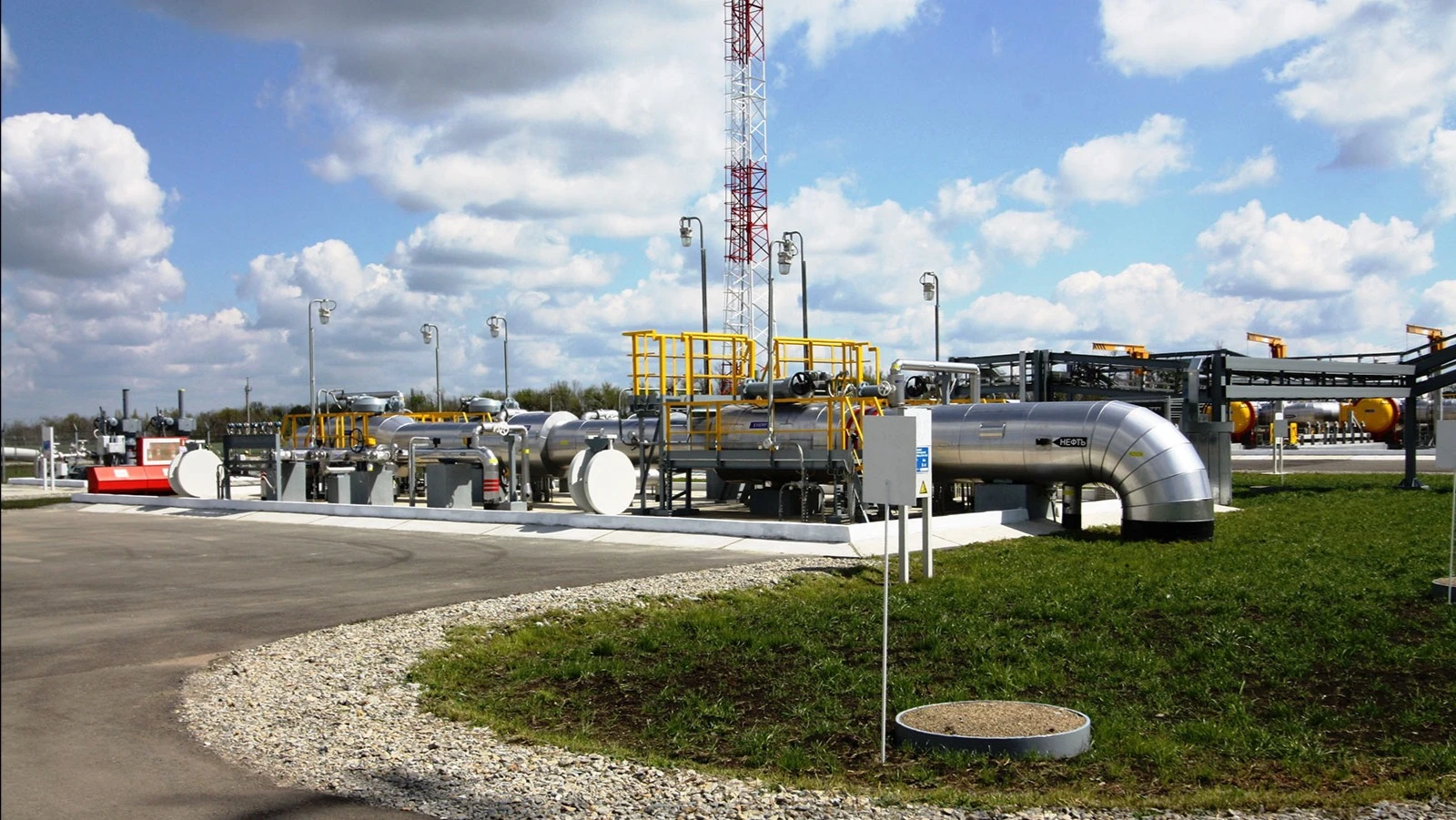
By way of comparison, last spring, when just the Strait of Hormuz was blocked, one-fifth of global oil and LNG supplies were put at risk. At that time, countries began drawing down their reserves to cope with the consequences of the energy shock.
As a result, strategic reserves and commercial stocks in the U.S. reached their lowest level since the first half of the 1980s in mid-July. From March through May, OECD countries’ government reserves fell by 163 million barrels to their lowest level since December 1990, and in June, they fell by another 44 million barrels. In an effort to combat the oil crisis, OECD countries agreed in March to release 400 million barrels onto the market.
"The use of large volumes of strategic reserves early in the conflict significantly reduced the stockpiles that could be tapped in the event of future disruptions," Mick Strautmann, an analyst at Vortexa, told the WSJ.
Three bottle necks
On Thursday, the price of Brent crude oil exceeded $100 per barrel for the first time in two months, and on Friday, July 24, it is trading near that level. Back in early July, it was just over $70.
Following the closure of the Strait of Hormuz in March, the port of Yanbu on the Red Sea coast became the main export hub for Saudi Arabian oil, thanks to a pipeline that runs across the entire country. According to Reuters, since March, the kingdom has been exporting an average of 5 million barrels per day from its western coast, more than double pre-war levels. According to Kpler, approximately four-fifths of these shipments pass through the Bab el-Mandeb Strait, from where they are shipped to Saudi Arabia’s main oil buyers—countries in Asia.
However, if it is transported through the Suez Canal, across the Mediterranean Sea, and around Africa, freight and insurance costs increase.
In addition, supertankers carrying 2 million barrels or more cannot pass through the canal due to their shallow draft: they must either not be fully loaded or transfer the oil to a pipeline south of the canal and then pump it back in near Alexandria. As a result, the voyage is extended by several weeks.
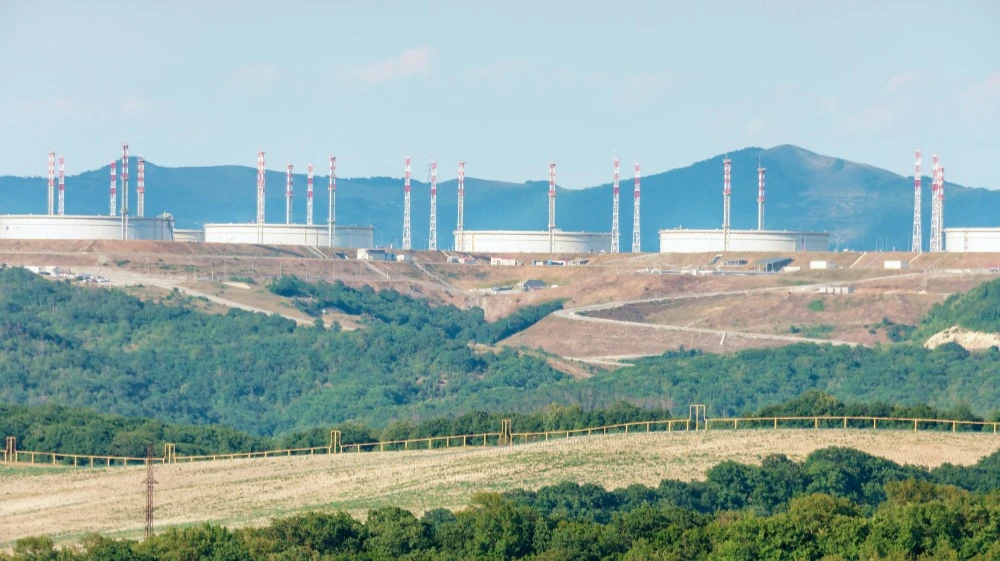
As for the Black Sea, earlier this week the port of Novorossiysk imposed a verbal ban on vessel traffic from midnight to 5 a.m., disrupting round-the-clock cargo transshipment. Then, the Russian Ministry of Defense reported that it is unsafe to remain in Russian waters in the Black Sea due to the threat of attacks by Ukrainian drones. From July 8 to 20, at least 124 Russia-linked vessels, including 89 tankers, were struck in the Black and Azov Seas, Bloomberg reported, citing data from the General Staff of the Armed Forces of Ukraine. Nearly one-third of Russia’s oil exports pass through the Black Sea.
Due to the attacks, Kazakhstan suspended loading operations at the Caspian Pipeline Consortium terminal in Novorossiysk—through which more than 80% of Kazakhstan’s oil is exported—and was forced to sharply reduce its oil production.
"Everything that is happening points to a tighter market than during the period when the Strait of Hormuz was closed from late February through mid-June, ” Kevin Morrison, an oil and gas sector analyst at the Institute of Energy Economics and Financial Analysis (Australia), told Oninvest. “CPC’s volumes account for about 1% of global oil supply, but this is happening against the backdrop of additional disruptions to fuel supplies in Russia and the Middle East.”
Minus half the growth
An escalation in the Middle East could lead to a sharp slowdown in global economic growth—this year, the global economy may grow by just 1.3%, World Bank Chief Economist Indermit Gill told Reuters. By comparison, the bank’s June forecast projected growth of 2.5%, and last year’s growth was 2.9%.
According to Gill, in its June economic forecast, the bank modeled three possible scenarios.
The worst-case scenario, in which hostilities would last half a year or longer, is already close to becoming a reality, he added: in that case, global inflation would reach 4.5%.
We can also expect the food security problem to worsen due to disruptions in the supply of fertilizers, helium, and sulfur, which are essential for agriculture. This will lead to higher food prices and a further increase in interest rates, the economist said.
The main problem for the global economy lies not so much in supply issues with crude oil as with refined petroleum products, which are, in fact, consumer goods, according to Reuters and the WSJ.
Major Middle Eastern refineries in Saudi Arabia, Bahrain, Kuwait, and the UAE remain shut down or are operating only partially. In June, when shipping through the Strait of Hormuz began to resume, according to Kpler, an average of about 4 million barrels of crude oil were exported daily from the region, but only 1 million barrels of refined products—a quarter of the pre-war level.
In June, Chinese refineries cut processing volumes by 18% compared with the same month in 2025, bringing them to their lowest level since the start of the coronavirus pandemic in March 2020. In the spring, China sharply reduced its crude oil imports and fuel exports to protect itself from rising energy prices and secure its reserves.
Overall, average daily global crude oil refining volumes in the second quarter fell by approximately 5 million barrels compared with the same period last year, to 78 million barrels—a 6% decline—according to the International Energy Agency.
In July, the situation only got worse. In Russia, where all 10 of the largest refineries were hit by Ukrainian drones, oil refining fell to levels last seen in the early 2000s—less than 4 million barrels per day, according to EA Analytics. It fell by more than a third, while diesel exports were roughly half of what they were during the same period in 2025, Isabel Gilks, a senior analyst for retail fuel markets at Wood Mackenzie, told the WSJ.
According to her, “Repairs at Russian oil refineries will likely proceed slowly, as sanctions are making it difficult to find spare parts and specialists.”
Bets — Up
"After the U.S. and Iran signed a preliminary peace agreement on June 17, investors simply wanted to move on and put the problems with the Strait of Hormuz behind them," says Mike Bell, director of market strategy at RBC Blue Bay Asset Management.
“But that has always seemed like wishful thinking. Burying one’s head in the sand is a bad strategy when it comes to political risks,” he told the Financial Times.
When the price of oil exceeded $100 per barrel on Thursday, the yield on 10-year U.S. Treasury bonds surpassed May’s “war” peak of 4.69% and reached 4.71%. In Europe, the yield on 10-year French government bonds rose to 4%, its highest level since 2009, while the yield on German 10-year government bonds rose to 3.21%, a level last seen in 2011.
Although oil prices remain well below their May highs, the rise in yields suggests that the market is bracing for more prolonged and persistent inflation amid renewed price increases for diesel, gasoline, and natural gas, analysts note.
Inflation expectations are not easing, even though markets are pricing in more significant interest rate hikes by central banks, notes John Hill, director of U.S. inflation strategy at Barclays: “This suggests that the Fed may not necessarily be able to solve the inflation problem.”
The U.S. economy and labor market remain strong, underscoring the need to curb inflation through tighter monetary policy. Market participants expect the U.S. Federal Reserve to raise rates twice by 0.25 percentage points by January, and the European Central Bank to raise rates twice more by April 2027, according to the FT.
This article was AI-translated and verified by a human editor