The market-crashing Citrini sent an analyst to the Strait of Hormuz. What did he find out?
Observations by a Citrini Research employee confirmed the existence of a "shadow checkpoint" in the Gulf

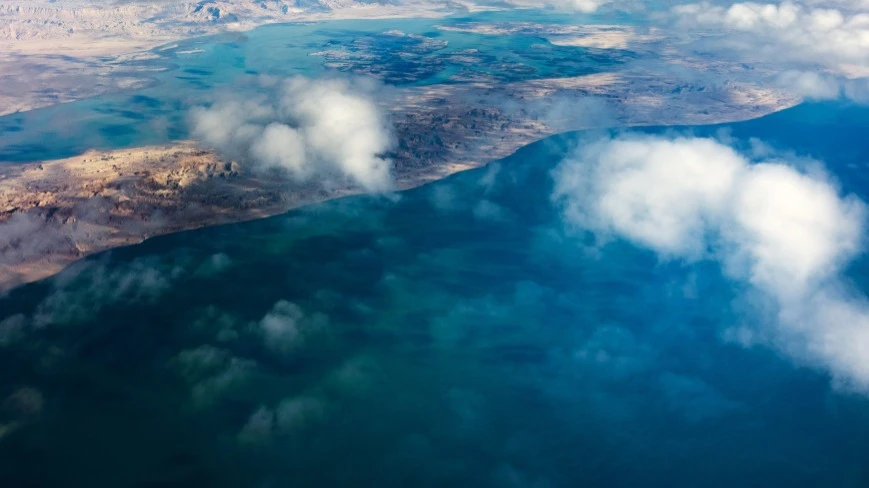
Shadow traffic from the Persian Gulf goes through the corridor between the Iranian islands of Larak and Qeshm / Photo: Fabio Mauri/Shutterstock.com
An employee of the analytical firm Citrini Research, whose viral report in February triggered a stock market sell-off, went with a wad of dollars and a box of cigars from Manhattan straight to the Strait of Hormuz to see for himself the real state of affairs in the world's main oil artery. As a result of the trip, he predicted prolonged problems with oil supplies and advised traders to temporarily avoid short-term contracts.
Details
The trip of the expert, designated in the Citrini report as "analyst No. 3," was informal in nature. He was inspired by the American writer David Foster Wallace, author of the novel "Infinite Jest", to collect facts on the spot. The analyst arrived in Oman with $15,000 in cash, rented a boat and took it out to the Strait of Hormuz, which connects the Persian Gulf to the open sea. The strait plays a crucial role in the world's oil exports: before the U.S. war with Iran, about 20 percent of supplies passed through it.
His own observations, as well as conversations with Middle Eastern officials, oil traders, field workers, fishermen, and Iranian smugglers, led the expert to the following conclusions:
- There is no complete blockade of the Strait of Hormuz: ship traffic continues in a partial restriction mode. Currently, about 15 vessels per day pass through the Strait, with the situation gradually improving. "It is likely that over the next 4-6 weeks we will see a recovery of traffic up to 50% of the pre-war level," CNBC quoted Citrini's report as saying.
- Official tracking systems do not reflect the real picture of shipping in the region. According to the report, the actual transit volume exceeds the public data because many vessels disable automatic identification systems (AIS) while passing through the strait, becoming invisible to monitoring.
- Iran has actually organized in the strait a navigation regime based on the principle of a checkpoint. Shadow traffic goes through the corridor between the Iranian islands of Larak and Qeshm. Ships are required to get Tehran's approval in advance to transit, causing ships to line up for permits. "U.S. vessels and those of U.S. allies will have serious difficulty passing through [the waters] throughout the conflict," Citrini's analyst warned.
- The number of attacks on commercial ships by Iran in the strait exceeds the data of official public reports. In addition, as The Wall Street Journal notes, the report itself includes footage of a burning tanker.
- "Our view of the conflict is nuanced - it does not fit into a simple 'Strait open - oil falls' or 'Strait closed - oil takes off in a parabola,'" the study emphasizes. Citrini predicts a prolonged nature of the disruptions, which will lead to the formation of a permanent risk premium in the oil market. On this basis, the analysts of the firm advised to give preference to oil futures with execution in December 2026, rather than contracts with the nearest delivery date.
What Citrini Research is famous for
Citrini Research publishes its reviews primarily on the Substack platform. The atypical approach attracts an audience: according to WSJ, Citrini's account with almost 210,000 subscribers is one of the most popular financial blogs on the platform.
In February 2026, Citrini Research published an essay on a hypothetical economic collapse. It argued that the widespread introduction of artificial intelligence into business processes would lead to mass layoffs of white-collar workers and trigger a deflationary cascade, unemployment would exceed 10%, and the stock market would crash. By the next morning, the publication had become the main topic of discussion on Wall Street and triggered massive sell-offs.
At the same time, Citrini's own benchmark portfolio was not designed at all for the financial crisis, the company's founder James Van Geelen admitted. He noted that he was even criticized for being too bullish. In addition, Citrini did not short corporate platform ServiceNow, delivery service DoorDash and payment system American Express - these companies were mentioned in the February essay and collapsed after its publication.
This article was AI-translated and verified by a human editor