The owner of Calvin Klein is betting on two brands. Why does UBS have confidence in his stock?
Following PVH Corp.'s second-quarter earnings report, UBS maintained the highest price target for the company's stock. It forecasts growth of nearly 70%.

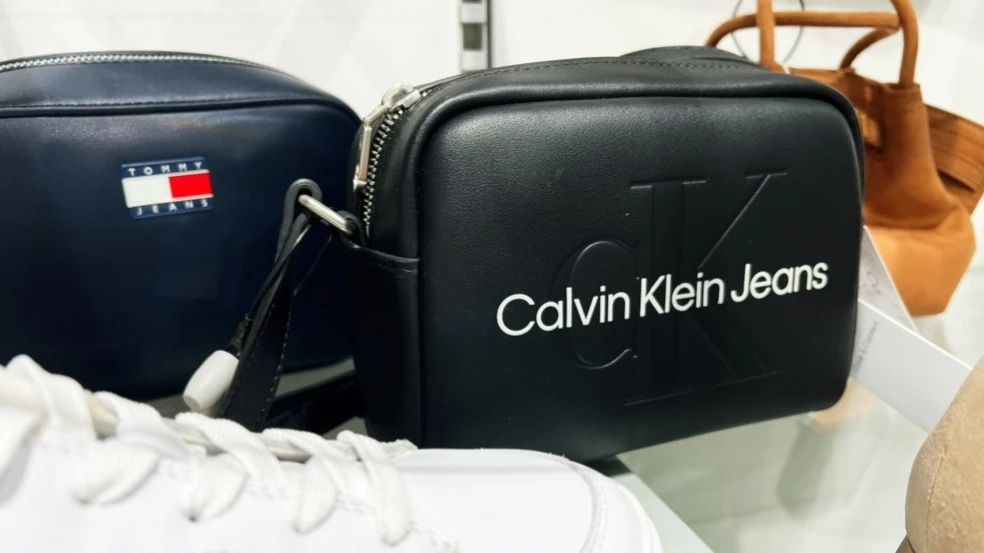
As of the end of 2025, Tommy Hilfiger and Calvin Klein accounted for approximately 95% of PVH Corp.'s total revenue. / Photo: AS project / Shutterstock.com
PVH Corp., the owner of the Calvin Klein and Tommy Hilfiger brands, is one of the oldest publicly traded companies, having started out making men’s shirts for miners. More than a century later, following a series of acquisitions, PVH sold off its non-core assets and focused on its two key brands. Does this strategy pay off, and why do analysts recommend buying PVH stock? Find out in this Oninvest article.
Shirts for miners and turn-down collars
The company’s founders—the married couple Moses and Endel Phillips—were far removed from the world of fashion: in 1881, they began building their business selling custom-made shirts to miners in Pennsylvania. Business went so well that a few years later, the company moved to New York, where it merged with the shirt and collar manufacturer D. Jones & Son and continued operations under the name Phillips-Jones Corporation.
In 1919, by purchasing the patent for Van Heusen’s spread collar, the company“revolutionized”men’s comfort. The invention was a success, and in 1920 the company went public on the New York Stock Exchange. In 1957—in honor of its best-selling shirt brand—the Phillips-Jones Corporation changed its name to Phillips-Van Heusen Corporation.
The Controversial Calvin Klein
By the 1990s, the company was already a well-known manufacturer of men's clothing. But the real breakthrough came in 2003, when PVH acquired Calvin Klein and its affiliated companies.
PVH paid $401.6 million and also transferred 2.54 million of its shares, valued at $30 million. Calvin Klein also received a warrant to purchase PVH shares and the right to receive payments for 15 years equal to 1.15% of global net revenue from products sold under the Calvin Klein brands.
Calvin Klein rose to fame among a wide audience in the 1980s thanks to his jeans and underwear collections, as well as a controversial ad featuring 15-year-old actress Brooke Shields. In the 1990s, Kate Moss became the face of Calvin Klein: provocative underwear campaigns and the Obsession fragrance cemented the brand’s popularity, and Obsession became one of the world’s best-selling fragrances, according to Coty, which manufactured and sold Calvin Klein perfumes and cosmetics under license.
PVH noted that Calvin Klein had a weak presence in a number of product categories and saw the expansion of its product lineup as an opportunity to increase sales and profitability. The deal began to pay off in its very first year: PVH reported that in 2003, net sales increased by $45.5 million year-over-year, primarily due to the Calvin Klein business.
After the acquisition of the Calvin Klein brand, some of its key business lines remained with licensees. Specifically, Warnaco manufactured Calvin Klein jeans and underwear and managed the brand’s business in Asia and Latin America. In 2013, PVH acquired Warnaco for approximately $2.9 billion, gaining direct control over these operations.
In 2025, Calvin Klein generated nearly $4 billion in revenue for PVH—about 44% of the company’s total revenue and nearly 3% more than the previous year. The company now derives most of its revenue from sales of its own products: PVH’s total licensing revenue for 2025 amounted to just $421 million.
"À la Ralph Lauren"
In 2010, the company made another major acquisition: the Tommy Hilfiger brand—founded by designer Tommy Hilfiger, who received funding in the mid-1980s from an Indian entrepreneur to create a brand “à la Ralph Lauren,” but with a younger and more casual vibe.
Tommy Hilfiger went public in 1992, but by the early 2000s, it had lost ground due to changes in its target audience and brand image. In 2005, Apax Partners acquired the company for $1.6 billion, turned the business around, and sold it to PVH four years later. The deal was worth approximately €2.2 billion. Tommy Hilfiger remained the brand’s chief designer and continues to hold that position to this day.
Through the acquisition, PVH gained a major operating platform and distribution network in Europe. The acquisition of Tommy Hilfiger transformed the scale of PVH’s business: the company evolved from a predominantly American apparel manufacturer into a global player. Already in the year of the acquisition, Tommy Hilfiger International contributed approximately $1 billion to PVH’s net sales, while Tommy Hilfiger North America contributed $889.6 million. By the end of 2025, the brand had surpassed Calvin Klein in revenue, posting $4.8 billion—a 4% increase from 2024.
Big Sale
PVH was once a major licensing operator: the company had agreements with dozens of third-party brands—from Michael Kors to the Donald J. Trump Signature Collection. For example, the company entered into a licensing agreement with the Donald Trump brand in 2004, which called for the promotion of shirts, and later, ties and athletic wear. In 2015, PVH terminated the agreement amid a scandal over Trump’s remarks about Mexican immigrants.
By 2020, PVH’s brand portfolio had grown to an impressive size. In addition to Calvin Klein and Tommy Hilfiger, the company owned what are known as “Heritage Brands”—historic brands including Van Heusen, IZOD, Arrow, Warner’s, Olga, and Geoffrey Beene. However, Calvin Klein and Tommy Hilfiger were already the backbone of the business: together, they accounted for more than 85% of revenue, with over 60% of PVH’s sales coming from markets outside the U.S.
Amid the COVID-19 pandemic, the company’s revenue fell from $9.9 billion in 2019 to $7.1 billion in 2020. PVH decided to simplify its business structure and focus on two key global brands: it first announced the closure of 162 stores carrying heritage brands in North America, and then began selling off its portfolio. As early as 2021, the company announced the sale of the Van Heusen, Izod, Arrow, and Geoffrey Beene brands for $220 million.
It was not an easy decision, but Heritage Brands provided the resources that laid the foundation and enabled us to make PVH one of the world’s largest fashion companies. Over the past few years, we have streamlined this business while simultaneously directing resources toward higher-return areas, thereby increasing shareholder value.
In late 2022, the company announced that it would gradually phase out the licensing of Calvin Klein and Tommy Hilfiger and operate them independently to ensure its strategic growth. It was decided to first extend the licensing agreements with G-III Apparel Group and then phase them out gradually between 2025 and 2027. The categories being phased back in accounted for a significant portion of the business: they represented about one-third of PVH’s total global licensing revenue in 2021.
PVH retained some of its Heritage Brands in its portfolio; in 2025, this segment generated $215 million in revenue for the company—2.2 times less than in 2023.
What's in the financial statements
At the end of the second quarter of this year, PVH’s revenue declined 3% year-over-year to $2.1 billion. The company attributed this, in part, to weakness in its wholesale business: wholesale sales fell 6%, particularly in the EMEA (Europe, the Middle East, and Africa), where the company faced weak consumer demand due to the fallout from the conflict in the Middle East. Additional pressure came from a 13% decline in licensing revenue due to the transfer of previously licensed categories to PVH’s direct management.
PVH's direct-to-consumer sales (excluding franchises and retail chains) remained virtually unchanged: online sales rose 4% to $194.1 million, but this growth was almost entirely offset by a 0.7% decline in revenue from company-owned stores, to $862 million. Adjusted earnings per share rose to $3.70, compared with $2.52 a year earlier.
The company has not changed its full-year outlook: PVH expects revenue to remain flat year-over-year, with adjusted earnings per share reaching $11.8–12.1, compared with $11.4 in 2025.
What Analysts Are Saying
Following PVH’s second-quarter earnings report, JPMorgan analysts maintained their “Underweight” rating (a recommendation to sell the stock) and lowered their price target from $85 to $83, which is nearly 17.8% above the closing price on September 8. JPMorgan believes the company’s path to its long-term goal—an operating margin in the mid-double-digit range—will take longer than expected. This is due to the slow recovery in sales, the challenging global economic environment, and significant discounts offered by competitors (the report is available at Oninvest).
Needham maintained its “buy” rating but lowered its price target from $102 to $95. The bank’s analyst considers the second-quarter results to be mixed: the business is showing greater volatility than other global apparel brands.
UBS maintained its “Buy” rating with a price target of $121. This is the highest price target for the company’s stock, implying a nearly 70% increase from the closing price on September 8. Analysts expect long-term earnings growth thanks to the strong Calvin Klein and Tommy Hilfiger brands, more targeted marketing, and PVH’s solid financial position. UBS considers the planned $300 million share buyback to be an additional driver.
On Marketwatch, the company has eight "buy" recommendations from analysts, six "hold" recommendations, and two "sell" recommendations. The average price target is $87.45, which is 22.7% above current levels.