The U.S. Federal Reserve left interest rates unchanged. What should investors expect next?

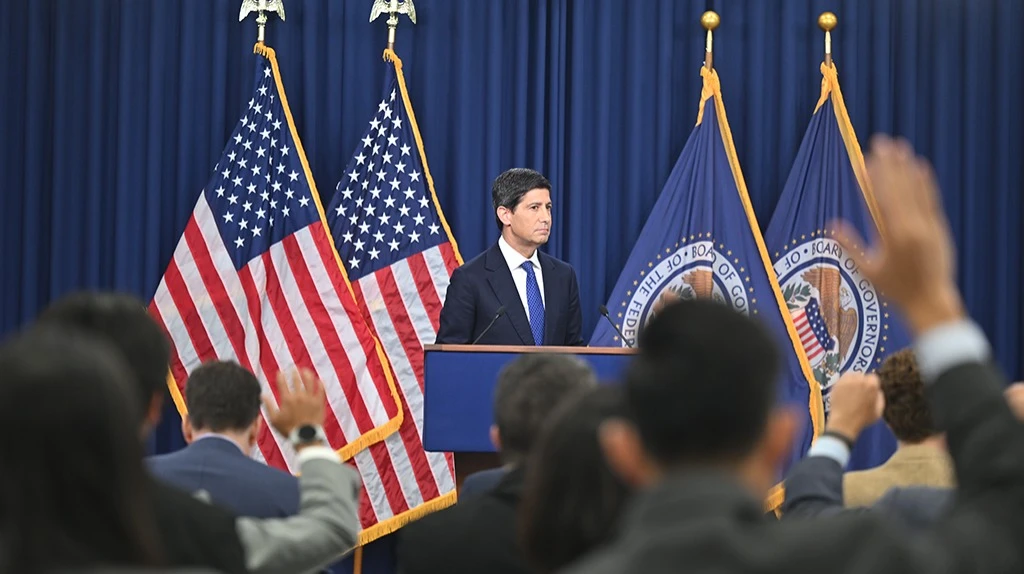
The U.S. Federal Reserve left its interest rate unchanged, even though inflation came in higher than expected / Photo: X / federalreserve
The U.S. Federal Reserve left its interest rate unchanged, even though the latest inflation data came in higher than expected. The central bank's decision was fully in line with market expectations.
Details
Following its October 27–28 meeting, the Federal Open Market Committee (FOMC) of the U.S. Federal Reserve kept the federal funds rate at 3.75–4%. This range was set in September, when the central bank tightened monetary policy for the first time since 2023.
What's next?
Prior to today’s Fed decision, traders had priced in a 76% probability of a rate hike following the next meeting in December, according to the CME’s FedWatch tool. The median forecast of FOMC members, published in September, called for one more round of rate hikes by the end of the year, while the Fed expected rates to remain unchanged in 2027.
“We believe that Warsh and other FOMC members are increasingly concerned about inflation, remain committed to continuing rate hikes, and will cautiously signal this,” said Stephanie Roth, chief economist at Wolfe Research, ahead of the central bank’s release.
The latest inflation data indicate that price pressures persist across the economy, Bloomberg notes. Specifically, the Consumer Price Index (CPI) rose at its fastest pace in five months in September amid rising fuel prices and came in worse than Wall Street estimates. Energy prices rose 5.2% over the month—the sharpest jump since March. Higher fuel prices could keep inflation elevated while simultaneously dampening economic activity, Barron’s notes. The publication believes the current data is already sufficient to justify a rate hike.
Economists at Citigroup and Morgan Stanley agree that the regulator will resume tightening policy in December. However, Morgan Stanley explains that the markets have already done some of the Fed’s work. Changes in stock and bond prices, the dollar exchange rate, oil prices, and credit spreads since September have led to a tightening of financial conditions comparable to a rate hike of nearly a quarter of a percentage point, the investment bank calculated. If the sell-off continues, a rate hike in December may become unnecessary, Barron’s concludes. Economists at Citigroup agree that the Fed will resume tightening in December, but they also warn that a further decline in stocks could bring this cycle to an end.
By the end of the week—following the release of key earnings reports from tech giants Alphabet, Microsoft, and Amazon, as well as new economic data—investors should have a clearer picture of whether consumers can continue to sustain economic growth, whether the AI investment boom can withstand rising borrowing costs, and whether financial market conditions have tightened enough to give the Fed grounds to hold off on raising interest rates, according to Barron’s.
Ahead of the meeting, several key Fed officials indicated that the central bank has time to assess the state of the economy before considering its next move. This view was expressed by Federal Reserve Vice Chair Philip Jefferson and New York Fed President John Williams. Board Member Christopher Waller noted that the Fed has some flexibility and is not obligated to tighten policy at every meeting. Fed Chair Kevin Warsh, as usual, refrained from offering any hints.
This article was AI-translated and verified by a human editor