The wave of IPO cancellations continues: one of Australia's largest IPOs has fallen through
The failed IPO attempt by the Australian AI company Firmus served as a warning sign for other companies preparing to go public

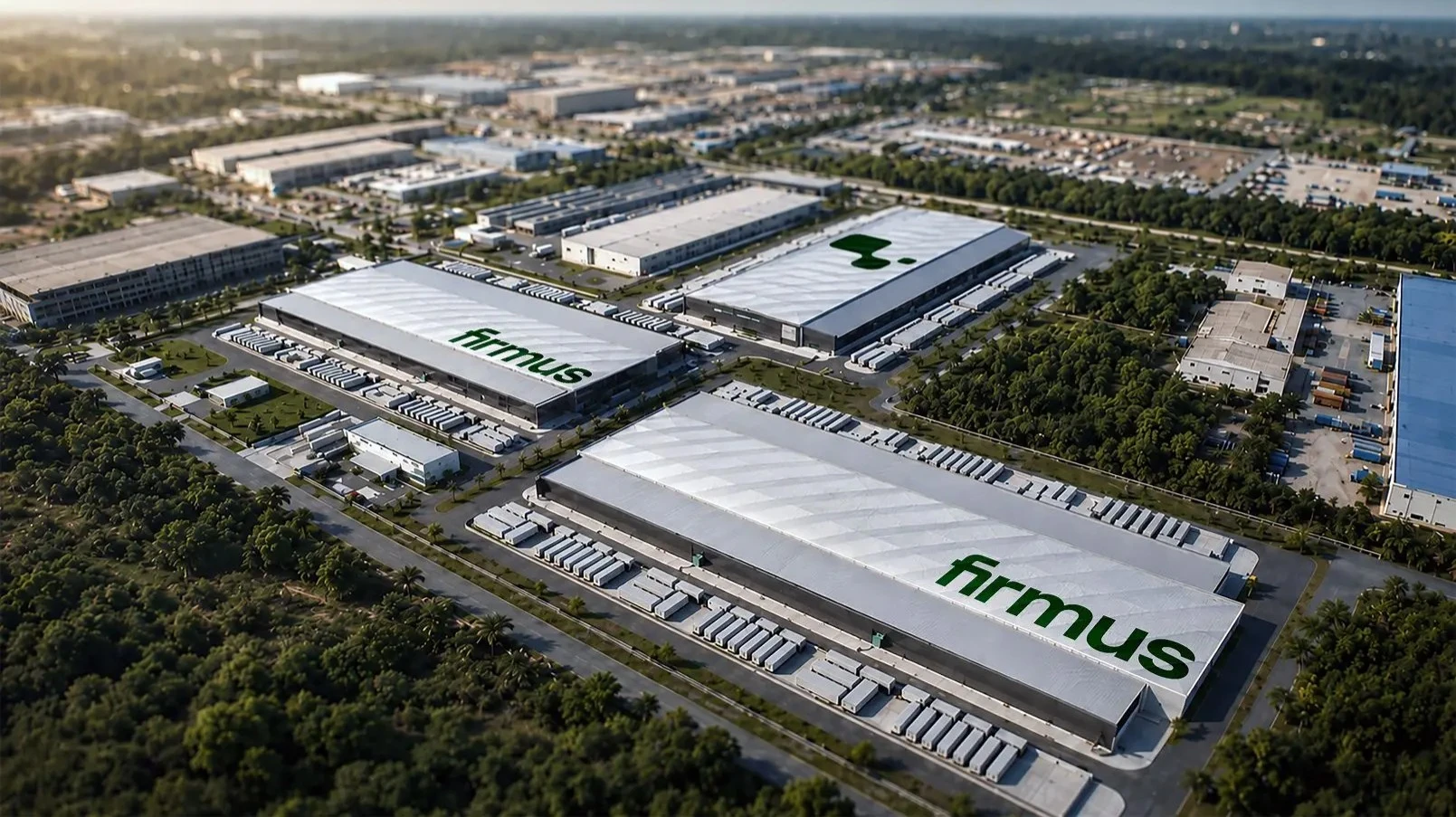
Firmus Grid, an Australian data center operator in which Nvidia has invested, has canceled its planned IPO / Photo: Firmus
Australian data center operator Firmus Grid, in which leading AI chipmaker Nvidia has invested, has canceled its planned IPO, citing market conditions and volatility, CNBC reports, citing a company statement. The listing could have been the second-largest in the country’s history, but Firmus was unable to attract international investors, who are becoming increasingly wary of the inflated valuations of AI companies, Bloomberg explains .
Details
The proposed terms of the offering do not fully reflect Firmus’s business potential and long-term growth prospects, according to a statement from the AI operator cited by CNBC. “The board of directors has concluded that proceeding with the offering is not in the best interests of the company and its shareholders. Firmus will now seek capital in private markets and explore alternative options in both public and private markets,” the statement said. The startup’s business model depends on a steady inflow of new funding, Bloomberg notes.
This marked a sharp turnaround for the company, which just a few days ago had reported strong demand for its IPO, suggesting a valuation of over $30 billion. Less than three months ago, it was valued at $10.5 billion.
Firmus Grid had hoped to raise up to $5.5 billion in its IPO. The bookbuilding period ended on schedule on the morning of Thursday, October 8, but the company was unable to generate sufficient demand, according to Bloomberg sources. Potential investors were not convinced by the rationale behind such a sharp increase in the company’s valuation, as it has yet to prove the viability of its business model and generated revenue of only $51 million for fiscal year 2026, the agency reports.
In addition, according to sources who spoke with Bloomberg, investors feared that existing shareholders would begin selling off their shares en masse shortly after the company went public.
What's Happening in the IPO Market
The cancellation of this IPO serves as a striking example of how the market is beginning to reject overly generous financing terms for AI companies—against a backdrop of rising borrowing costs worldwide and uncertainty regarding the long-term returns from the technology, Bloomberg explains.
"Investors simply weren't willing to pay an exorbitant price in advance for capacity that, for the most part, still exists only on paper, — said Josh Gilbert, eToro’s lead analyst for the Asia-Pacific region and the Middle East. “The timing also turned out to be unfortunate: rising bond yields increase the cost of borrowing and reduce the amount investors are willing to pay today for profits expected only several years from now.”
UniSuper, one of Australia’s largest pension funds, was among the institutional investors that declined to participate in the IPO, Bloomberg reported. “We believe Firmus has a truly compelling story. But its valuation is unattractive. Too many things would have to go right to justify that valuation,” said John Pierce, the fund’s chief investment officer.
As they await major deals—such as Anthropic’s IPO—investors are becoming increasingly selective. This caution has already affected a number of IPOs: in September alone, four companies from various industries—each hoping to raise at least $50 million—canceled or postponed their listings. Among them are the insurer Bamboo Insurance, the industrial company Amaero, the nuclear energy firm Holtec Nuclear, and the smart ring manufacturer Oura.

What are the forecasts?
The IPO failure served as a wake-up call for other companies preparing to go public, especially following a string of unsuccessful debuts by companies in the artificial intelligence infrastructure sector, according to Bloomberg.
“Right now, the arguments of those who favor a negative scenario are gaining more and more traction, as the cost of capital has spiraled out of control and the stocks of companies whose value depends largely on cash flows in the distant future are under pressure. “Therefore, the short-term outlook looks challenging,” warned Dave Mazza, CEO of Roundhill Investments.
Several companies are already delaying their initial public offerings after publicly filing documents with the regulator: Nscale, a provider of cloud computing power for AI, and SB Energy, a SoftBank-backed developer of data center and energy infrastructure, filed for listings in the U.S. last month but have not yet begun marketing to investors.
What Is Known About Firmus
A significant portion of Firmus’ valuation was based on the assumption that the company would successfully build a network of data centers across Asia to serve clients such as Meta Platforms and OpenAI, according to Bloomberg. The company began operations in 2019 by mining Bitcoin in Australia but later shifted its focus to the rapidly growing Asian AI infrastructure market. According to investor documents reviewed by the agency, the total capacity of Firmus’s planned projects is 912 MW, though only 46 MW of capacity has been built so far.
The company has closed a number of deals with major clients and secured $2 billion in investment commitments from a group of investors, including Nvidia and Blackstone.
In September, Firmus announced that it had entered into agreements with Meta. The company will provide graphics computing power at its Asian AI data centers, built on the Nvidia DSX platform, to support Meta’s research in artificial intelligence, as well as for model development and training.
This article was AI-translated and verified by a human editor