Trump orders blockade of Strait of Hormuz after talks with Iran fail

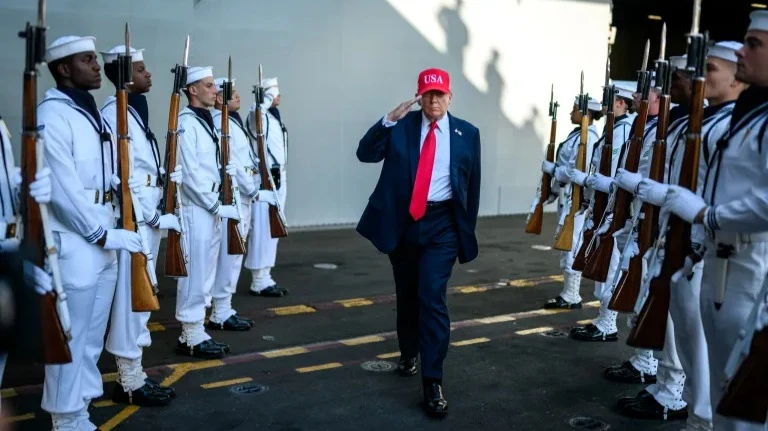
Photo: whitehouse.gov
The US Navy will soon begin blocking the Strait of Hormuz, President Donald Trump said on Truth Social.
"Effective immediately, the United States Navy, the best in the world, will begin the process of BLOCKADING all vessels attempting to enter or exit the Strait of Hormuz," Trump wrote.
He also threatened to intercept in international waters all ships that paid Iran a toll to transit the strait. Trump wrote that Iran was engaging in "extortion" by blocking with mines the strait, through which 20 percent of the world's oil and gas normally passes. He said the US military will also begin destroying mines planted by the Iranians in the strait and is also ready to "finish off what little Iran has left," the US president wrote.
Trump made his threats after the US and Iran failed to reach an agreement at direct talks in Pakistan on April 11 that lasted more than 20 hours. The US president said that the meeting "went well" and the sides managed to agree on "most points" but not "the only really important point" - Iran's refusal to develop nuclear weapons.
The Strait of Hormuz is one of the world's most important energy corridors, and its de facto closure after the US-Israeli war against Iran began six weeks ago led to unprecedented supply disruptions and a sharp rise in oil and gas prices. The issue of its reopening was one of the key points of discussion during the talks, Bloomberg writes.
Three supertankers with a combined transport capacity of about 6 million barrels passed through the Strait of Oruz on the day of the negotiators' meeting, the largest volume of oil exports through the strait in six weeks, Bloomberg noted. Including Iranian exports through the strait, which totaled about 1.7 million bpd in March, total shipments on April 11 were about half of pre-war levels, the agency calculated.
Nevertheless, the positive trend did not continue. On April 12, two oil tankers trying to cross the strait to the Persian Gulf turned around at the last moment, when it became known about the failure of negotiations and the question arose as to what would happen to the previously announced cessation of the yanja, Bloomberg writes.
This article was AI-translated and verified by a human editor