U.S. airports collapse over budget for security screening. Three stocks are up
Trump has promised to bypass Congress to pay off employees who provide security screening at U.S. airports

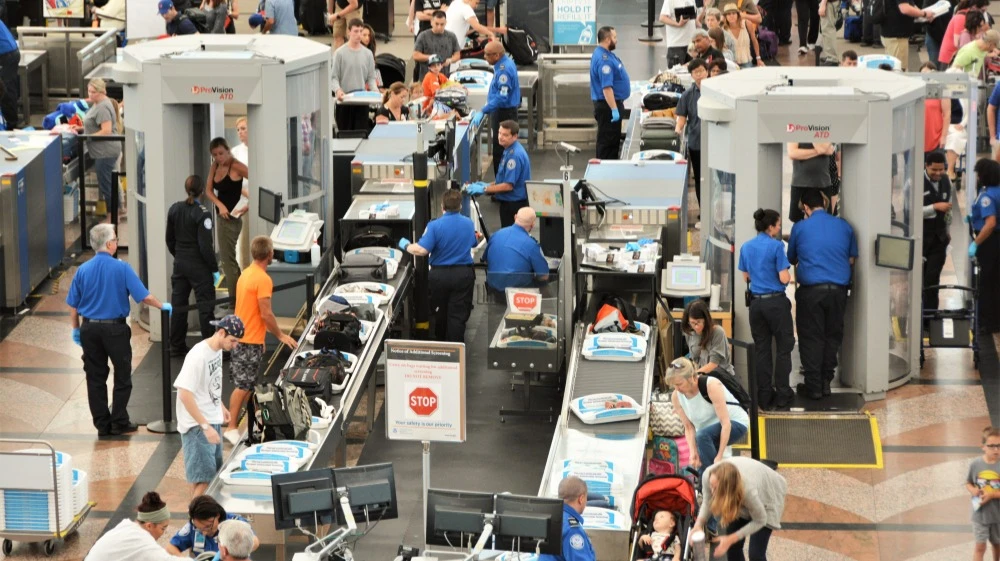
Passengers are buying a paid Clear Secure subscription en masse to avoid hours-long lines at U.S. airports / Photo: Jim Lambert / Shutterstock.com
The prolonged security screening crisis at U.S. airports has benefited at least three publicly traded companies, Barron's said. Due to staff shortages at government screening points, passengers are forced to find alternative ways to travel to avoid bypassing lines. As a result, biometrics services and car-rental companies are recording an influx of customers and an increase in quotations.
Details
Clear Secure biometric control service is not dependent on public sector staffing problems. Passengers are buying Clear+ subscriptions en masse to legally bypass hours-long lines at U.S. Transportation Security Administration (TSA) security checkpoints. Clear Secure was already favorably positioned for early 2026, and now staffing shortages at the TSA are "acting as a strong tailwind to sign up new Clear+ users," Barron's quotes D.A. Davidson analyst Wyatt Swanson as saying.
Since the beginning of March, when the situation at U.S. airports became more acute, the number of downloads of the app has more than tripled year-on-year, CNBC reported, citing data from Sensor Tower. Clear Secure's quotes have added more than 20% in two weeks amid increased queues at government screening points at airports. Swanson of D.A. Davidson on March 26 raised its target price on the screening service from $54 to $65 and reiterated a "Buy" recommendation.
Hertz Global and Avis Budget Group , leaders of the US car rental market, were also beneficiaries of the airport collapse. In order to avoid unexpected delays at airports, tourists are changing their behavior patterns, preferring car trips to domestic air travel. According to Hertz, one-third of customers are now renting cars specifically for vacation travel. On March 26, Hertz reported a 15 percent jump in search traffic on its website. Investors reacted positively, with Hertz shares up 9.2 percent and Avis Budget securities up 13 percent at the end of the trading day.
What Wall Street thinks about stocks
According to FactSet, the quotes of all three airport crisis beneficiaries mentioned by Barron's have already exceeded Wall Street's expectations: trading in Clear Secure shares closed March 25 2.2% above the average target, Hertz securities - 10.2% higher, Avis Budget - 31.1% higher.
The consensus rating of Clear Secure shares calculated by the service is "above the market" (Overweight, corresponding to the recommendation to buy). In the car rental sector, analysts are more conservative: the consensus on Avis Budget securities is "Hold" (Hold), and on Hertz shares - "below the market" (Underweight, corresponding to a sell recommendation).
Context
Tens of thousands of TSA and other employees of the U.S. Department of Homeland Security have not been paid since the agency's funding was cut off in February due to the government shutdown. Acting TSA head Ha Nguyen McNeil told Congress on March 25 that more than 480 of her agency's employees have quit, and the failure to hire 40-50% of the staff at some major airports has led to "unprecedented" wait times of more than four and a half hours.
US President Donald Trump has ordered the deployment of Immigration and Customs Enforcement (ICE) agents to 14 airports, but their presence has not reduced hours-long lines for screening, states Barron's. On March 26, Trump said on his social network Truth Social that "to address the emergency and quickly end the chaos at the airports" he would pay the salaries of TSA employees, bypassing Congress.
This article was AI-translated and verified by a human editor