Waiting for the 'real carnage': How the Iran war has reshaped the global gas market
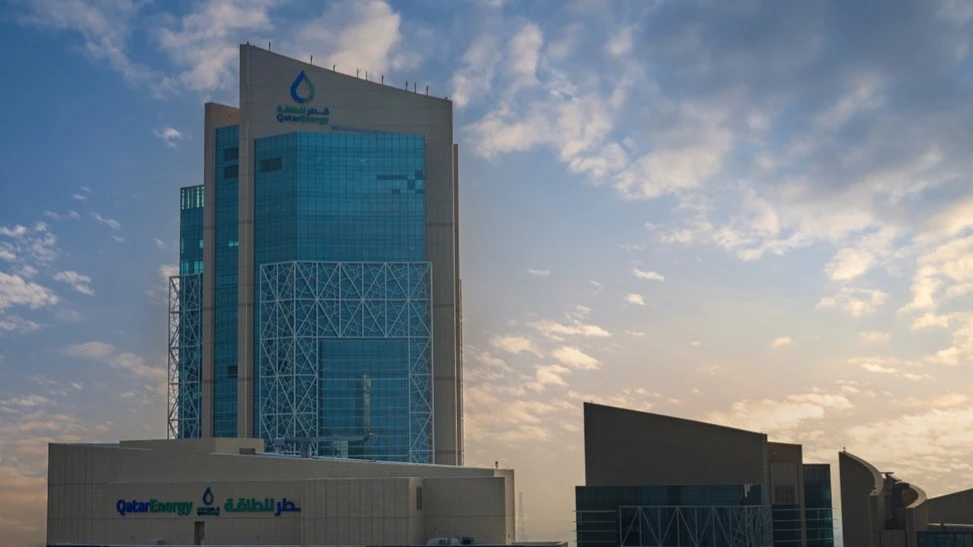
Iran's strike on the Ras Laffan LNG complex has had serious consequences for QatarEnergy's business and for Qatar's own export potential. Photo: SLSK Photography / Shutterstock.com
Three weeks of war in the Middle East have brought a fifth of the world's oil and liquefied natural gas supplies to a halt and reshaped energy exports. The impact of this conflict on the LNG market has been described by market participants as an "apocalypse today", a nightmare and a terrible dream. They may be felt for years to come.
Crisis for years
An Iranian strike on the Ras Laffan gas field and the liquefaction complex there, the world's largest, damaged nearly 17 percent of Qatar's LNG export capacity, Saad al-Kaabi, QatarEnergy CEO and the country's energy minister, told Reuters on March 19.
Two of 14 LNG production lines and one of two gas-to-liquids plants were damaged, he said.
The repairs will take three to five years and $26 billion, leaving Qatar $20 billion short of annual revenues, al-Qaabi said. He said he could not have imagined such a thing "even in his worst dreams".
In early March, QatarEnergy declared force majeure on some contracts when Iran effectively halted shipping through the Strait of Hormuz. But those were short-term contracts, and now the company will have to break contracts to supply LNG for up to five years to Italy, Belgium, South Korea and China, al-Kaabi said.
In South Korea, the share of gas passing through the Strait of Hormuz accounts for 20% of consumption, Bloomberg calculated, and in China - 6%. Due to the consequences of the energy crisis, the situation may be even more difficult in Pakistan, India and Taiwan.
The latter, being the world's largest computer chip manufacturing center, is heavily dependent on LNG as an energy source, so it quickly contracted additional volumes from other regions, securing itself for April and half of Ma. For June, Taiwan is negotiating increased purchases from the US.
The strike on the Ras Laffan complex could be a turning point for the LNG sector, comparable to the undermining of the Nord Stream pipelines in 2022, if not worse, Susan Sakmar, a visiting assistant professor at the University of Houston Law Center, told Bloomberg.
"LNG supplies from Qatar could be suspended for months, and in the worst case, years," says Arne Lohmann Rasmussen, chief analyst at Global Risk Management. - For the gas market, the crisis will not end simply because the war will end and the Strait of Hormuz will reopen".
Deficit instead of surplus
The scale of Qatar's problems is such that it could change the balance of power in the global market for years to come, robbing it of the surplus that was expected from this year with an increase before the end of the decade.
The International Energy Agency (IEA) predicts that between 2025 and 2030, a cumulative 345 billion cubic meters per year of LNG capacity should come online globally: "This is the largest wave of LNG capacity additions in any comparable period in the history of the market."
The agency's experts expected that by 2030 there would be a surplus of 65 billion cubic meters on the global LNG market due to the countries' stated climate and energy policies. This would lead to a noticeable decrease in gas prices.
However, "geopolitical shocks, including those related to the ongoing conflict in the Middle East, as well as further delays in project implementation and final investment decisions... could significantly change the dynamics of capacity additions," the IEA noted on March 17, citing the QatarEnergy situation as an example.
This year, according to the IEA, 40 billion cubic meters of capacity was planned to be commissioned, with two major projects in the US (19 billion per year) and Canada (13.5 billion). Qatar also planned to expand production, bringing 10.9 billion cubic meters to market in 2027 and 27.1 billion in 2028.
But now Qatar has shut down all LNG production with an annual capacity of 77 million tons (106.3 billion cubic meters). The two damaged lines were producing 12.8 million tons of LNG (17.7 billion cubic meters) a year, according to al-Qaabi.
As a result, the expected oversupply on the global LNG market threatens to turn into a shortage of gas. An interruption of more than a month will quickly lead to a shortage of 4%, analysts at Morgan Stanley said.
We are rapidly moving towards a catastrophic gas crisis scenario. Even after the war is over, disruptions to LNG supplies can last for months or even years - depending on how long it takes to repair the damage.
Two gas traders told the Financial Times that what has happened - two Iranian missile strikes on a Qatari compound on Wednesday night and early Thursday morning - simply does not sit right in their minds. "This is unprecedented," one of them lamented.
"This is the apocalypse of today," commented investment banker Laurent Segalen, who specializes in clean energy.
The coming months, he said, "promise to be a real slaughterhouse for gas importers," as Asian and European countries will have to compete fiercely for the dwindling LNG supply by driving up prices.
The war for gas
The price of gas in Europe (Dutch TTF futures) nearly doubled from €32/MWh before the war to €59.3 on Friday.
This is nowhere near as catastrophic as during the 2022 crisis, when the price was already under 90 euros just before the outbreak of war in Ukraine, and at its peak in August of that year exceeded 340 euros.
Still, the price of gas has been climbing over the past week to January 2023 levels, with the European Central Bank warning that prolonged energy supply disruptions could push eurozone inflation up to 6.3% and trigger a short recession.
Qatari LNG used to supply only 3% of the EU's gas needs. But the situation is complicated by the fact that EU countries are ending the heating season with extremely low gas reserves: storage facilities are now 28.7% full, according to Gas Infrastructure Europe. The average for this time of year over the past five years is about 42%. In other words, in the coming months, Europe will need to purchase increased volumes, competing for supplies with Asian countries, which will be hit harder by this crisis.
India's Indian Oil Corp. on Thursday closed a tender without selecting a supplier for April due to prices offered by sellers that were too high.
In addition, freight rates have skyrocketed. Shipping one LNG tanker to Asia now costs about $80 million - more than twice as much as before the war in Iran.
Developing countries in Asia buy four-fifths of Qatari LNG, and if supply disruptions last several months, the region's stock indexes could slide, Toby Copson, China-based portfolio manager at Davenport Energy, told Bloomberg, "South and Southeast Asia will be the first victims."
Qatar accounts for 99% of Pakistan's LNG imports, and authorities there have already warned that there may not be enough gas to meet demand from mid-April. In many Asian countries, LNG is used by industry, for cooking in homes, cafes and restaurants, and by the agricultural sector, which needs fertilizer (the Gulf countries are major suppliers).
So far, Asian countries, from South Korea to Indonesia to Bangladesh, have been increasing coal-fired power generation.
LNG suppliers from the U.S. and Canada, which is ramping up exports, are in a favorable position. "The global gas crisis is boosting U.S. export revenues and helping to attract more gas-intensive industries and jobs to the country," notes Kavonik of MST Marquee.
The US and Qatar were the big players that could quickly adjust the market situation, says Michael Sabel, CEO of VentureGlobal, one of the leading LNG producers in the US. Now, based on this logic, only the U.S. is left.
"We remain committed to supplying the market and supply is gradually increasing," Michael Sabel said.
This article was AI-translated and verified by a human editor