Immix Biopharma has set its sights on an $11 billion market. What will happen to its stock?

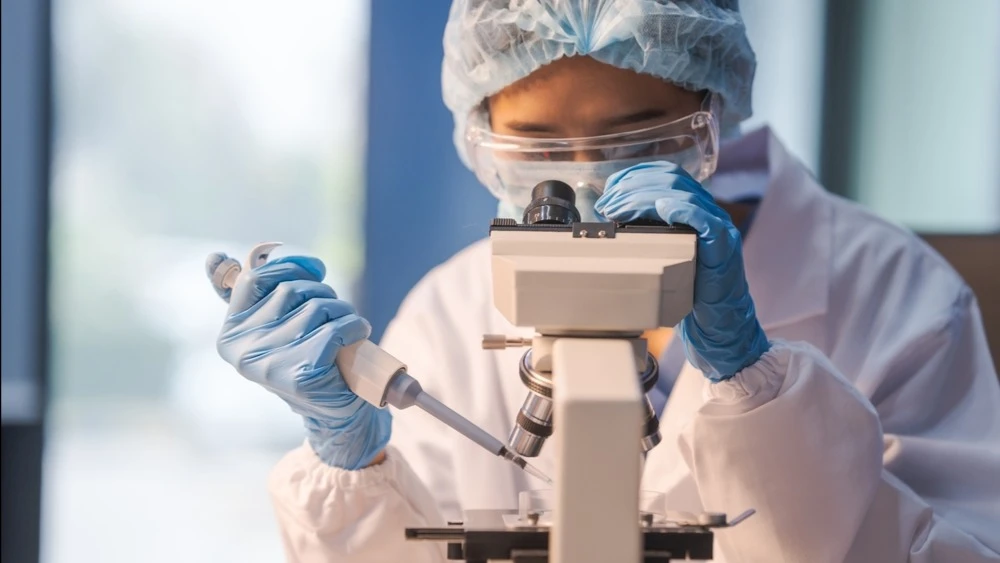
Immix initially focused on developing cancer and anti-inflammatory drugs / Photo: Shutterstock.com
Immix Biopharma, a small biotech company, has set out to revolutionize the market for treating AL amyloidosis, a dangerous disease that can cause heart, kidney, and liver failure. The latest clinical data show that its experimental drug has a high chance of approval, according to investment bank HC Wainwright. According to Grand View Research, the global market for AL amyloidosis drugs could grow to $11.13 billion by 2033.
An idea born in a test tube
Immix Biopharma was founded in 2012. The idea for the company came from Ilya Rakhman, a physician-researcher and cell biologist who, according to the company, wanted to translate academic discoveries into practical applications.
By the time he founded Immix, he had extensive experience conducting clinical trials. He was among the first to test drugs targeting a specific protein whose activity can lead to inflammatory and severe viral diseases, as well as the growth of cancerous tumors. Later, Rahman founded an organization that conducted clinical trials on behalf of pharmaceutical companies.
Rahman's business partners are patent attorney Sean Senn and scientist Vladimir Torchilin.
Immix refers to the latter as its “scientific co-founder.” Torchilin, one of the world’s leading experts in medical nanotechnology, graduated from the Chemistry Department at Moscow State University and the Institute of Experimental Cardiology. In particular, he worked on developing treatments for blood clots, strokes, and heart attacks. The methods his team devised for delivering medication into the body are still in use today. In 1991, Torchilin moved to the United States and continued his career there. In 2024, ScholarGPS—a service that ranks scientists in their fields based on the number of citations their work receives in other authors’ articles— named Torchilin a “highly cited scientist,” a distinction held by only 0.05% of the world’s scientists.
Clinical pathway
Initially, Immix, as Rahman had envisioned, focused on developing anticancer and anti-inflammatory drugs. The main one was the IMX-110 molecule, designed to treat solid tumors—those that are visible to the naked eye. It first blocks the specific proteins that promote tumor growth and then destroys the tumor. Clinical trials of IMX-110 are ongoing in Australia and the United States.
In 2022, Immix expanded its development portfolio by acquiring the rights to the drug candidate NXC-201 from Hadassah Medical Center in Israel. This is a cell therapy (CAR-T) that has the potential to treat certain types of cancer, as well as AL amyloidosis, a condition in which amyloid protein accumulates in the heart, kidneys, liver, and other vital organs, ultimately leading to organ failure and death. The deal is worth $20 million in upfront royalties and future milestone payments, plus a commitment to invest $12 million in Hadassah’s clinical program over four years.
Currently, treatment for AL amyloidosis involves combinations of targeted drugs and chemotherapy. However, there are currently no approved therapies for patients with relapsed or refractory AL amyloidosis. Unlike these regimens, NXC-201 is a single-dose CAR-T therapy.
In May 2026, Immix released data showing that NXC-201 was effective in 95% of patients with recurrent AL amyloidosis. One year after receiving the drug, 19 out of 20 patients—one of the two patient groups being monitored—were in complete remission. There were no signs of the disease even in those who had not responded to four previous lines of therapy.
In September 2026 and March 2027, Immix plans to present data from the second group of trial participants and then submit an application for its registration, after which it will be able to begin commercial operations.
It also plans to begin testing the drug as a first-line treatment for patients who have not yet received any treatment.
The company notes that the NXC-201 has orphan drug designation in the U.S. and Europe. This means that no other company will be able to register a similar product for the same indication for seven years in the U.S. and for ten years in the EU.
What Investors Need to Know
In its early years, Immix financed its operations through grants and the sale of promissory notes and bonds; and in 2021, it held an IPO, selling 4.2 million shares at $5 each—for a total of $21 million, excluding the underwriters’ option.
Since then, its share price has risen by 70%.
Following the release of updated clinical data on NXC-201, investment bank HC Wainwright raised its price target for the company’s shares by a full third—to $20, which is 2.4 times higher than the closing price on June 12. Analysts believe that the results have increased the likelihood of the drug’s approval from 85% to 95%. They forecast that at its peak, NXC-201 could capture 55% of the market for its indication, compared to the 40% the investment bank had previously anticipated.
According to Grand View Research, the market for AL amyloidosis treatments is expected to grow by 7.5% annually and reach $11.13 billion by 2033, the company states in its 2025 report.
The company’s operations are not yet generating revenue. Immix warns that it will not turn a profit for many years to come—and perhaps never. Moreover, the company notes that its operating losses will increase as research continues. Among other risks to its business, Immix cites increasing competition: pharmaceutical giants AbbVie and Janssen, the pharmaceutical subsidiary of Johnson & Johnson, have publicly announced the development of treatments for AL amyloidosis, according to its report.
Immix shares have four ratings from Wall Street analysts, all of which are "Buy." The average price target is $18.50, which implies the potential for the stock to more than double from its last closing price.