Wall Street Saw a Resumption of Oil Supplies from the Middle East: What About Prices?
Goldman Sachs considers the oil market to be in balance, but Brent has closed higher for the third consecutive month

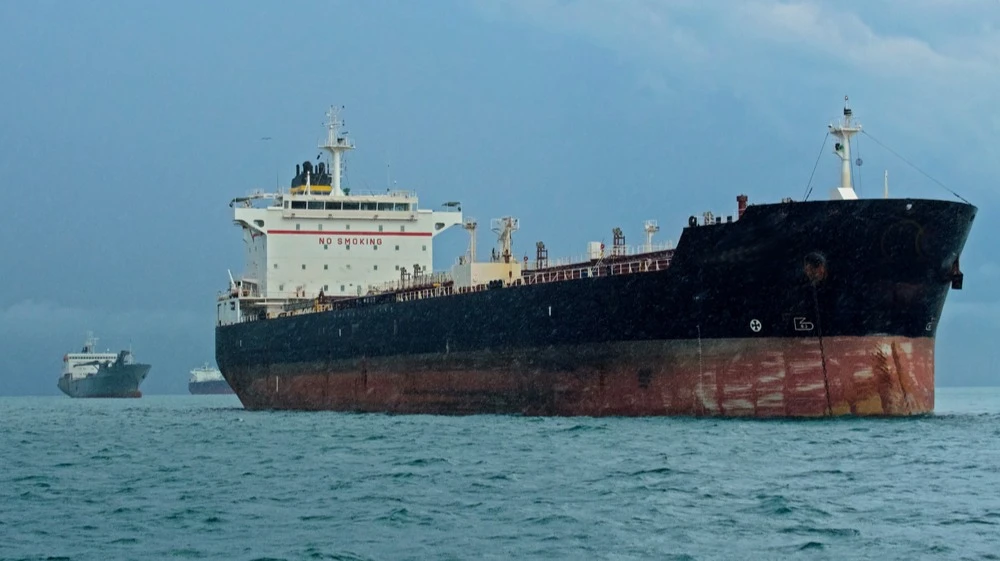
Freight rates in the Strait of Hormuz have surged to record levels, leading to a rush of demand for used oil tankers / Photo: Bruce Raynor/Shutterstock.com
Oil supplies from the Middle East have approached pre-war levels, according to Wall Street investment giants JPMorgan Chase and Goldman Sachs. However, the increase in supply has not yet eliminated the geopolitical risk premium in prices: it is being sustained by uncertainty surrounding the U.S.-Iran conflict.
Oil Prices Are Rebounding, but Fuel Prices Are Lagging Behind
According to JPMorgan’s estimates, oil shipments from the region have reached 17.5 million barrels per day—98% of pre-war levels, Bloomberg reports. Shipments of petroleum products, including gasoline and diesel, have recovered to only 3 million barrels per day, or 58% of pre-war levels. Total exports averaged 20.5 million barrels per day over the past ten days—89% of the 2025 level, Reuters adds, citing calculations by the U.S. bank with the largest asset base.
Goldman Sachs estimated exports from the Persian Gulf over the past week at 23.3 million barrels per day, including gray-market shipments—roughly the same as the average for 2025. “According to our estimates, oil supply on the global market in September is roughly in line with demand,” the bank’s analyst Yulia Zhechtkova-Grigsby wrote to clients on September 29 (as quoted by Bloomberg).
Risk Premium
The recovery in supply has already affected prices: On September 29, oil prices fell due to increased shipments from the Middle East, but rose again on the morning of September 30, Reuters notes. According to the agency, the price rise resumed after U.S. President Donald Trump denied an Axios report that he was willing to ease sanctions against Iran and unfreeze its funds in exchange for specific steps by Tehran regarding its nuclear program.
Despite the increase in supplies, Brent is on track to end September with a 14% gain—its strongest performance since July, according to Reuters.
“The ongoing uncertainty surrounding sanctions relief and negotiations is keeping a geopolitical risk premium in prices,” Reuters quoted SS WealthStreet analyst Sugandhi Sachdeva as saying. “Increased supplies could curb further price increases, but new disruptions [in supplies] or escalating tensions could trigger another rally,” she added.
The price of Ormuz is rising
Shuttle voyages are helping to boost shipments, according to the Financial Times (FT). Middle Eastern producers are taking on the risk of transiting the Iranian-controlled Strait of Hormuz: they transport oil out of the Persian Gulf themselves and transfer it to tankers waiting offshore. “This has allowed oil companies to increase exports regardless of how many ships are willing to risk passing through the Strait of Hormuz,” explained Niels Rasmussen, chief analyst at the shipping association BIMCO.
Meanwhile, charter rates for supertankers to transit the strait reached an unprecedented $1.2 million per day last week. The frenzied demand for used vessels that can be sent to the Persian Gulf to capitalize on high freight rates has driven the value of the vessels themselves to record levels, the FT found.
"Supplies through the Strait of Hormuz have essentially 'returned to late-June highs—nearly 13 million barrels per day—primarily thanks to Saudi Arabia,'" JPMorgan reported. “But the increase in the number of transits through the strait does not mean that the route has become safer. Rather, it reflects the industry’s growing ability to operate under conditions of constant risk” (quoted from Bloomberg).
Context
The U.S.-Iran war is now in its eighth month, and attacks on ships continue in the Strait of Hormuz. Tehran claims control over this maritime corridor, through which one-fifth of global oil transit passed in peacetime. Washington rejects these claims, is blockading Iranian ports, and is facilitating the passage of ships from other countries, according to Bloomberg.
To bypass the strait, Saudi Arabia used the East-West Pipeline, which connects the Persian Gulf to the Red Sea. Following the attacks on September 10, the kingdom was forced to halt pumping and increase exports through the Strait of Hormuz. Later, operations on the pipeline were partially restored, and on September 29, tanker loading resumed at the port of Yanbu on the Red Sea, according to Reuters.
According to Goldman’s estimates, Iran’s exports declined, while those of other Gulf producers increased. Saudi shipments more than doubled in September and exceeded the 2025 average, Bloomberg reports, citing the bank’s calculations.
This article was AI-translated and verified by a human editor