LVMH is trading at a 30% discount to Inditex. Why aren't investors buying into the dip?
Zara co-founder Amancio Ortega ranks higher on the Forbes list than LVMH CEO Bernard Arnault

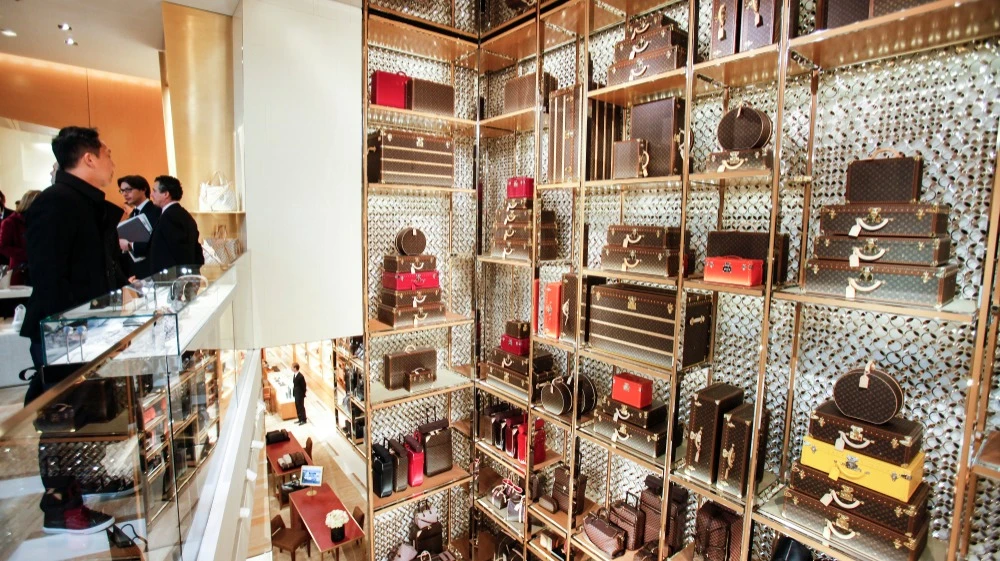
Based on the price-to-earnings ratio, LVMH shares are currently trading at a 30% discount to Inditex. Photo: Alessia Pierdomenico/Shutterstock
The stock market is showing unusual trends: shares of major luxury companies, such as LVMH—which owns Louis Vuitton and Christian Dior—and Prada, are trading at an unusually large discount compared to “fast fashion” companies — Zara (Inditex) and H&M, writes The Wall Street Journal. Investors are in no hurry to snap up these discounted assets due to fears that the sector’s best days are behind it, the newspaper reports.
Details
Based on the price-to-earnings ratio, LVMH shares are currently trading at a 30% discount to Inditex, according to The Wall Street Journal. Global luxury goods sales have shown almost no growth for three years now due to the fading of two major trends that had driven the industry’s historic annual growth rate of 8%.
The first factor was a decline in demand in China. Retail sales in the country have been growing by less than 1% for five consecutive months. One reason is the crisis in the real estate market: property values have plummeted by 40% compared to their peak at the end of 2021. As a result, homeowners feel poorer and are cutting back on luxury spending. In addition, the WSJ added that major expenditures by wealthy citizens are expected to decline due to the 20% tax on offshore trusts imposed by Beijing.
Another factor was the situation in the West. Middle-income consumers in the U.S. and Europe are facing inflation, rising energy prices, and high interest rates on loans. As a result, they no longer have the disposable income for $4,000 handbags, which they used to be able to afford once a year, the WSJ explains.
Who Is Affected by the Drop in Demand?
Against the backdrop of these challenges, a structural divide has emerged in the market, the WSJ continues. Mega-brands such as Louis Vuitton, which derive more than half of their sales from mass-market consumers with average incomes, have proven to be the most vulnerable. At the same time, brands focused exclusively on a narrow group of the ultra-wealthy, such as Brunello Cucinelli, are less sensitive to market changes, the newspaper asserts. Richemont, the owner of Cartier, is also feeling confident. It successfully attracts customers across a range of income levels, offering products priced from a few hundred dollars to 10 million. Richemont’s shares are currently trading at the same price-to-earnings ratio as those of Zara’s parent company.
In addition to losing traditional customers, luxury brands are facing stiff competition from resellers, according to Morgan Stanley analysts. Sales on The RealReal, a luxury resale platform, rose 17% in the second quarter. The market is signaling that consumers are turning to the secondary market or to more affordable options from brands like H&M and Zara.
This shift also affected the net worth of Inditex and LVMH’s major shareholders—billionaires Amancio Ortega and Bernard Arnault. Arnault was once the world’s richest businessman, according to Forbes, but in September 2026, he fell out of the top 10 on the list. His net worth is now estimated to be lower ($116.9 billion) than Ortega’s ($140.5 billion): Arnault ranks 14th, while Ortega ranks 11th.
Luxury brands now face a tough choice: make their products more affordable or maintain prices and accept a decline in business, the WSJ notes. For investors, stocks in this sector are no longer the asset class that was once prized for its strong growth and unlimited potential for price increases, the newspaper concludes.
This market pessimism is also confirmed by investment banks’ assessments: RBC analysts downgraded LVMH and Burberry at the end of September, calling investors’ expectations “too optimistic.” Overall, Goldman Sachs’ luxury stock index fell 15% in 2026, on track to post its worst performance since 2008.
This article was AI-translated and verified by a human editor