Morning in New York: Rising Treasury Yields Weigh on Stocks


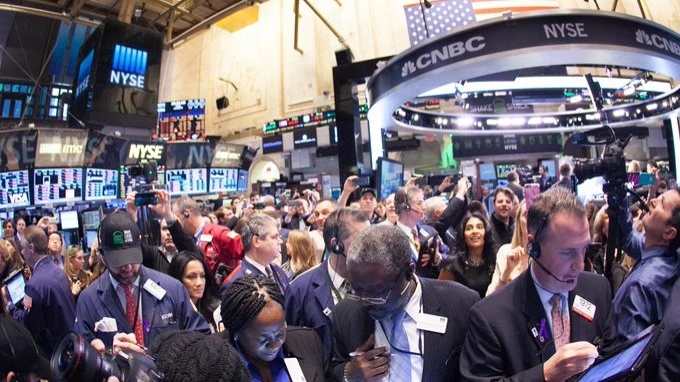
High Treasury yields remain the main source of pressure on stocks / Photo: X / NYSE
A daily overview and forecast of events in the U.S. stock market by Mikhail Denislamov, Deputy Director of Capital Markets Research at Freedom Broker.
We expect
High Treasury yields remain the main source of pressure on stocks. Strong preliminary Purchasing Managers’ Index (PMI) data from S&P Global for September reinforced expectations of a further Fed rate hike and also reignited the debate over whether the economy is overheating. At the close of trading yesterday, the yield on 10-year Treasury notes approached 5.11%, and today it is rising toward 5.13%, a new high since 2007. A massive sell-off continued in Japanese bonds, causing the yield on 10-year JGBs to rise by 8 basis points to 3.06%, a peak not seen since 1996. This trend is limiting the potential for a stock market recovery, particularly for shares of small companies with a relatively high proportion of floating-rate debt and a need for new capital.

Among today’s macroeconomic releases, the statistics on unemployment insurance claims are of the greatest interest. The consensus forecast calls for an increase in initial claims from 196,000 to 200,000, and in continuing claims from 1.73 million to 1.75 million. If actual figures come in slightly above these estimates, it could dampen expectations of further rate hikes and provide support for bonds. Unexpectedly low figures, on the other hand, would keep pressure on the bond market.
Also this Thursday, new home sales data for August will be released (consensus: +1.4% MoM, July: -10.5%). The recovery will offset only a small portion of the previous decline. A result below consensus could heighten concerns about the sustainability of housing demand.
Negotiations between U.S. and Chinese representatives will continue, and a meeting between President Donald Trump and President Xi Jinping is expected. Treasury Secretary Scott Bessent announced an agreement to extend the trade truce for two months. For semiconductor manufacturers, agreements on access to the Chinese market remain the main potential surprise; however, Washington is not currently showing any willingness to significantly ease export restrictions.

A decline in oil prices could somewhat ease inflation concerns. Iran remains open to diplomatic dialogue with the U.S., although differences between the two countries persist. The risk of supply disruptions remains a concern, which could push oil prices higher.
Meta Platforms (META) stock remains in the spotlight following Mark Zuckerberg’s presentation at the Meta Connect conference, which took place after the market closed. The company unveiled Charm, a pocket-sized device designed to work with the AI assistant Muse: the gadget, roughly the size of an AirPods case, features a 2-inch screen and 5G connectivity and is expected to go on sale in time for the December holidays. The company also made Muse the primary interface for its smart glasses, adding computer control and integrations with Walmart (WMT) and Best Buy (BBY). New VR headsets will go on sale in the spring of 2027 and will cost $1,299. Meta intends to transform Muse from a software product into its own hardware ecosystem, expanding the potential monetization of AI services beyond advertising and social media.

Before the start of the main trading session, Darden Restaurants (DRI) and TD SYNNEX (SNX) will report their earnings. After the market closes, Costco Wholesale (COST) and Scholastic (SCHL) will release their results. In Costco’s report, the most important metrics will be changes in profitability and membership growth.
S&P 500 and Nasdaq-100 futures are in the red. We assess the risk outlook for the upcoming session as negative, with elevated volatility. High bond yields are currently limiting the positive impact of the trade truce and falling oil prices. A rebound in the S&P 500 above 7,735 points would provide grounds for revising the risk balance toward neutral.
What to Watch for in the Pre-Market
— Everpure (P) shares rose by approximately 6.7% following the release of its outlook for fiscal year 2028 (FY), projecting revenue in the range of $7–7.3 billion and non-GAAP operating income in the range of $1.7–1.9 billion. Guidance for FY 2027 was reaffirmed at $5.03–5.07 billion and $940–960 million, respectively. Three new business segments—Modern Data Software, Scale AI, and Hyperscale Solutions—are expected to account for approximately 20% of revenue by FY 2030. The guidance provided implies a significant acceleration in growth and an improvement in operating margins after FY 2027.
— MGM Resorts (MGM) shares are down by about 9% after People Incorporated (PPLI) withdrew its offer to buy out the company’s shares that it does not already own. The offer had been priced at $48.30 per share and valued MGM at more than $18 billion, with People retaining a stake of about 27%. MGM confirmed that it will continue to operate as an independent company. The stock’s plunge reflects the disappearance of the potential buyout premium and shifts investors’ focus to the issuer’s operating results.
— GRAIL (GRAL) has been in the spotlight after six out of four members of the FDA’s advisory committee voted in favor of approving the application for the Galleri test, which is designed for the early detection of several types of cancer. However, the committee’s recommendation is not binding on the FDA, and a final decision is expected in the coming months.
— Viking Therapeutics (VKTX) shares are down more than 8% following the announcement of a $200 million equity offering and convertible bonds for the same amount. The proceeds are expected to be used to advance the VK2735 and VK3019 programs, as well as for general research, working capital, and corporate purposes.
— Stitch Fix (SFIX) shares plummeted by about 18% following the release of its earnings report and a weak outlook for the new fiscal year. The company’s fourth-quarter revenue rose 4.2% year-over-year to $324.4 million, compared with a consensus estimate of $325.5 million, while the number of active customers fell 1.4% year-over-year to 2.277 million. For FY 2027, the company expects revenue in the range of $1.31–1.36 billion, compared to a market consensus of $1.4 billion, and forecasts adjusted EBITDA in the range of $27–42 million, following $53.4 million for fiscal year 2026. The market’s reaction to these figures reflects concerns that weak annual guidance will outweigh continued revenue growth.
The Market on the Eve of...
Trading on U.S. stock exchanges on September 23 ended in the red. The S&P 500 lost 0.75%, the Nasdaq-100 fell 0.85%, the Dow Jones dropped 0.68%, and the Russell 2000 fell 1.77%. The number of stocks trading in negative territory significantly exceeded the number of gainers. On the NYSE, this ratio was 3.84 to 1, and on the Nasdaq, it was 3.37 to 1. The equally weighted RSP fell by 0.7%, almost in sync with the SPY (-0.72%), meaning the correction was not limited to just the largest companies. At the same time, large-cap “growth” stocks underperformed “value” stocks (-0.94% versus -0.51%), while small-cap “growth” companies lost 2.05%. The only sector ETF to remain in positive territory was the energy ETF XLE (+0.95%). The biggest decliners were utilities (XLU: -1.92%), real estate (XLRE: -1.55%), and consumer cyclicals (XLY: -1.5%). The trading pattern indicated broad-based selling pressure, which was most pronounced in interest-rate-sensitive sectors.

The main factor driving stock market movements was a reassessment of the ruble exchange rate forecasts following strong September business activity data. According to preliminary estimates by S&P Global, the manufacturing PMI rose to 57 points, while the services PMI climbed to 58.7 points, even though the consensus forecast had predicted a decline to 53.6 and 56, respectively. At the same time, the report noted increasing price pressure. After a slight decline at the open, pressure on stocks intensified amid the release of the PMI data and rising Treasury yields. Yields on two-year and ten-year Treasury bonds rose by approximately 15 basis points—to 4.89% and 5.1%, respectively. Negative sentiment was exacerbated by comments from Federal Reserve Board member Michael Barr, who acknowledged the need for further adjustments to monetary policy to bring inflation back to the central bank’s 2% target.
A weak auction of $70 billion in five-year Treasury bonds put additional pressure on the bond market. The yield at the auction was 3.1 basis points higher than the market level immediately prior to the auction, and demand was below the average for the past six months.
Selling pressure was seen in the stocks of major technology companies: NVIDIA (NVDA), Alphabet (GOOGL), Amazon (AMZN), and Broadcom (AVGO) collectively accounted for about 49 basis points of the SPY ETF’s decline out of a total of 72 basis points. Meanwhile, semiconductor manufacturers, including memory chip makers, lagged behind, while software and cybersecurity product developers appeared more resilient. Shares of Palo Alto Networks (PANW) and CrowdStrike (CRWD) rose by about 5%.
A key feature of the session was a broad-based decline amid a sharp rise in bond yields. Weakness among the largest technology companies amplified the indices’ movements, but the virtually identical performance of the SPY and RSP suggests broad-based pressure. The main line of divergence ran along the spectrum of interest rate sensitivity: small-cap companies, growth stocks, and the real estate and utilities sectors fared the worst. The energy sector, on the other hand, received support from the recovery in oil prices.
This article was AI-translated and verified by a human editor