Nasdaq Composite jumped more than 1% in opening trading

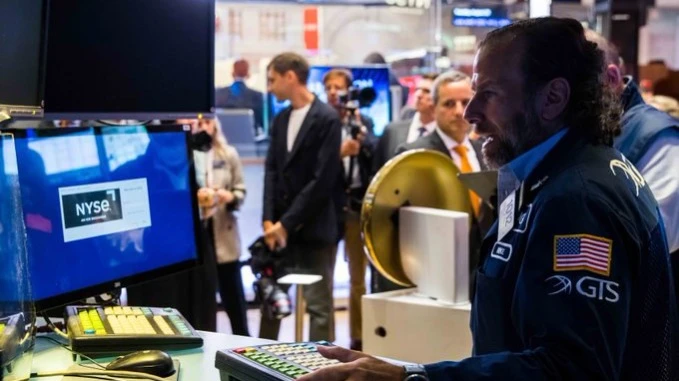
Photo: NYSE
U.S. stocks rose at the opening of trading on Tuesday, April 14. The broad market index S&P 500 rose by 0.5%, technological Nasdaq Composite jumped by 1.1%. The Dow Jones blue chip index added 0.2%. Wall Street continues to demonstrate resilience in the face of geopolitical uncertainty, commented CNBC.
The day before, traders ignored the breakdown of peace talks between the US and Iran, remaining optimistic about a possible agreement. As a result, the S&P 500 at the end of the session recovered all the losses incurred since the beginning of the war in the Middle East.
A Bloomberg source reported Tuesday that Iran is considering suspending its own oil exports through the Strait of Hormuz for a few days in order not to provoke the United States and not to give a pretext for tightening the naval blockade or a military incident. Such a step could be a temporary de-escalation measure and a signal of readiness to compromise when new negotiations are being prepared, the agency said.
Investor sentiment was also supported by the Producer Price Index data for March: the index grew much weaker than expected.
As in the previous session, the market was pulled by technology stocks. Oracle soared 6% - after a 12% rally on Monday. Nvidia and Palantir Technologies also continued to rise.
"We're seeing a rotation back into more cyclical segments of the market," Ma Wilson, chief investment officer and chief U.S. equity market strategist at Morgan Stanley, told CNBC. He said this dynamic signals that "things will resolve in a constructive way in the second half of this year." "The minima have already been passed," the analyst believes.
Oil prices turned downward after the growth on Monday. May futures for WTI collapsed by 4.4%, trading at less than $95 per barrel, while June futures are already around $90. Brent was losing 2.6%, quoting just below $97. The International Energy Agency warned that amid tight supply and rising energy prices, the decline in demand will intensify and it will shrink for the first time since the 2020 pandemic.
This article was AI-translated and verified by a human editor