AI Powered by Coal: Kazakhstan to Build a $10 Billion Data Center. What Are the Risks of the Project?

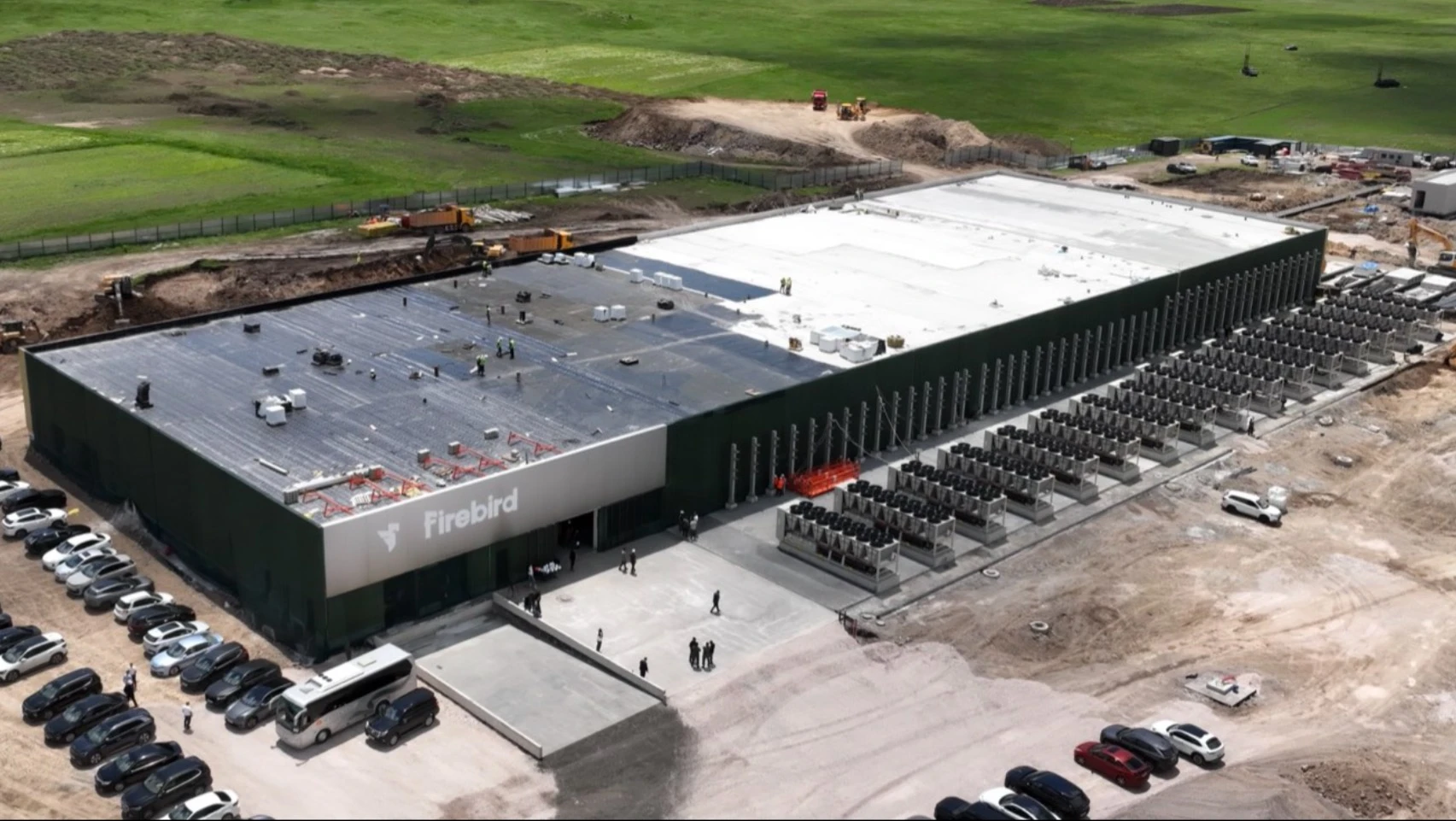
The American company Firebird is building a data center in Armenia, which is scheduled to launch in July of this year. In June, it signed a series of agreements with the government of Kazakhstan. Photo: Firebird.ai
The Kazakh government has signed a $10 billion package of agreements with the U.S. company Firebird, which calls for the construction of a large data center in Ekibastuz using Nvidia chips. This was announced on June 15 by Kazakhstan’s Ministry of Artificial Intelligence and Digital Development.
This data center will serve as the foundation for the “Data Center Valley”—a project through which the country is attempting to reduce its dependence on raw material exports; last year, oil and petroleum products accounted for half of its budget’s export revenues.
Coal Valley
In January of this year, Kazakh President Kassym-Jomart Tokayev announced the possibility of building AI data centers that would run on cheap electricity from coal-fired power plants.
It was decided to build them in Ekibastuz, which, according to Bagdat Musin, chairman of the board of the state-owned company “Kazakhtelecom,” accounts for about 40% of Kazakhstan’s electricity. It is the center of the country’s coal industry.
It was originally planned that Kazakhstan would build the first phase of the “Data Center Valley” project, with a capacity of 50 MW, on its own—using the resources of “Kazakhtelecom.” “Negotiations are underway with international investors. But we’re not waiting for anyone,” said Zhasslan Madiev, Minister of Information Technology and Digital Development, in February.
Despite these statements, they were actively seeking investors and partners: Kazakhtelecom and the Ministry of AI and Digital Development sent information about the project to 27 international technology companies, Musin said.
As a result, Firebird was incorporated into the project, and the concept changed. The cost of the first phase of the project is now estimated at $5 billion, of which $1 billion will be invested by Kazakhtelecom through its subsidiary, KT-Telecom. KT-Telecom will handle the construction of the buildings, cooling systems, and communications infrastructure. Firebird is responsible for the infrastructure and technology, including the supply of Nvidia graphics cards —up to 100,000 GB300 and Vera Rubin GPUs.
Kazakhstan’s “Data Center Valley” will be directly connected to the nearby Ekibastuz GRES-1 power plant. A 215-MW substation was also purchased for the project. In total, the “Data Center Valley” has a capacity of up to 1 GW.
The 125-MW data center is scheduled to begin operations in 2027. The parties will determine the terms for implementing the second phase at a later date.
Kazakhstan’s Prime Minister Olzhas Bektanov has called Firebird a “global IT giant,” but for now, it is better described as a “startup.” Its co-founder and CEO, Razmik Ovakimyan, is also known as the head of the investment company Leo Messi Play Time. Firebird’s other co-founder, Alexander Esayan, is a co-founder of Ucom, IUNetworks, and Team Telecom Armenia.
Zhaslan Madiev said that the new project will generate $3 billion in export revenue per year. This represents approximately 3.8% of Kazakhstan’s total exports for 2025.
Firebird is also building a similar data center in Armenia, near Razdan. The cost of the first phase of construction is $500 million. According to plans, this data center will go live as early as July of this year. It is expected that during the first phase, the project will receive 6,000 Blackwell chips from Nvidia. Its total planned capacity is comparable to that of the first phase of the Kazakhstani project—100 MW. For the first time in the history of Armenia’s banking system, six financial institutions have entered into a syndicated loan agreement for $300 million to fund the project.
What Does “Data Center Valley” Offer?
According to information from “KT-Telecom,” residents of the “Data Center Valley” will receive electricity at approximately $0.025 per kilowatt-hour, which is three times lower than the average rates for Kazakhstani enterprises and very cheap by global standards. However, this price is slightly higher than the maximum supply rates set for GRES-1 through 2032 (9.5 tenge per kilowatt-hour, or approximately $0.019).
In April of this year, Bagdat Musin of Kazakhtelecom said that his company had held talks with 20 hyperscalers from the U.S., China, and India. As a result of these negotiations, Kazakhtelecom managed to generate preliminary demand for capacity exceeding 100 MW—that is, approximately 80% of the amount announced for the first phase. However, he did not specify exactly who these companies were, nor did he mention what stage the negotiations are currently at.
There is currently no demand in Kazakhstan itself that matches this scale, which is why the government is positioning the project as an export-oriented one, says Vadim Novikov, an associate professor at Almaty Management University (AlmaU).
“Since the data center isn’t located in the U.S. or the EU, profitability will be lower, but there will still be demand. For many companies, response time—that is, the distance to the server—is important, or the jurisdiction in which the data is stored matters to them. There is more than enough demand from those for whom these factors are not as important,” says Stepan Gershuni, an investor at the Cyber Fund venture capital fund.
In April, Kazakhtelecom and the Ministry of AI and Digital Development signed a memorandum of understanding with Aleria, a company based in the UAE, which means that the company has no firm plans to use the capacity of the future data center.
Aleria representatives requested that the memorandum specify that they are interested in at least 30 MW of capacity. Their delegation visited the site and confirmed that the location and access to electricity are indeed available. A working group has now been established to define the business model for the partnership, and further documents are being prepared.
The project’s parties have not publicly disclosed any other agreements. As of the time of publication, representatives of KT-Telecom, Firebird, and Aleria had not responded to Oninvest’s inquiry.
Risks for Kazakhstan
Novikov points out that the project has several weaknesses. “The project has been granted certain benefits—for example, the electricity capacity that Firebird receives in advance will no longer be available to anyone else,” he says.
Kazakhstan does indeed face a problem with its energy balance. In 2025, energy consumption rose to 124.6 billion kWh, while production totaled 123.1 billion kWh. At the same time, peak load exceeded 17.7 GW, while maximum generation was less than 17.3 GW. Kazakhstan’s Ministry of Energy plans to eliminate the annual generation deficit as early as 2026; however, the shortage of reserve capacity to cover peak demand, maintenance, and emergency outages will persist until at least 2032. However, these problems mainly affect the southern part of the country. In the north, including Ekibastuz, on the other hand, a power surplus is expected as early as this year.
Novikov points out that the issue of long-term operation remains a pressing concern. According to Epoch AI’s long-term data, the cost of a unit of computing power decreases by an average of 25–30% per year.
According to accounting standards, the full payback period for such projects is five to six years, but in reality it’s two to three years. The Firebird project will provide the country with more than enough capacity for its own digital needs, but it must be acknowledged that, in other respects, this still looks like a risky venture for the government.

According to Jefferies, by the end of 2025, global demand for computing power exceeded supply by nearly 2.4 times. However, there is a risk that in a few years, the global oversupply of these services could amount to billions of dollars: this is difficult to predict.
Last year , McKinsey experts estimated that global investment in data centers would need to reach $6.7 trillion by 2030 to meet the growing demand for computing power; depending on the demand scenario, this figure could range from $3.7 trillion to nearly $8 trillion. Goldman Sachs analysts project investments through 2030 to range from $4 trillion to $8 trillion, with a base-case estimate of $6 trillion. However, as the bank’s analysts note, discussions about the scale of such investments boil down to one question: Will the spread and commercialization of AI justify such massive expenditures?
This article was AI-translated and verified by a human editor