Redburn Expects a Stock Market Crash for Non-Cloud Providers. What's Wrong with the AI Computing Market?
Credit markets are beginning to factor in the structural fragility of the AI computing market

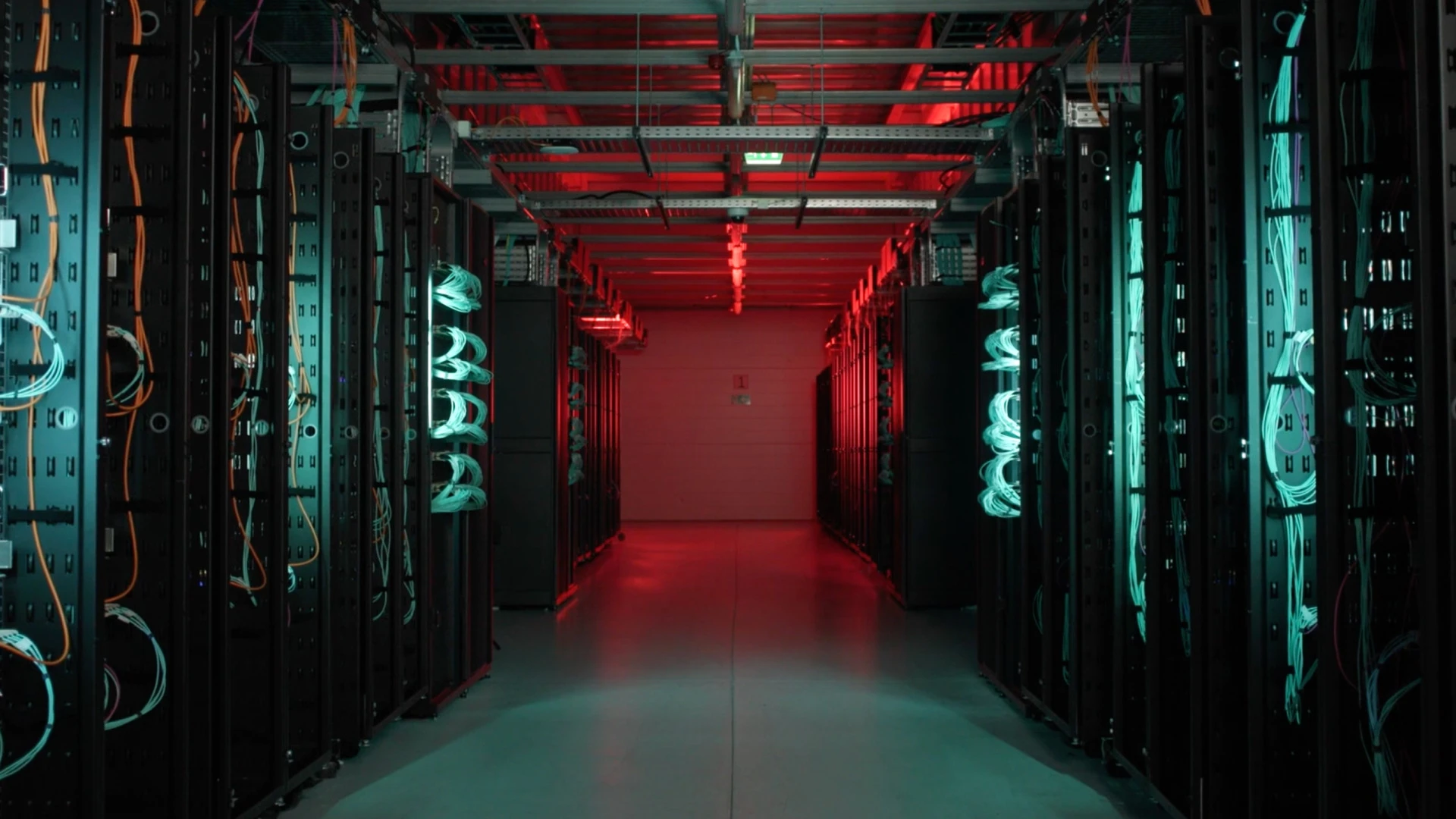
It is becoming increasingly expensive for data center owners to service their debt for AI infrastructure / Photo: Nebius
Rothschild & Co Redburn analyst Alex Heissl warned of rising risks in financing the artificial intelligence boom and assigned a “sell” rating to the stocks of non-cloud providers Nebius and CoreWeave, as well as hyperscaler Oracle. Last November, he was among the first to downgrade Microsoft and Amazon to “neutral.” In a note to clients cited by MarketWatch, the analyst pointed to the structural vulnerability of the computing power segment in the AI supply chain as market leverage increases.
Details
Stock investors are focusing on the high demand for chips and servers: due to infrastructure shortages, buyers are paying an average of more than $20 billion per gigawatt of capacity per year, Heissl wrote. However, the analyst believes these prices are significantly inflated. They are driven by well-funded AI startups—neocloud services that, with money from venture capital funds or large tech companies, sign contracts to purchase cloud infrastructure at prices significantly higher than what is justified by market economics. “Our analysis points to significant downside potential in the computing power segment,” Heissl wrote in a note dated September 21.
Due to the potential decline in the cost of AI computing, the analyst downgraded the ratings of non-cloud providers Nebius, CoreWeave, and Oracle to “sell.”
During trading on September 22, Nebius shares rose nearly 1.5%, CoreWeave shares rose 0.8%, and Oracle shares rose 1.1%.
What alarmed the analyst
Unlike the stock market, credit markets, according to Heissl, are already beginning to price in the structural vulnerability of the AI computing sector, MarketWatch reports. The free cash flow of major tech companies—Amazon, Microsoft, and Alphabet—has declined due to massive AI spending, forcing them to increase their borrowing. At the same time, the actual level of debt burden is significantly higher than reported figures, the analyst asserts. He explains that traditional metrics do not account for off-balance-sheet obligations related to long-term infrastructure leases and financial guarantees that major players provide to smaller partners. According to his estimate, hyperscalers Amazon, Microsoft, Meta, and Oracle have accumulated more than $1 trillion in future lease obligations.

A separate issue is the cost of borrowing for specialized cloud providers that work with “less stable counterparties”—that is, non-cloud providers. Such startups sign more expensive contracts for model training but remain dependent on access to external capital, Heissl notes. As a result, lenders are already wondering whether these expensive contracts can be renewed once they expire.
The trend in the cost of debt confirms this. When Nebius issued convertible bonds in August 2026, the coupon rate rose from 0.5% for securities maturing in 2030 to 4.5% for the issue maturing in 2034. In addition, by maturity, the principal amount of debt on these issues increases to 110% and 125% of par, respectively. In total, the company raised $5.75 billion.
CoreWeave’s March loan, which secured a contract with Meta, cost the company an effective interest rate of about 5.9%. Its most recent loan, taken out in August, came with a total interest rate of about 9%, according to MarketWatch.
Heissl attributes this difference to the fact that credit markets factor a higher risk premium into contracts backed by AI startups rather than hyperscalers. “Despite higher prices for computing power, contracts with neo-clouds, which have shorter terms, are significantly more expensive to finance,” the analyst noted. He also pointed out that macroeconomic factors, such as rising interest rates, could further increase the cost of financing for CoreWeave and Nebius.
Representatives from CoreWeave and Nebius did not respond to MarketWatch's requests for comment.
Context
Concerns about the sector’s credit quality had been raised previously. In the summer of 2026, Moody’s Ratings warned that the race to build AI infrastructure posed a threat to the credit profiles of Microsoft, Amazon, Alphabet, Meta, Oracle, and CoreWeave. The agency estimated these companies’ total data center lease obligations at $1.2 trillion, of which more than $820 billion was for facilities still under construction. According to Moody’s, companies with lower credit ratings—Oracle and CoreWeave—are under the greatest pressure.
Heissl himself has already expressed skepticism about the sector: In November 2025, he downgraded Microsoft and Amazon shares for the first time since 2022, noting that the underlying economics of generative AI were “much weaker than expected.” At the time, his position ran counter to the consensus—more than 90% of analysts covering these stocks had a “buy” recommendation.
Well-known investor Jim Chanos has also expressed concern about non-cloud providers securing debt financing using Nvidia chips as collateral. He warned that most of these companies, including CoreWeave, lack a sustainable business model and a clear path to profitability, which makes debt repayment problematic.
Oracle’s debt burden has previously been a source of concern for analysts: according to Morgan Stanley’s forecast, the company’s total debt could approach $300 billion by 2028, including data center lease obligations, and, according to S&P Global, one-third of its revenue by that time will depend on a single client—OpenAI.
This article was AI-translated and verified by a human editor