"The economy has been resilient": how did the four major US banks report and what about stocks?
JPMorgan CEO warned that uncertainty in markets remains high

Four of the largest banks in the US - JPMorgan, Goldman Sachs, Citigroup and Wells Fargo - opened the new reporting season: confidently, but without bright surprises, Quartz noted. Revenues and profits at all four exceeded Wall Street forecasts in the third quarter, thanks in part to a surge in trading, mergers and acquisitions and a rebound in the IPO market. Investment bank chiefs said the U.S. economy remained resilient, although they warned of lingering risks.
However, contrary to the results better than expected, the reaction of investors was mixed: quotes of JPMorgan and Goldman Sachs at the auction on October 14 collapsed, but Citi and Wells Fargo, on the contrary, jumped.
What results the banks achieved and why the securities of JPMorgan and Goldman Sachs had the worst day since April - we tell you.
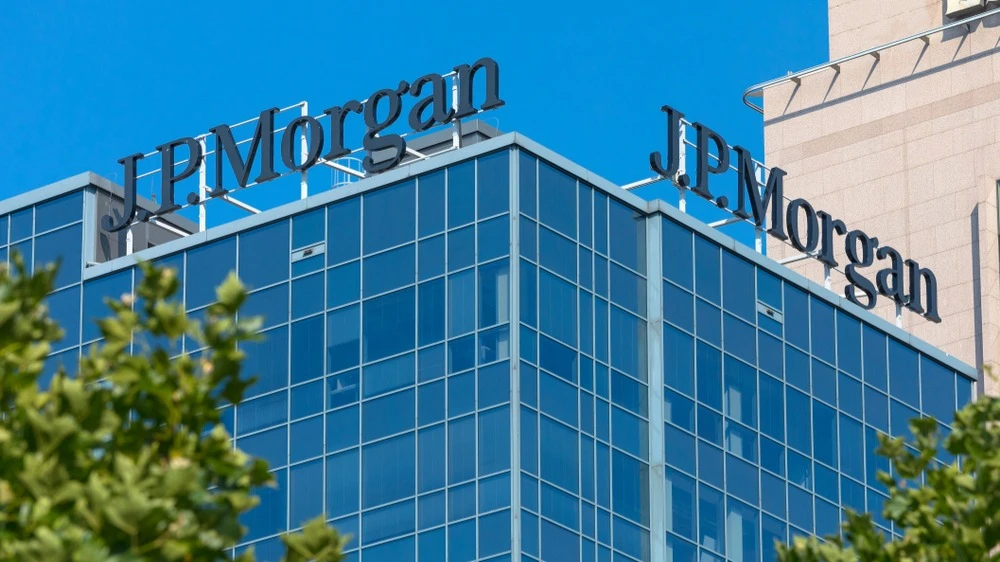
JPMorgan
Profit of the largest bank of the USA - JPMorgan Chase & Co - on the results of the third quarter increased by 16% in annualized terms and amounted to $5.07 per share. The company beat Wall Street expectations by 4.5%, which was the smallest excess of analysts' forecast since the second quarter of 2024, MarketWatch notes with reference to FactSet data. The bank's revenue in the third quarter beat Wall Street's expectations by 2%: it rose to $46.43 billion, while analysts expected only $45.47 billion. JPMorgan's net interest income totaled $24 billion, while Wall Street expected $24.1 billion, Bloomberg reports.
JPMorgan CEO Jamie Dimon noted that all of the bank's core businesses performed well in the third quarter. According to him, commissions from investment banking services grew by 16% due to the revival in the equity capital market and M&A transactions.
"Uncertainty in the markets remains high, with geopolitical tensions, trade and tariff risks, overheated asset prices and the threat of persistently high inflation continuing to influence the situation," Dimon said, adding that the bank is preparing "for a variety of scenarios" to deal with the impact of these factors. He also noted that lending conditions have remained favorable for several years now, but banks could face increased losses on a number of loans if the economy slows.
JPMorgan projected fourth-quarter net interest income of $25 billion, compared with analysts' consensus of $24.67 billion. For the full year 2025, the bank expects to generate about $95.8 billion on that measure - $400 million more than analysts' forecast, Reuters adds, citing LSEG data.
Wells Fargo
Wells Fargo reported third-quarter earnings rose to $1.66 per share from $1.42 in the year-ago period. Analysts' consensus forecast on FactSet was $1.55. The bank's revenue rose to $21.44 billion, while market participants were expecting $21.15 billion. Net interest income rose $260 million to $11.95 billion, but was slightly below the FactSet consensus forecast of $12.03 billion. The last time the bank beat analysts' forecasts for this metric was in the fourth quarter of 2024, MarketWatch emphasized.
CEO Charlie Scharf said the bank achieved its "highest quarterly loan growth in three years." "While some uncertainty remains, the U.S. economy is resilient and the financial position of our customers and clients remains strong," Scharf said.
Goldman Sachs
Goldman Sachs reported that its third-quarter earnings rose nearly 46% year-over-year to $12.25 per share. That was also 11% above analysts' FactSet consensus of $11.03. The company's revenue also beat Wall Street forecasts and became the third largest in history - it increased by 20% in annual terms and amounted to $15.18 billion against expected $14.12 billion. Goldman's income from operations with shares rose by 7% - to $3.74 billion - amid the renewal of the S&P 500 index series of historical highs, but was below analysts' expectations ($3.9 billion). This marked the first time since the fourth quarter of 2021 that the bank fell short of Wall Street's forecast, MarketWatch noted.
Goldman Sachs Group CEO David Solomon said these results were the result of increased investment banking activity, including a slew of mergers and acquisitions and a revival of the U.S. IPO market. He also noted that the bank anticipates a more favorable M&A environment through the end of the year and into 2026, provided there are no macroeconomic shocks. "We know that conditions can change rapidly, so we remain focused on effective risk management," Solomon cautioned.
Citigroup
Citigroup 's earnings per share in the third quarter amounted to $1.86 per share, while the FactSet consensus forecast was $1.73. The bank's revenue was also better than Wall Street's expectations: $22.1 billion versus $21.09 billion. Citi, like its competitors, benefited from a surge in M&A activity, Barron's emphasized.
Citi CEO Jane Fraser said the bank's efforts to simplify its organizational structure also contributed to these results. "Our transformation, updated strategy and simplification have put Citi in a fundamentally different position in terms of our competitiveness," Fraser said.
Citigroup also improved its year-end outlook, saying it now expects revenue "above $84 billion" versus a July estimate of "around $84 billion." By comparison, the consensus forecast of FactSet analysts suggests $85.02 bln.
What about the stock
In spite of the fact that all four investment banks exceeded Wall Street's forecasts on profit and revenue, they showed very different dynamics at the trades on October 14. Thus, shares of JPMorgan collapsed in the moment by 4.5% - to $294.2. It became the strongest fall for the day since April 4, noted Barron's. Then, however, the securities slowed their decline to less than 1%. The company's market value remains up more than 27% since the beginning of the year.
Goldman Sachs securities fell by 5.6% - to $742.4, showing the largest percentage decline since April 10. Then quotations also recovered a significant part of losses. Compared to the beginning of 2025, Goldman securities are in the plus by more than 36%.
Citigroup shares, on the contrary, jumped by 472% to $100.7. Since the beginning of the year, the investment bank's market capitalization has grown by almost 43%.
Quotes Wells Fargo soared immediately by 8% - to $ 85.3, and since the beginning of the year they are in the plus 21%. Analyst David Wagner of Aptus Capital Advisors called the past quarter for Wells Fargo "encouraging" in a Reuters statement and added that "the company finally showed how much the asset limit was holding back its potential".
"The most important thing is to realize that it's not so much about the results themselves - which were generally better than forecasts - but rather that all of these stocks are already trading at or near all-time highs," Art Hogan, chief market strategist at B Riley Wealth, explained the market dynamics. Bank stocks have seen strong gains in recent months amid expectations of lower interest rates and heavy deal flow, MarketWatch noted.
This article was AI-translated and verified by a human editor