"Confidence barometer": LVMH shares posted their worst-ever quarterly results
Falling demand for branded accessories amid global uncertainty has hit the capital of the empire of France's richest family, the Arnault family
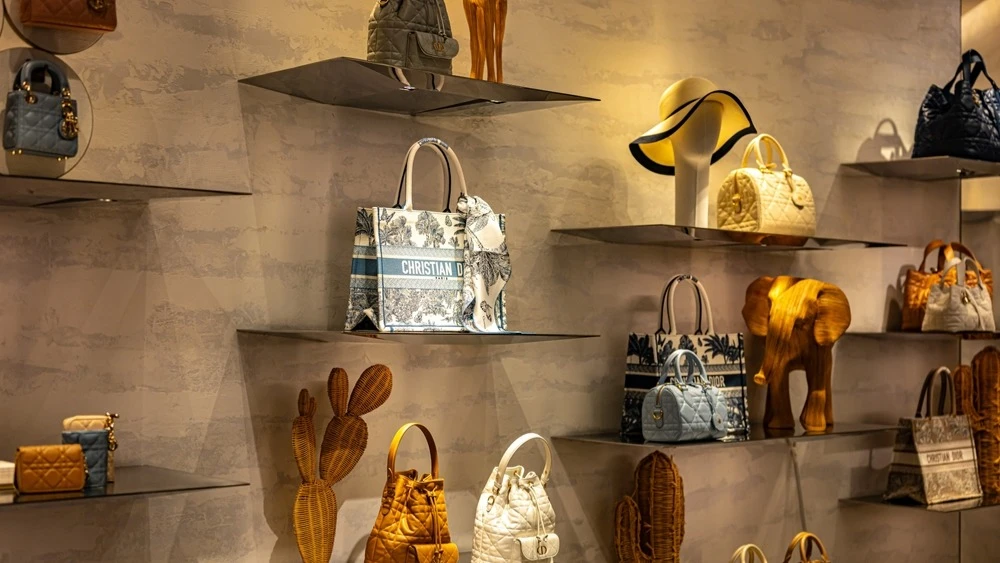
LVMH is more focused on so-called "premium segment" buyers. Photo: monticello/Shutterstock
Shares of LVMH, the world's largest group of companies in the luxury sector, which is considered an indicator of the state of the industry, showed the worst start of the year in the history of observations, writes Bloomberg. Conflict in the Middle East is clouding the outlook for the global economy and adding to the slump in demand for luxury goods. The collapse of LVMH quotes reduced the fortune of LVMH CEO Bernard Arnault by $55.9 billion in the first quarter of the year.
Details
In the first quarter of 2026, the securities of LVMH - owner of the brands Louis Vuitton, Dior, Moët & Chandon, Givenchy and others - fell by 28%, the most significant decline among all major European luxury producers. LVMH's current performance has been worse than during the 2008-2009 global financial crisis, the Covid-19 pandemic in 2020 and the dot-com bubble, according to a Bloomberg analysis covering data since 1989. That trend also reflects the downturn in tourism: sales of the most expensive goods are directly dependent on the flow of wealthy travelers, which has now declined
LVMH shares in Paris added 2.8% in early trading on April 1, but then slowed to 0.7%.
However, the quarterly collapse in the quotes of the group of companies has already led to the fact that the fortune of CEO and billionaire LVMH Bernard Arnault has decreased by $55.9 billion since the beginning of 2026, Bloomberg calculated. According to the agency's billionaires index, Arnault's capital is now about $152 billion. At the close of trading in Paris on March 31, his losses since the beginning of the year became the second largest in the list of 500 richest people in the world (after Larry Ellison, founder of Oracle). During the first quarter, the Arnault family's share in LVMH exceeded the symbolic threshold of 50%.
LVMH's impact on the luxury industry
Investors are closely watching the conflict in the Middle East and its "broad implications for the cost of living, economic growth and markets," Morningstar analyst Elena Sokolova said. - Markets are an important leading indicator, especially for luxury consumption in America," she added (quoted by Bloomberg).
LVMH is more focused on so-called "premium segment" buyers, who cut costs in times of uncertainty more quickly than customers of more exclusive, competing LVMH brands, the agency said. In addition, unlike rivals narrowly focused on specific luxury goods, LVMH is a major player in the wine and spirits market. But this division of LVMH has been stagnating for the past three years, in particular because of the falling demand for Hennessy cognac, Bloomberg writes.
As the largest player in all niches - from luxury wines to jewelry - LVMH and its performance serve as a kind of barometer for the entire industry: any fluctuations in its revenues predict future problems for all other luxury brands. The industry is trying to recover from the postpandemic recession and the effects of U.S. trade duties.
Richemont (owner of Cartier) shares fell about 20% in Zurich in the first three months of the year, while Hermès International SCA lost nearly a quarter of its value in the same period.
What's next
LVMH is due to release its Q1 2026 earnings report later this month. According to analysts' preliminary estimates, the company's key division - fashion and leather goods (including Louis Vuitton and Christian Dior) - may show organic growth of only 0.65%, Bloomberg points out.
The agency notes that a bad start to the year does not always mean a negative outcome. In 2020, LVMH shares eventually rose 23%. However, in 2008 and 2001, the declines were 42% and 35%, respectively.
Although LVMH does not disclose profit and revenue figures separately for the Middle East region, CFO Cecile Cabanis said in January that the company's performance in the Gulf region was showing "significant growth". RBC estimates that the region contributed about 6% of the company's revenue before the turmoil began. At the same time, LVMH is much more dependent on the US and Asia (including China), where sales were stagnant or negative last year.
"LVMH has become more than just a luxury brand stock, it is now a barometer of global confidence," says Cité Gestion analyst John Plassard. - "The problem is not the exposure to the Middle East itself, but what it signals: uncertainty, pressure on household wealth and fear of a broader economic slowdown.
This article was AI-translated and verified by a human editor