Maxim Nogotkov: "I no longer have the task of making a billion"
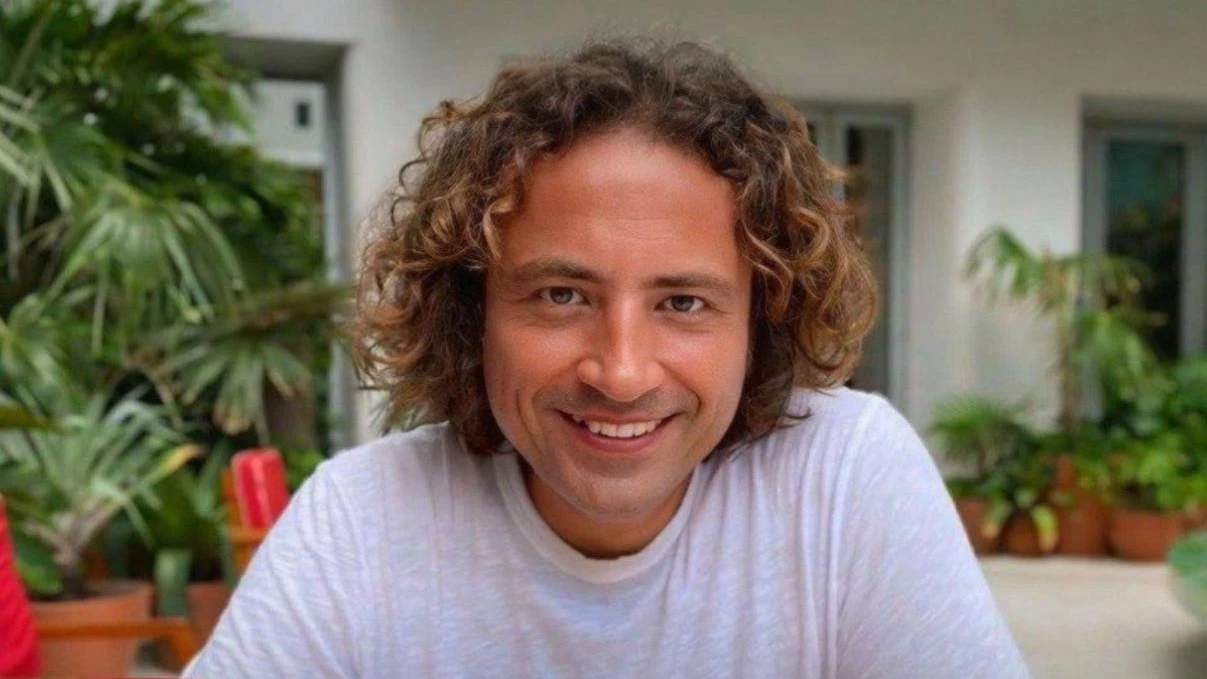
- Maxim Nogotkov no longer seeks to build a large profit-making business
- Nogotkov's project is called Oroboro. It is a non-profit movement based on mutual giving that offers transformational practices to participants
- Oroboro is to become a chain of hotels where members of the movement will congregate
- For ten years, Nogotkov has been making small stratapes, doing counseling, and exploring himself through various transformational practices
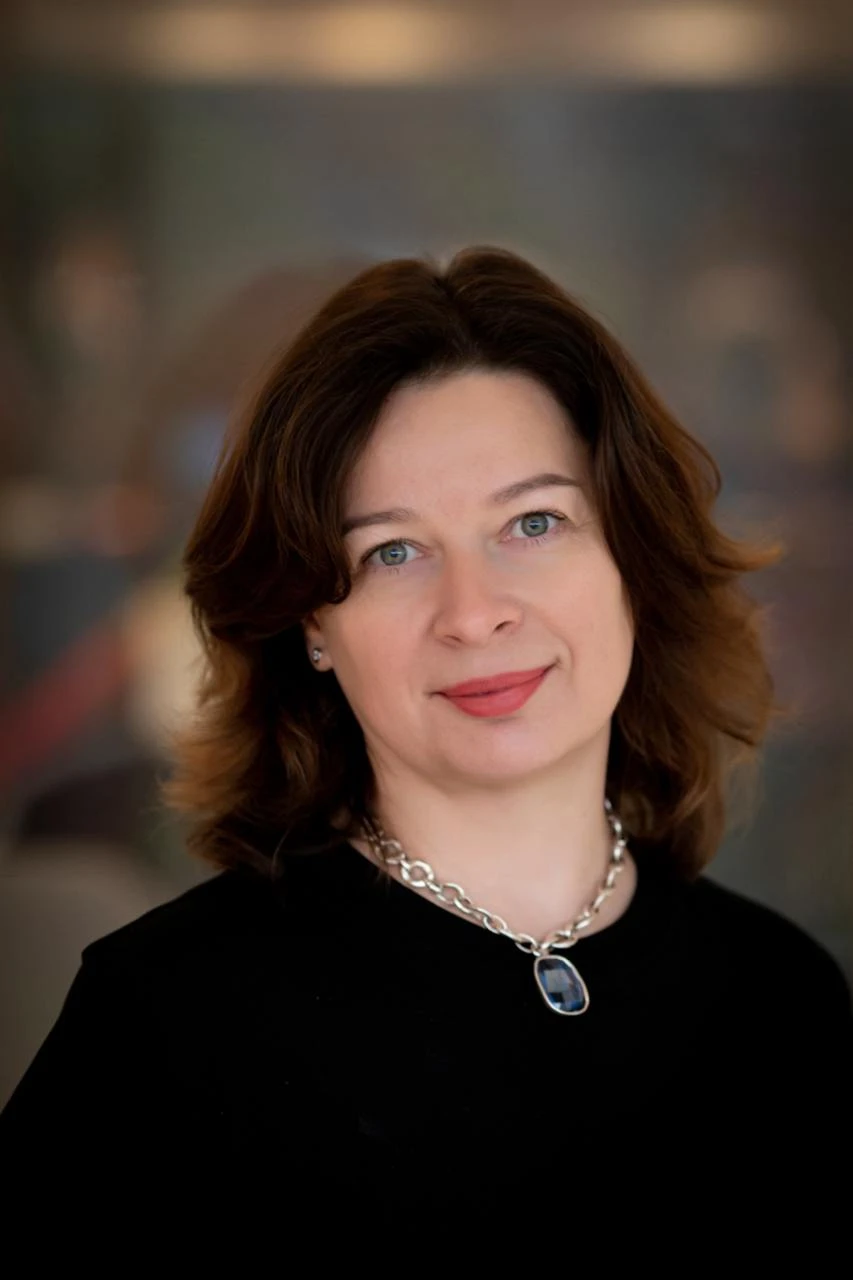
Maxim Nogotkov made the Forbes list in 2012 with a fortune of $1.3 billion, went through a collapse and personal bankruptcy in 2014, and left for the US in 2015. He now lives in Los Angeles, but spends most of his time traveling the world, and is building the Oroboro project, a movement based on reciprocal giving inspired by Burning Man. Nogotkov told Oninvest about the psychological transformations he has experienced over 10 years, what he has come to and what he wants from life now.
- You've been giving a lot of interviews lately and, in general, you've probably already answered all the questions. So, in order not to repeat myself with questions, let me give you a brief overview for those who are not in the know. Maxim Nogotkov in 2012 became one of the youngest billionaires in Russia with a fortune of 1.3 billion dollars, entered the Forbes list. In 2014 he lost everything because of the crisis, financial turmoil in the Russian economy. In 2015, he went to America, did startups there, got divorced, remarried, three children. And now you are doing the Oroboro project, which you call a network state. It is a social entrepreneurship and non-profit enterprise, which it is financed by donations from good people, let's say, who gave 25,000 euros each. You actually live on that money. Am I making myself clear?
- Almost. Only it's dollars, not euros. And I'm not married yet. I'm a free man.
- Oh, this is important, by the way! Ladies! Okay, you're trying to build a community out of our citizens who have left, from what I understand. As far as I can tell from what I've seen. Tell me, what do you think is most important to these citizens right now? It's just that you left much earlier than everyone else.
- In fact, we have guys, and there are quite a few of them, who live in Russia - in Moscow, in St. Petersburg, in other cities. We don't have an emphasis on those who have left. But really, the majority are those who have left. Simply by virtue of the fact that they feel lonely and want to socialize more. And the second point. We are called a movement, not a community, because we have a common mission, goals, and a desire to invest in those goals. Right now, a community is called anything from a chat room on Telegram. We're building it a little bit differently. And in terms of people, my experience is that you start looking for friends in the place you come to. For example, I speak fluent English, but it is easier for me to communicate with those who used to live in Russia.
What Oroboro is and where it came from
- How did you come to the idea of building the Oroboro movement? I can see how I would have come to that thought by trying it on myself - by watching what was happening, seeing people looking for somewhere to lean, seeing that they felt alone. What was it like for you?
- To be honest, I was coming from a different direction. I did not have the desire or the task of making just an association of Russian-speaking people. There are several guys here in America who are doing this kind of community quite successfully. I was coming from the side of social innovation. I've always been interested in changing culture. In Russia, I had three nonprofits that I was passionate about, in parallel with a dozen different businesses. One of them was Nikola Lenivets, such an art park in the Kaluga region. It's a variation on the theme of Burning Man, where people are free to create, make and give something away just for the sake of self-expression. The second project I had was when we were experimenting with the merit economy, with the idea of encouraging good deeds or volunteerism in Russia and creating a social currency. And the third was Yopolis. This is what in the West is called direct democracy - when people directly make decisions at the level of a city, a neighborhood. I have always been interested in all these topics. When I moved to America, I went to Burning Man and started to remember what I liked to do most in Russia. And I realized that what I liked most of all was to do creative work myself, and to develop people through creativity. I liked what I did in Nikola Lenivets, and I really liked at Burning Man that they don't have money, but an atmosphere of mutual giving. It made me want to scale that. What we're doing as the Oroboro movement involves Russian-speaking, American, and European - multinational and multi-lingual audiences.
-Caught up in the trend...
- I started with the Russian-speaking audience simply because they know me, and it's easier for me. Well, because there is a big demand for it in the Russian-speaking environment now, because a lot of people are out of Russia. The same thing, by the way, is happening with Israel. I was recently in Thailand, on Pangan. There, the whole island has turned into an Israeli disco. People are fleeing military conflicts and looking for new places to live.
- Let's pretend it's been five years. Can you describe the Oroboro project? What is it?
- It will still be in its formative stages. We're not growing super fast. Our challenge now is to learn how to double in size every year. We started with 100 people a year ago. Since then, we've done 11 camps, and about 250 people have come through. In the next 12 months we'll have 500 people, then a thousand, and so on. Up to 10,000 people. And there will be many points of attraction both offline and online. We are actually experimenting with a culture of mutual giving during the gatherings. We're also experimenting with living on the impulse of spontaneity. I think in five years, we'll probably have a couple of these places of our own. Hotels that will be bases for us. And in general, our main task is to learn how to change people's condition, to learn how to raise their energy level, to open their heart. This is the inner transformation of a person. But unlike different masters, we look at it not only through the prism of the person, but also through the prism of the environment. What kind of environment and what kind of relationships with other people a person is in, because this has a very strong influence on his or her condition.
- Obviously. How do people experience transformation at your camps and gatherings?
- First, we gather very interesting people - entrepreneurs, creative guys, musicians who know how to play in the flow, and people of helping professions - masters, healers, teachers, and so on. And we immerse people in an atmosphere where there is no programming, no predetermined rules. And this helps people to accept this state of chaos, because an ordinary person tends to control a lot, it is very difficult for him to let go of this control, and this creates a lot of anxiety and tension in a person. And in order to live the most fulfilling life, it is better to be in the so-called state of presence on the border between the state of control and letting go.
- Hmmm...it's not all that easy to understand.
- It's actually very simple, but you have to practice. It is a state in which there are no thoughts, it is very similar to the state of flow when you are windsurfing or snowboarding. Except we're talking about this state in a social context. And in a social context, it's much harder for people to hold it than in extreme sports. This state, by the way, is very easy to find in creativity - in jams, in any spontaneous creative improvisation or spontaneous speaking, singing. That's the first thing we do. We also have contact improvisation and various acting exercises.
- I mean, it's been described before as some kind of theater story.
- Yes, because in a theatrical story, in contact improvisation, you are immersed in a state of presence, spontaneity, but at the same time you are in a social context, interacting with other people. Once you learn to do that in improvisation, then it's much easier to transfer that skill to real life. That's one part of what we develop in people and what we do. And the other part is mutual giving. We give a person the experience of shifting their attention to another person. The fact is that in the standard habitual state, a person has a lot of thoughts about himself. There is such a part in the brain - amygdala. And there are a lot of such, what is called, self-referential thoughts in it, when a person thinks about himself all the time, evaluates how he looks, what he has with money, what he has with relationships, what he has with health, he constantly has a huge number of thoughts about himself. And that eats up 25% of some people's energy, and some people have 90% of their energy. Giving helps people shift their attention to the other person. And it allows to calm the mind, and start to live differently.
How Nogotkov wants to change the world and society
- I'm reading a book right now, The Paradox of Power. by Kendall. He postulates, actually, something similar. He postulates that Machiavelli was wrong. And society gives power to those who think of others and care about the common good. And takes power away from those who think only of themselves. Pretty close, I think. You said there would be millions of participants in this project....
- No, that's not what I'm saying about it. I am saying that our mission and goal is to shift global culture from the priorities of material accumulation in its various forms - power, fame - to the priority of the evolution of consciousness as the main meaning of human life. And for such a cultural shift to take place, it is necessary to reach 10 million people. This is possible if we double every year. This is more of a benchmark, where we would like to get to. But I have stopped setting such rigid goals.
- Doubling down on people?
- Yes, I want to double in people every year. But not just double, but double in people who have had important life-changing experiences and want to try new economic and social relationships based on giving.
- How did you come to this? I just don't get it. It's a wonderful, wonderful idea. Let's all give to each other. Let's say I go to the store right now and say, "Give me groceries." What's the store gonna say to me?
- I realize this seems a little strange, but if you made it to Burning Man in Nevada, you'd see that 85,000 people gather there every year for a couple weeks. It takes a long time to prepare for, they spend about a billion dollars to get ready. And in that space, you walk into any place, into a campground, and everybody does everything for free... somewhere you get fed, somewhere you get drunk, somewhere you....
- No, no, within the camp, yes, I understand, but how to implement it in life? I guess if a nuclear war happens, then it would be relevant. I don't really see how you can take it outside of the camp
- In general, mankind has been dreaming about it for quite a long time. There is such a popular American TV series Star Trek from the 1960s. It shows an economy in which there is no money. If you get into the society of people who have the main focus on how they can realize their vocation, and how they can give what they have, and at the same time use what others give, then there is, first of all, high trust between these people. It's a different kind of relationship. And basically, if we talk about people who are on the spiritual path in one way or another, for them it is a practice of fearlessness, a practice of trusting the Universe. And people who are really deep in these topics know that if they do something with love, they will not have a deficit.
- That's true, by the way. That's exactly how it works.
- Such people are still few on the planet, no more than 1%. But they are there. I think there are about 70 million such people. This is enough to build a society of the future and try a new social system.
- A ticket at that you have about $2,000.....
- We have a large number of people that we subsidize in one way or another. About 25% of the tickets go to volunteers - musicians or craftsmen. That's how it works so far.
- Sorry, we're a business building, let me ask you about the money. Is all of this generating any revenue right now? I realize it's a non-profit story that doesn't make a profit, but it still makes money. Is it bringing in enough to support the team and you?
- Not yet. We're still in survival mode. I started doing this full time since February last year. But it's gradually building up. And I think we still need a few more months for it to get on a good track.
- It's really fast. People love it. What's the secret? You're a good salesman. You've sold phones, you've sold credit cards, you've sold Pandora.
- In fact, it turned out that it was contraindicated for me. In some systems like Human Design, I need people to find me and ask me and request me. I don't do social media myself, for example. It is difficult for me to do what Zhenya Chichvarkin or Oleg Tinkov do. A personal brand. For me, this is some kind of disorganized activity. I believe that what we do should be sold by word of mouth. People have an experience, if they like it, they bring their friends. I want to sell like that. I don't even like the word "sell" in this case. It's more like inviting. So I want to develop slowly, but at the same time with quality.
- I want to tell you that you're actually a rare case. You've had a hard fall. Let's be honest, there's nothing to hide, it's a severe crisis. I have a sneaking suspicion that you still haven't gotten over it. And yet you've maintained your reputation and your connections. Who's backing you now?
- I have probably a couple dozen people who support me. But I don't have one big sponsor for the project - like Ruben Vardanian in Atlanta - I don't have one big sponsor. A few people have given us one-time $25,000 each. There are people who help with time, services. But we don't have a big brother.
What is a utopian society
- Is it your ability to keep a large number of people around you? I can actually guess that it's much easier to agree with one person than to keep a group of people around you who believe in you.
- I didn't want to do that. The project was called "utopian society" at first. It was modeled on the "geographical society" in Russia. We wanted to explore the utopian structure of society, whether it was possible, how it could be. To conduct an experiment. Then, after some time, when I realized that there were more than a hundred people who were interested in it and who were ready to go and invest in it, I decided that we should rename it a movement and treat it not as a research, but as a real project. And it was very important to me that there were a lot of people, because you can't build a society with one person. You have to build a society with many people. So it was important for me to find support from a large number of people. So I consciously did not want to go with just one person.
- Can you tell me about the utopian society? That's been very interesting right now. What is it in your mind? How is it organized?
- Utopian Society... There are actually quite a few entries on the subject. As far back as ancient Greece there were attempts to describe it. Then there was Thomas Morr with his Sun City. Then there was a lot of exploration in Russia, including communist, anarchist, socialist ideas in the mid-19th century. People were looking for new social forms, alternatives to the capitalist order. And I wanted to look for such forms too. But if we take what I believe in, I believe that it will really be like in sci-fi movies, that there will be a society without money. I believe it's possible. And I believe it's possible to build a society that has a focus on the other person. Well, simply because it gives a different state - more fulfillment, more meaning, more joy, more health, more longevity. I believe that this transition will happen. When will it happen? Maybe in 50 years, maybe in 100, maybe in 200, I don't know. And we are building a model of it that can be scaled up further
Why Nogotkov doesn't want to make a billion anymore
- It's interesting how you talk about a society without money. You can feel the echoes of your experiences in that. How do you think what happened to you in 2014 affected you?
- Positive. I feel better, younger, more energetic now than I felt in 2012, 2013, and 2014. And I even like the latest pictures better. I guess I've given up some fears. I used to have quite a few fears about status, about money, about power. Now those fears are gone. I started to feel freer. I started doing things that are closer to me and in which I see more meaning. For me, life has become more interesting, it has not followed the path it could have followed in Russia - another business, then another business, and another. It has become more diverse, more wide-ranging.
- That's an interesting point, by the way. Because it's been 10 years. What have you been doing all this time? It's unclear. From my point of view, a person who has made a billion once and then lost it, is capable of making it a second time in the same way. Because it's not an accident, it's a mindset.
- You know, when I came to America, I thought about what I wanted to do. And I realized that I want to do something that I myself am so cool at. Of the projects that I've done, I liked doing Nicola Sloth the most, actually. I liked being on the land, in nature, with interesting creative people, and I liked doing fantasizing and creating. I started asking myself if I wanted to build another retail chain in Russia, or a fast food chain, or something else that I could do quickly and easily. And I realized that I don't want to. I don't have the task of making a billion anymore, and I don't have the task of building big profit-making businesses. I remembered that I had missed out on a lot of things in my life. For example, I was very interested in history when I was a kid and I read a lot.Then I got caught up in this whole entrepreneurship thing and I missed out on what I was interested in. I read a couple hundred books in two years. Mostly in social sciences, politics, history, behavioral economics. I started to just choose where I was drawn to, where I was called, where I was curious, where I was interested. And whether there is money there - I stopped caring about that at all.
- Does this match your childhood dream? What was your childhood dream?
- I honestly don't remember anymore. I had a lot of different hobbies as a kid. I imagined new civilizations. But I was also a clown and a boxer. I was really into programming. I had a business when I was about 12. I was in theater, I was in biology club, I was in math club. I had a lot of hobbies. I just followed my curiosity, my interest. And in that respect, that quality has persisted. And I like it that way. I like to travel some more. For the next year, I think I'll be traveling for 10 months, and I'll only spend two months in Los Angeles. I really like to move around the world.
- Yeah, I'm very familiar with all this. You know, there's a school of thought that the script of our lives is shaped by our favorite fairy tale. You ever heard of that story?
- Yes, I've heard about that, I've heard the alternative version that our life scripts are formed from childhood trauma or rather from some stresses or emotions.
- Yeah, it's psychology. So what's your favorite fairy tale?
- It's like I didn't have it, but for some reason "The Scarlet Flower" comes to mind. Where the monster turns into a loving...
- Prince Charming.
- Prince Charming. It's a story about transformation because of a great, bright love. Well, that's the story that came to mind for some reason.
- Who do you associate yourself with? A monster that transforms?
- I didn't associate myself with anything, I didn't have a favorite fairy tale. You asked, I gave you the first thing that came to mind.
- Yeah, that's how it works
- I hadn't really thought about it before.
- You must be living this scenario - through transformation. I've listened to your interviews, you've tried all sorts of things over these 10 years....
- I like to try everything.
- Three years ago, you said you stopped relying on your head to make decisions and started relying more on your body. How has that changed the way you make decisions?
- It has become much more intuitive. That is, I used to believe that the first intuitive decision had to be redone, logically rethought - and I made various compromises. And when I hired people that way, it always led to problems in the future. Now I try to make decisions about people and situations much more intuitively. I like the idea that the soul speaks to us with the voice of feelings, and our personality, our ego, speaks to us with the voice of thoughts.
- Interesting. So thoughts should be chased away?
- No, they don't need to be chased away, they can just make decisions differently, faster.
- I'm exactly the opposite. If I act on my first wish, it's definitely a mistake.
- Hahaha. For this, there must be already quite a calm mind, consciousness, many desires must be lived. So it doesn't always work for everyone. It works for me, in short.
- You must have traveled the path already - you have calmed your thoughts there, given up temptations. I know you don't drink alcohol, for example.
- Yeah, almost 13 years now.
How Nogotkov has lived the last 10 years
- What has impressed you the most out of the things you've tried as part of your transformation over these ten years?
- It's been a lot of different things. It started with ayahuasca nine years ago. It was an unforgettable experience. And then meetings with interesting people who have various siddhis, special abilities.
- Like what?
- Ahahaha! Well, for example, in Eastern traditions it is believed that we are all part of a single consciousness. And I used to treat it as a beautiful fairy tale or theory. I couldn't imagine how it could work. And now there are quite a lot of people around me who can feel, see something that happens at a great distance. I also treated it as a joke or psychics, until I started working with such people, until I realized that these people can go into the body, into the consciousness, into the field of another person, and feel what is happening to another person. If I had not experienced it myself, I would not have believed it.
- Did you have that experience with them, that is, did they interact with you?
- Yes, of course. A couple of them will be in Thailand in Phuket where we're going the first week of December.
- I want to go back to the money again. In the years you've lived in America, you've tried to do a certain number of projects. Something like Yopolis, a direct voting system, a neighborhood network, you called it, a platform for fashion designers to collaborate. What happened to all of that?
- I was mainly involved in consulting and mentoring. I helped various projects, mostly in e-commerce, retail and fintech. I had an idea at first to actually make a social network based on Jopolis, but it became clear pretty quickly that it didn't really fly. Ma 9 months in, we found out that people don't want to be friends based on where they live. But that experience will hopefully come in handy as part of what I hope turns into a hotel chain. When people become neighbors consciously. I also did one jewelry theme, more of a jewelry designer. I put the project with fashion designers on pause for now because I decided to focus on Oroboro, and there was a bit of a mystical story about it.
I funded it myself along with my partner. And Oraboro had been on my mind since 2016. But for a very long time I did it only on weekends with a small team of people, and full time I didn't dare to do it. In December 2023, I had an interesting dream that I was going to fire all the people from this startup on February 9. But I had no such plans. In principle, I had no plans, but I remembered this dream. And on February 8, my partner refused to co-finance this project with me. And it seemed to me that this was an important sign for me, that I should do what I was called to do and what I was really interested in. That day I had a choice either to raise some money and continue to do my work, or to do something that I have been dreaming about for a long time, but for various reasons I am afraid of. And on February 9, I decided that I wanted to focus on what is truly important to me. So I put the project on pause. Maybe someday I will return to it, but only if there is a CEO or co-founder, a partner who wants to do it.
- I'm having a breakdown right now. Before, you were talking about how people should think about others, invest in them, and then one day you just fire everyone. Just because. How does that mesh?
- It's very easy to methink. I have my mission, my purpose, my calling in life. The path I've traveled and my talents. And I think the most important thing is to maximize them. When you sacrifice something that is not real, not yours, not fulfilling.
- So it turns out that your partner refused to fund the project, and you realized at that point that it wasn't what you wanted to do?
- I've had these thoughts before, it wasn't related to funding. I used to think that I didn't understand what I was doing in this industry. I am absolutely indifferent to fashion. My wives bought me clothes all the time, I wear jeans and a T-shirt, I travel the world with a small suitcase. For some reason I decided to get into this industry, but I didn't see what is called Project Founder Fit there. My own fit with this project. I started it just as a mentor-counselor for a girl who wanted to do it. Gradually got involved and I had to take on a lot of roles.
- The girl's gone and you're still with the project?
- Hahaha. Anyway, it went a little bit differently than I wanted. And I realized it wasn't really my thing and I had to make a choice.
- You still had a venture capital fund, you said.
- No, that was before 2015. When I lived in Russia, as we were developing retail services, e-commerce, and fintech.
- So it's not active now? I thought it was still in effect.
- No, I don't do that. We had several investments. Two investments in Israeli companies, one investment in an English company. And one 50/50 partnership with a German company. It was a decent venture capital investment of millions of 80 dollars. But that was all before 2015.
- You said just about 15 minutes ago that Oroboro will eventually be a hotel chain where people will choose their neighborhood. So you're building a hotel chain after all? Or did you misspoke?
- The project consists of three main elements. The first element is the community, which has online and offline formats that are more or less classic for the community. The second part is an application where people can better express their vocation and give what they want to give, well, and find those who need it. And the third part is what we're doing now as camps, gatherings, events, giving people the experience of this alternative reality and a new quality of relationships. Over time, this will grow into its own places - hotels, glamping. And then into free economic zones or enclaves that will have their own economy and their own laws. Of course, we will land it on real estate, on development, on places where like-minded people will meet, socialize. Maybe someone will live there for a couple or three months. Someone will stop by for a few days. Of course, in order to keep people in the new environment, we need to keep them friendly, get to know each other, and help them create partnership projects. It is very important that people do not fall out of the environment.
- Well, that sounds like a business project. Listen, what kind of legacy do you want to leave behind?
- No, I don't. I don't have a mission
- If I asked you to write a letter to your 80-year-old self. What would you write in it?
- Ma was once told by my partner that the most important thing in life is to look at yourself in the mirror, being happy and not looking away. I want to live an interesting, full of discoveries, holistic life in accordance with my vocation, in connection with people, with the Universe, with myself. This is the most important thing for me. And where it will lead me and what kind of experience I will have is not important.
This article was AI-translated and verified by a human editor