New momentum: How the energy crisis is accelerating the transition to green energy

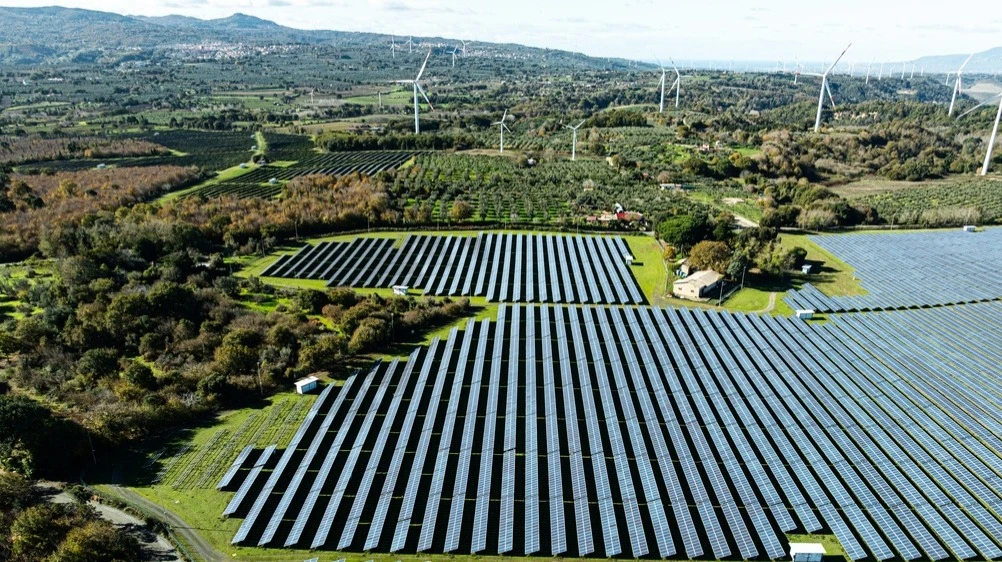
Increasing electricity generation from non-fossil sources will break the link between electricity prices in Europe and fossil fuel prices, according to the Bruegel think tank /Photo: Shutterstock.com
The shock caused by the cessation of oil and gas supplies from the Persian Gulf countries can lead to radical changes in the global energy market. This is exactly what has happened after previous crises. Electrification and green transition will accelerate, and investors can capitalize on the companies associated with these trends.
Crisis as an incentive for change
The International Energy Agency (IEA) called it "the biggest energy crisis in history". About 20% of the world's oil and LNG supplies were being transported through the Strait of Hormuz, which was blocked as a result of the war in the Middle East. Some of the oil was redirected. Saudi Arabia began pumping up to 7 million barrels a day through a pipeline to a Red Sea port, the UAE increased exports through a bypass pipeline to about 1.8 million barrels, and rare tankers began leaving the Persian Gulf with Iran's permission.
Even if the world market lost 10 percent of its oil supply, that's still more than it lost during the Arab embargo on exports to Western countries in 1973-74 (9 percent) and the Islamic revolution in Iran and the ensuing war with Iraq in 1979-80 (7 percent), Reuters notes.
However, the price shock was far from that strong. In the 1970s, oil prices quadrupled during the first crisis and doubled during the second. Since the current war began, futures contracts have roughly doubled in price, and the cost of current physical supplies has doubled.
"In the 2020s, we will experience a second energy shock," says Kingsmill Bond, energy strategist at UK think tank Ember, referring to the crisis caused by Russia's invasion of Ukraine in 2022. "It will affect people's decisions about how energy-intensive appliances they will buy," he adds.
The crisis of the 1970s led to massive changes in the long term. The most affected developed countries switched from oil to gas and nuclear power generation. Energy efficiency standards were introduced (and continually tightened thereafter), resulting in, among other things, a large reduction in the fuel consumption of automobiles. Despite the growth in their number, gasoline consumption in the U.S. has remained at about 9 million per day since the beginning of the 21st century.
In the 1970s, oil accounted for about half of the world's energy consumption; now it accounts for about a third, notes Columbia University's Center for Global Energy Policy.
The U.S. has transformed itself from the largest importer of oil to its leading producer. Europe and China have also taken significant measures to reduce dependence on foreign energy resources, but in other areas.
After oil prices soared to $147 per barrel in the summer of 2008, China began to stimulate the development of electric transportation. It is now the world's largest producer of electric vehicles: they (including rechargeable hybrids) already account for more than half of new car sales. The Finnish Center for Energy and Clean Air Research (CREA) estimates that the amount of oil displaced by electric cars in 2025 is roughly equal to Chinese imports from Saudi Arabia, Reuters points out.
China has become a leader in renewable energy (RE) development. In 2025, its existing clean energy capacity (including nuclear) exceeded the capacity to generate electricity from fossil fuels. Thanks to this, as well as its huge accumulated oil reserves, China has not been as hard hit by the current crisis as other Asian countries.
Europe is also actively developing green energy. Electric cars (including rechargeable hybrids) will account for 27% of sales in 2025 (for comparison: only 10% in the US). In countries such as France, Spain, Sweden, and Norway, power generation from clean sources is many times, if not dozens of times, higher than production from "dirty" sources.
Wholesale electricity prices in Europe's leading economies rose 2-35% in March, Reuters cites Ember calculations, compared with a four- to five-fold jump in 2022. And prices are now at a lower level than they were throughout 2022.
This is partly due to the fact that gas purchased from Qatar accounted for 8% of the EU's LNG imports (and 4% of total gas imports), while the EU purchased more than 40% of its imports from Russia before the war, the Bruegel think tank notes. But most importantly, renewables now account for 48% of the EU's electricity generation, nuclear power plants for another 23%, while all hydrocarbons account for 29% (including 17% of gas).
"For example, in Spain, thanks to the rapid growth in the share of wind and solar power, the share of hours in which the electricity price is determined by gas has fallen from 75% in 2019 to just 15% in 2026, the sharpest decline among the major gas-dependent European energy markets," Bruegel explains the successes. And insists that Europe needs to continue on this path: increasing electricity generation from non-fossil sources is "the only structural approach that will break the link between European electricity prices and fossil fuel prices" and protect the EU from future price shocks.
Electrification on the march
Although little more than a month has passed since the war began and there are no statistics on the change in consumer behavior, information from the field and company reports already clearly show that the only way to ensure energy security and protect against rising costs is to switch from fossil fuels to electricity, Bloomberg writes, citing examples from various countries.
In Germany, where heating oil prices have jumped 21% and solar panels are readily available at IKEA and other major retailers, calls from potential buyers tripled and sales more than doubled in March compared to February, said Janik Nolden, CEO of solar panel seller Solarhandel24: "It's like someone pushed a button."
In India, where more than 330 million households use gas cylinders for cooking and 90% of its imports come from the Middle East, sales of induction stoves through Amazon have grown 30-fold. In Nigeria, where tens of millions of people get their electricity from gasoline-powered generators, there is a frenzied demand for solar panels to be installed on rooftops.
Pakistan, which has increased the share of renewable energy generation to 55% in recent years, aims to raise it to 90% by 2034, the country's energy minister told Reuters.
Stock market participants are enthusiastic about the prospects of companies from this sphere. Ningbo Deye Technology, a leading Chinese manufacturer of energy storage systems, became one of the first companies to release forecasts taking into account the latest developments, Bloomberg reported. The company expects first-quarter net income to grow 56-70% from the same period in 2025. "This growth is primarily driven by geopolitical factors that have led to energy shortages and increased price volatility, which in turn has increased the importance of energy security," the company said.
Citigroup analysts expect sales to rise in the second quarter as well, given the jump in demand for batteries. Ningbo shares soared in trading on Friday, hitting the daily limit of 10%.
Shares of China's CATL, a leading global manufacturer of automotive batteries, energy storage systems for wind and solar power plants, have risen 21.6% since the beginning of March. The company operates "at the intersection of key trends in the energy sector" - from providing data centers for artificial intelligence to strengthening China's energy security, Morgan Stanley notes. Analysts at Jefferies Financial called the company a "TSMC in electrification" (the name refers to the world's largest chip maker, Taiwan's TSMC), due to its leadership among competitors and aggressive expansion.
Everyone to electric cars!
But the most visible response to the effects of the energy crisis is seen in the electric vehicle market.
The number of loans to buy electric cars has doubled in Australia, where diesel prices have risen by more than a third, the central bank said. In March, Tesla sales tripled in France, and in the UK sales of electric cars reached a record, Reuters lists.
Even in the US, where Donald Trump is fiercely fighting against electric cars, and five leading manufacturers have written off $70 billion due to falling demand for them and curtailed production of some models, interest in fuel-less cars has surged. This is helped by a glut of cheap used electric cars, the Financial Times explains. Under Biden, buyers of such cars received a large tax break, but they were often available only on lease, and now they are on the open market when the lease expires. Although buyers are mainly interested in used cars, this will support the market in the future, says the FT, due to the principle: those who have moved to an electric car will not return to a car with an internal combustion engine (ICE).
Car showrooms of China's BYD, the world's largest electric car maker, are jammed with visitors both in China itself and elsewhere in Asia, Bloomberg writes. Demand at the showroom in Manila, the Philippine capital, is so high that it has received a month's worth of orders in two weeks, salesman Matthew Dominic Po told the agency: "Customers are swapping their cars for electric vehicles because of rising oil prices."
It always favors the transition to electric vehicles, says Albert Park, chief economist at the Asian Development Bank, "It creates economic incentives to accelerate the green transition."
And this is not a one-off reaction, but a steady trend. According to the IEA and LSEG, over the past decade, sales of electric and hybrid cars have grown faster in years when oil prices were rising, Reuters points out. And the affordability of even new electric cars is now substantially higher than it was in 2022, the last time oil was more expensive than $100 a barrel: batteries, for example, are now half the price. HSBC estimates that in the UK the total cost of owning a Renault 5 Techno+ for four years on a home charge is £19,073, while a diesel Volkswagen Tiguan Match is £26,407.
BloombergNEF estimates that the introduction of electric vehicles last year reduced average daily consumption by 2.3 million barrels of oil. This is more than 2% of its global consumption.
Investors have already given electric car makers carte blanche. BYD shares have risen by 7.2% in Hong Kong since the beginning of March. Not much growth is explained by a drop in profits in the fourth quarter due to the price war, but shares of another major electric car maker, Geely, have soared by almost 55%.
Shares of European and American car companies moved in the opposite direction - even those that are trying to develop the production of electric cars. Their business is weighed down by the "legacy" of internal combustion engine cars, which is losing its efficiency. Volkswagen's shares fell 12%, while Renault's were almost unchanged.
Meanwhile, Ford Motor shares fell 13.9% - even with the jump in recent days after a truce between the U.S. and Iran. General Motors shares were down 2.9%, Toyota Motor was down 13.1% and Honda Motor was down 20.3%.
This article was AI-translated and verified by a human editor