S&P 500 recoups losses since war: Trump hints again at Iran deal

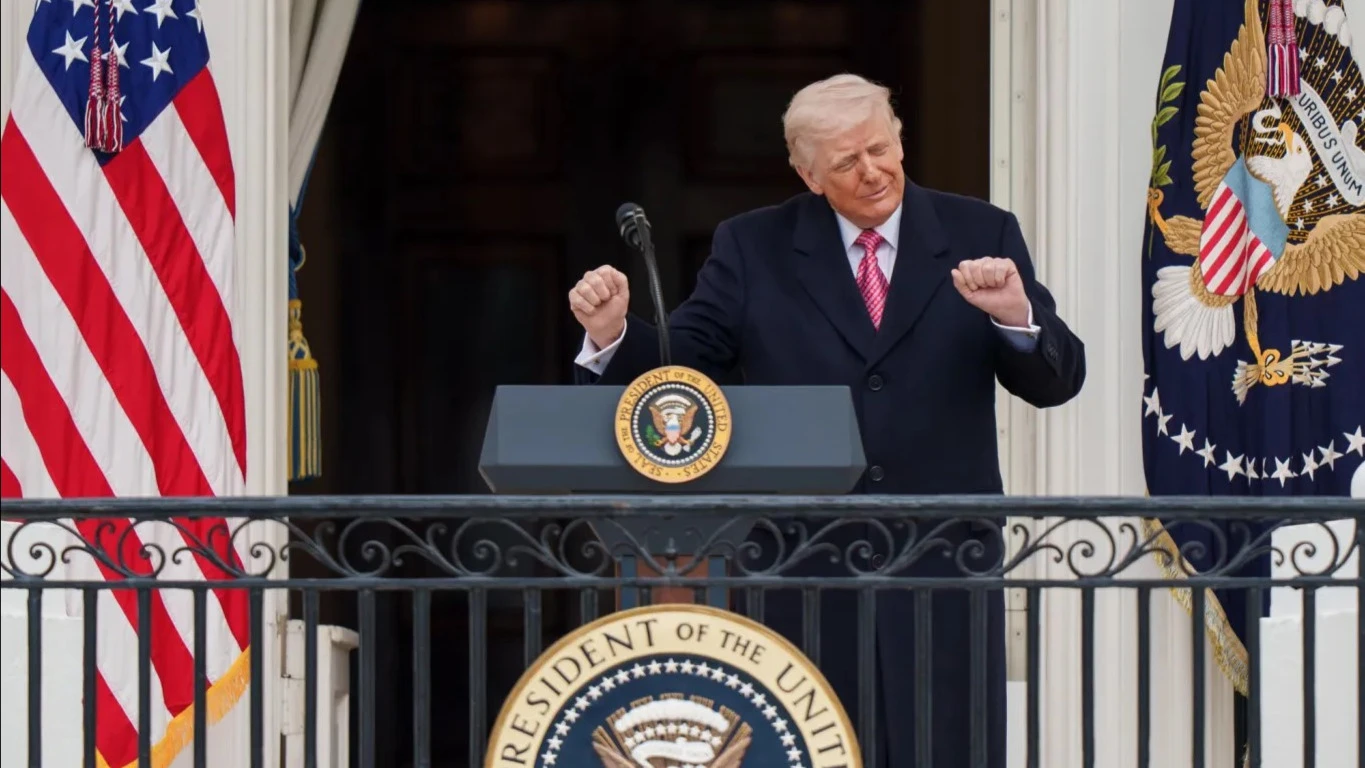
Trump says Iran wants to continue talks / Photo: White Hause
The S&P 500 broad market index hit its highest close since late February and oil prices slowed after U.S. President Donald Trump said Iran still wants a deal. Stocks were sharply lower in the morning and oil rose in price as weekend talks in Pakistan stalled and the U.S. decided to move to blockade the Strait of Hormuz, the opening of which is awaited by much of the world.
Details
- The S&P 500 broad market index rose 1% on April 13 to close at 6886.2 points. This is its closing high since February 26, when there was no war in the Middle East yet, Bloomberg notes. In addition, the index came out in the plus relative to the beginning of the year.
- The blue-chip index Dow Jones Industrial Average added 0.6% on Monday, reaching 48,218.25 points.
- The Nasdaq Composite Technology Sector Index rose 1.23 percent to 23,183.73 points.
- The Russell 2000 index of small and mid-capitalization companies rose 1.5% to 2,670.49 points.
- Brent crude futures were up 3.2% to $98.3 a barrel and WTI crude futures were up 1.5% to $98 a barrel.
- Gold fell 0.2% to $4741.7, while bitcoin rose 3.3% overnight to $73,450.
What influenced the stock
Stocks in the U.S. ended trading at levels close to the maximum for the day, and this despite the fact that at the beginning of trading all major indices were falling. At the low of the day, the S&P 500 was down by 0.4%, and the Nasdaq - by 0.5%. Shares were getting cheaper because of the failure of negotiations between the U.S. and Iran in Islamabad over the weekend. But the indexes reversed after US President Donald Trump said the US leadership had been contacted by "the right people, the right people" in Tehran. "They want to work on a deal," Trump noted.
Trump has ordered a blockade of the Strait of Hormuz, crucial to the world's oil supplies from the Persian zilv, after failed negotiations. The U.S. says the blockade of all sea traffic to or from Iranian ports went into effect on Monday. U.S. Central Command has said it will not prevent ships from passing through the strait to ports in other countries. Trump is considering resuming limited military strikes against Iran, The Wall Street Journal wrote Sunday, citing officials familiar with the situation.
The breakdown of talks in Islamabad has renewed fears that the war with Iran will last longer than expected, leading to higher oil prices, CNBC wrote. Mediators from Pakistan, Egypt and Turkey will continue talks with the two countries in the coming days, Axios reported, citing a regional source and a U.S. official.
The broad market in the US was supported on Monday by technology companies: in particular, shares of Oracle and Palantir Technologies rose by almost 13% and more than 3% respectively. This helped the S&P 500 to fully recover the fall since the start of the war with Iran.
What the analysts are saying
- "Given the economic costs of higher oil prices and the high uncertainty of near-term developments, we believe investors should not try to 'gamble' on geopolitical news," Bloomberg quoted Ulrike Hoffmann-Burchardy, investment director for the Americas and global head of equities at UBS Global Wealth Management, as saying.
- "The pullback in oil prices, combined with the prevalence of down bets, has fueled the stock market's recovery," JonesTrading chief market strategist Michael O'Rourke told Bloomberg. - Overall, investors are questioning whether the headlines are credible, but they don't want to lose money either."
- High expectations of profits from the beginning of the corporate reporting season protect the S&P 500 from a deeper decline, says Chief Investment Officer and Chief Strategist of Morgan Stanley on the U.S. stock market Mike Wilson, whose opinion is quoted by Bloomberg. The analyst recommends investors to be ready to increase risk positions even if the conflict with Iran continues.
- Technology stocks outperformed the S&P 500 on Monday as "weakening economic fundamentals are weighing on buyer interest in most other equity market sectors," MarketWatch quoted Interactive Brokers senior economist Jose Torres as saying. "Market participants want to own shares of companies that can weather high interest rates, rising oil prices and a cyclical slowdown in the economy," Torres wrote in a za on Monday. - The securities of the largest technology companies meet these criteria."
This article was AI-translated and verified by a human editor