The global economic outlook is deteriorating: what investors and analysts are saying
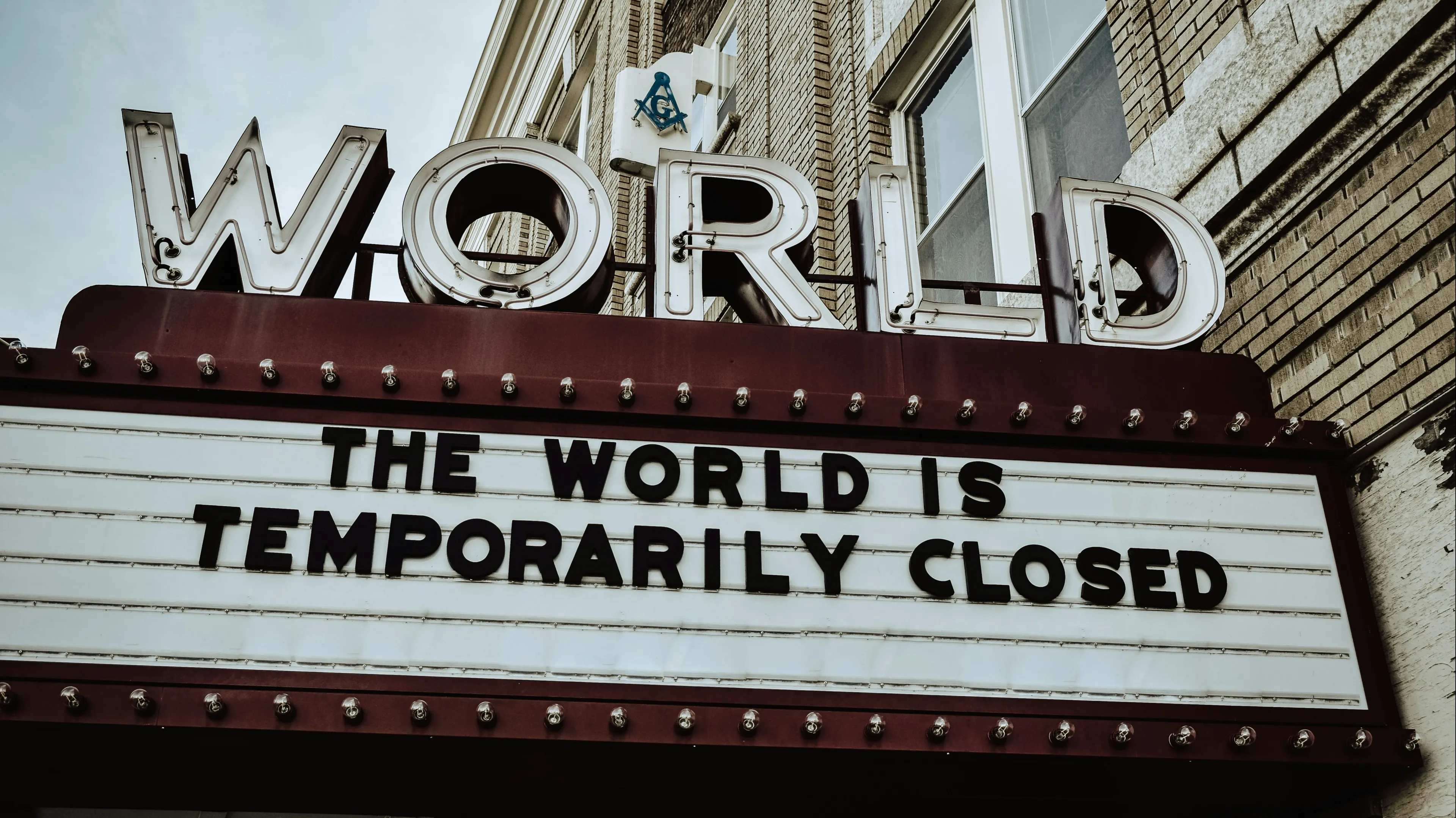
The IMF has worsened its baseline forecast for the global economy, but warned that its prospects are now "drifting" towards an even more unfavorable scenario. Photo: Edwin Hooper / Unsplash.com
The military conflict in the Middle East will leave scars on the global economy that will not heal for a long time. The IMF warns that its economic forecast is "drifting" towards a more unfavorable scenario. Investors are forced to revise their strategies once again.
On the verge of a new "serious crisis"
According to the IMF's new baseline forecast, global economic growth this year will be 3.1%, although back in January it was projected at 3.3%, and the fund even intended to adjust the April estimate to 3.4% (the same amount of global GDP growth in 2025).
The downward revision to 2026 mainly reflects the negative impact of conflict in the Middle East, the IMF explained in its submission.
Global inflation in the baseline forecast is now expected to be 4.4% instead of 3.9%. Prices will rise along the supply chain due to higher prices for both fuel and, for example, fertilizers.
"We estimate that about half of the rise in fertilizer prices translates into higher food prices a year later," IMF chief economist Pierre-Olivier Gourinchas told the Financial Times.
But this forecast is based on the assumption that the conflict in the Middle East will quickly end and oil prices will fall. However, now, as the IMF chief economist said, the world economy is "drifting" towards a more unfavorable scenario.
He suggests that if the conflict in the Middle East drags on and oil prices hold around $100 a barrel for the rest of the year, economic growth will slow to 2.5% and inflation will reach 5.4%. In the worst case scenario, involving more significant damage to energy infrastructure in the conflict region, the consequences would be even more severe: global growth would slow to 2% in 2026, inflation would accelerate to 5.8% this year and more than 6% next year.
"We have seen a 2% increase only four times since 1980, and on two occasions it was associated with major crises - the global financial [in 2008-2009] and the COVID-19 pandemic," Gurinsha said.
Specific losses
The IMF worsened its growth forecast for developing countries by 0.3 percentage points from its January estimate, believing that they will be the hardest hit by the current crisis.
The Fund expects at least 12 countries to turn to it for new loans to cope with soaring energy prices and the effects of supply chain disruptions from the war in the Middle East. IMF chief Kristalina Georgieva said in Washington on April 15 that the impact of the war could lead to additional demand for $20 billion to $50 billion in financial assistance, including new loans and increased funding for existing programs.
The outlook for developed economies has not changed much. But according to Fatih Birol, executive director of the International Energy Agency, the consequences will be felt by all countries, rich and poor alike. The longer the current "desperate situation" lasts, the worse those effects will be on economic growth and inflation - higher prices for gasoline, gas and electricity, Birol told the Associated Press.
The German authorities, for example, are losing hope for economic recovery this year, writes the FT: according to the newspaper's sources, the government of this country plans to reduce the growth forecast from 1% to 0.5%. As a result, the actual stagnation in Europe's largest economy will last for the fourth year.
Commerzbank chief economist Jörg Kremer expects German GDP growth to be 0.3% at all, compared with 0.4% in 2025. "It's basically a black zero," he told the FT. The IMF's new forecast is 0.8%.
"Germany's economic development lost momentum markedly in the first quarter amid conflict in the Middle East," the country's economy ministry warned. Growth this year will mainly be driven by "momentum from government spending" as private investment, exports and domestic consumption stagnate, a government source told the FT.
Some sectors will be hit harder than others. While oil and gas futures prices have risen about one and a half times (and are now about a third higher than before the war), jet fuel in Europe has more than doubled in price. It has cost about $700-800 per ton for the past two years, and reached a record $1904 in early April. Even during the 2022 energy crisis, the price only exceeded $1500 per ton.
"There is probably six weeks or so of jet fuel left in Europe," Birol told AP. Unless Gulf oil supplies can be unblocked soon, airlines in Europe could start canceling flights "in the near future," he warned.
Dutch KLM has already canceled 160 flights from Amsterdam airport "Schiphol" and back for the next month, as the increased price of kerosene made them unprofitable. The company, however, noted that there is no fuel shortage yet.
British low-cost carrier easuJet has reported growing losses due to its rising prices. But the fuel itself is enough, said the company's CEO Kenton Jarvis. The situation through mid-Ma is not a cause for concern, he said: "In our industry, we always estimate supply three to four weeks ahead, and the [current] situation is the same as it was before the crisis."
Military award
"Truces end wars but don't undo their consequences," Ajay Rajadhyaksha, global director of analytics at Barclays, told the FT, referring to the two-day truce brokered by the US and Iran on April 8. - The conflict has left behind a number of consequences that will not go away even if the shooting stops."
Even if the truce can be extended, it could take about six months to reach a full-fledged peace agreement, officials from the Middle East and Europe told Bloomberg, citing the views of their leaders.
"There will be no agreement between the US and Iran in the near term. President Donald Trump's optimism is because he recognizes the implications for markets," said Chatham House's Rob McAir, a former British ambassador to Iran.
All this time, and subsequently, situation-sensitive market assets such as oil and gas and government bond yields will trade at a premium, analysts say.
The yield on two-year U.S. Treasury bonds, the most responsive to changes in interest rates, reached a four-year low on the eve of the war. It is now above it by 0.4 percentage points and is at the level of last August.
The yield of similar securities of Great Britain, Germany and Italy exceeds the pre-war mark by 0.5 p. p. That is, borrowed funds for business and the state are more expensive.
Treasuries and the US dollar have always been a safe haven for investors in times of turmoil. And while the US economy continues to dominate the world, confidence and predictability levels have declined markedly due to Trump's erratic policies, Andrew Jackson, chief investment officer at Vontobel, told the FT. Therefore, he said, US government bonds are no longer a risk-free asset.
International investors are concerned about the dollar because of sovereign debt issues and US relations with the rest of the world.
The process of diversification with the withdrawal of some investments from U.S. assets began last year, but the conflict in the Middle East has convinced Bill Campbell, portfolio manager at DoubleLine, that it needs to continue: "We are looking at increasing the emerging markets exposure in our portfolio. This trend will continue in the future."
Risks and uncertainty
Analysts do not expect oil prices to return soon to the $60-70 per barrel levels seen before the war. Even if shipping through the Strait of Hormuz resumes soon, the Gulf countries will have to restore reduced production and repair energy and port infrastructure damaged by Iranian shelling. The increased level of uncertainty, fears, probability of renewed restrictions on shipping or even military action will keep prices elevated.
With oil prices not "returning to the lows we saw earlier this year", it will create more problems for the European economy and companies, according to Jim Keiron, chief investment officer at Morgan Stanley Investment Management. He told the FT that his firm is reducing the proportion of European equities in portfolios.
Beata Mantei, director of European and global equity market strategy at Citi, also believes that because of the long-term effects of the energy shock, it is now "difficult to be fully bullish on the European market."
If shipping through the Strait of Hormuz can be resumed, tankers blocked in the Persian Gulf will rush away. "But they may not return until they have a clearer idea of how durable this truce is," says Jon Treacy, publisher of investment newsletter Fuller Treacy Money.
He estimates the risk premium for oil at 35% of pre-war levels: "Since there has been significant damage to global supply chains, it makes sense that a higher level of support has now developed."
It could now be $80-90 a barrel "with the potential for significant jumps," Tricey believes.
The consequences will affect even the U.S. economy, which is the least affected because of its distance from conflict and significant energy independence. In a quarterly survey by The Wall Street Journal, economists lowered their forecast for GDP growth in 2026 to 2% from January's 2.2% and raised their forecast for even core inflation (excluding energy and food prices) at the end of the year to 2.9% from 2.6%. The Fed's target is 2%.
The conflict in the Middle East is likely to leave a noticeable mark on the U.S. economy, manifesting itself in higher commodity prices, tighter financial conditions, increased uncertainty in the private sector, and renewed supply chain challenges.
Due to accelerating inflation, the European Central Bank will raise the rate by 0.25 percentage point to 2.25% in June, a Bloomberg poll showed. Analysts raised the inflation forecast from 2% to 2.8%, in 2027, as analysts predict it could fall to 2%, the ECB's target level.
It's far from just about opening the Strait of Hormuz, James Vokins of Aviva Investors told the FT: even if a permanent ceasefire is agreed, "there will remain long-term scars that will require a higher risk premium".
"The conflict has lasted long enough and caused so much damage that any reasonable macroeconomic scenario looks significantly worse today than before the conflict began," agrees Bill Papadakis, macro strategist at Lombard Odier.
This article was AI-translated and verified by a human editor